



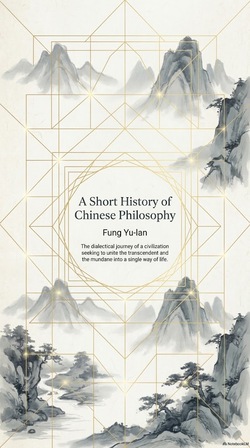
Fung clears up myths about Confucianism being a religion. It is really practical ethics. This book changed my view. I learned so much about Chinese thought today.
Your Review
Fung clears up myths about Confucianism being a religion. It is really practical ethics. This book changed my view. I learned so much about Chinese thought today.

Fung clearly shows Chinese philosophy is about living well, not religious belief.

Clear, insightful, and essential reading for anyone wanting to understand the true heart of Chinese thought.

The book explains why Chinese people chose philosophy over religion for spiritual needs instead of supernatural beliefs or dogma, blending secular and sacred realms into one cohesive way of life rooted in agrarian heritage where balance between action and inaction mattered most for survival, showing how this unique approach helped navigate the tension between worldly responsibility and spiritual transcendence throughout history without relying on gods or rituals.
The book explains how ancient farming life shaped the need for balance in Chinese thought.

Fung's four levels of life offer a clear path to finding meaning beyond just work or personal gain.

Some parts feel too academic, but the distinction between philosophical and religious Taoism was very useful.

Too focused on history, lacks practical advice for modern readers.

Great summary of how Chinese thought balances duty with spiritual growth.
I now understand that Chinese philosophy offers a way to find meaning without needing supernatural beliefs.

Finally, a clear distinction between Confucianism as philosophy and religion.

Really liked the part about how Chinese philosophy blends spiritual and daily life so well.

I now understand why Chinese philosophy blends secular and sacred realms without needing gods or rituals to find meaning.

This book finally clarifies that Confucianism is a philosophy about living morally rather than a religion like Christianity, which changes how I see Chinese culture completely.

This book brilliantly dismantles the myth that Confucianism is a religion by showing its focus on practical virtue rather than divine worship.

This book clearly explains why Chinese philosophy isn't a religion but a practical guide to living morally and finding balance in daily life through engagement and detachment.

I found the section on balancing worldly duty with spiritual detachment very useful for my daily life.

Fung clarifies that Confucianism is practical ethics, not a religion, which corrects my long-held misconceptions about Chinese thought.

I appreciated how the author explains the balance between worldly duty and spiritual detachment.

Fung clearly shows Confucianism is about living morally, not a religion like Christianity.