
A Woman Makes a Plan: Complete Chapter-by-Chapter Summary
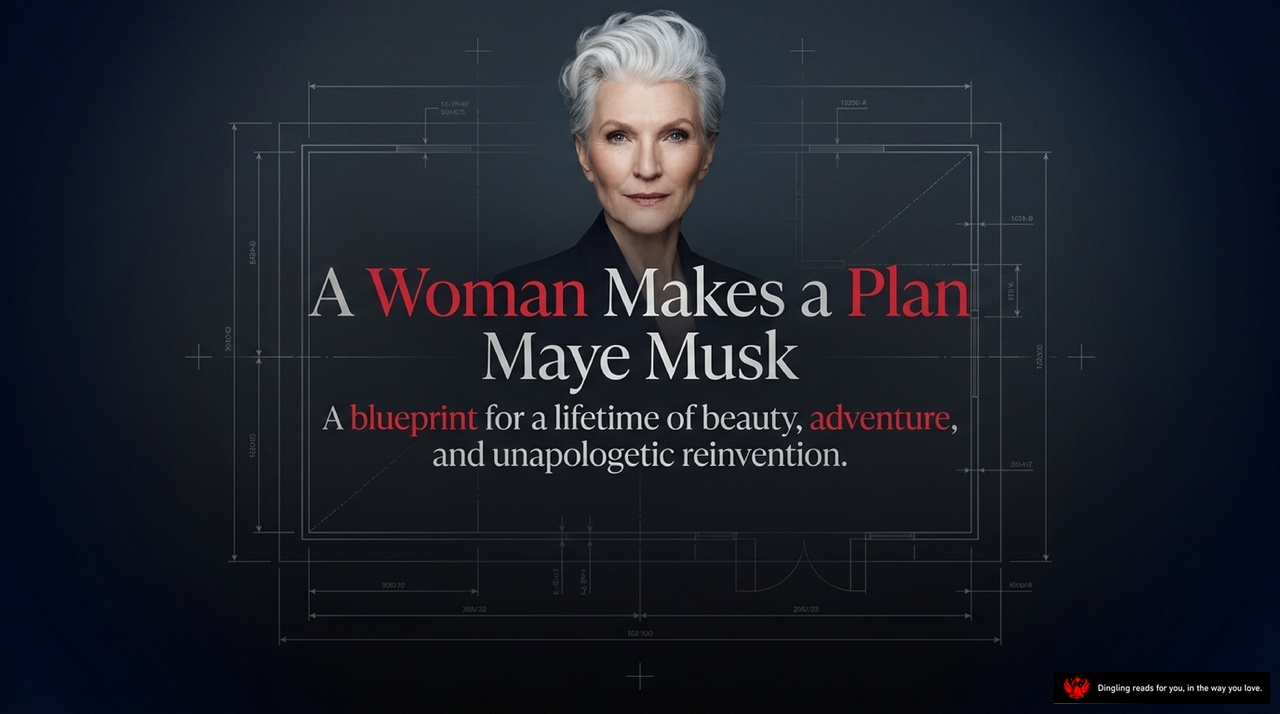
Welcome to a journey of reinvention. This isn't just a book cover; it's a blueprint for a lifetime of beauty, adventure, and unapologetic reinvention. Meet Maye Musk, the woman behind the words "A Woman Makes a Plan."
Look at her face. Those aren't lines of age; they are the map of a life fully lived. From walking the runway at fifteen to becoming a global icon at seventy-one, Maye teaches us that age is never a barrier—it's just another chapter. She reminds us that if men don't slow down as they get older, neither should women. Instead, she runs faster, fueled by curiosity and confidence.
But it's not just about the runway. It's about the mindset. Maye believes that true charm comes from being interesting, not just beautiful. She traded the pressure to be perfect for the joy of being present, proving that a witty smile and a curious heart are far more magnetic than any makeup. Her story is a powerful invitation to stop fearing the clock and start designing a life that feels alive, vibrant, and entirely your own.
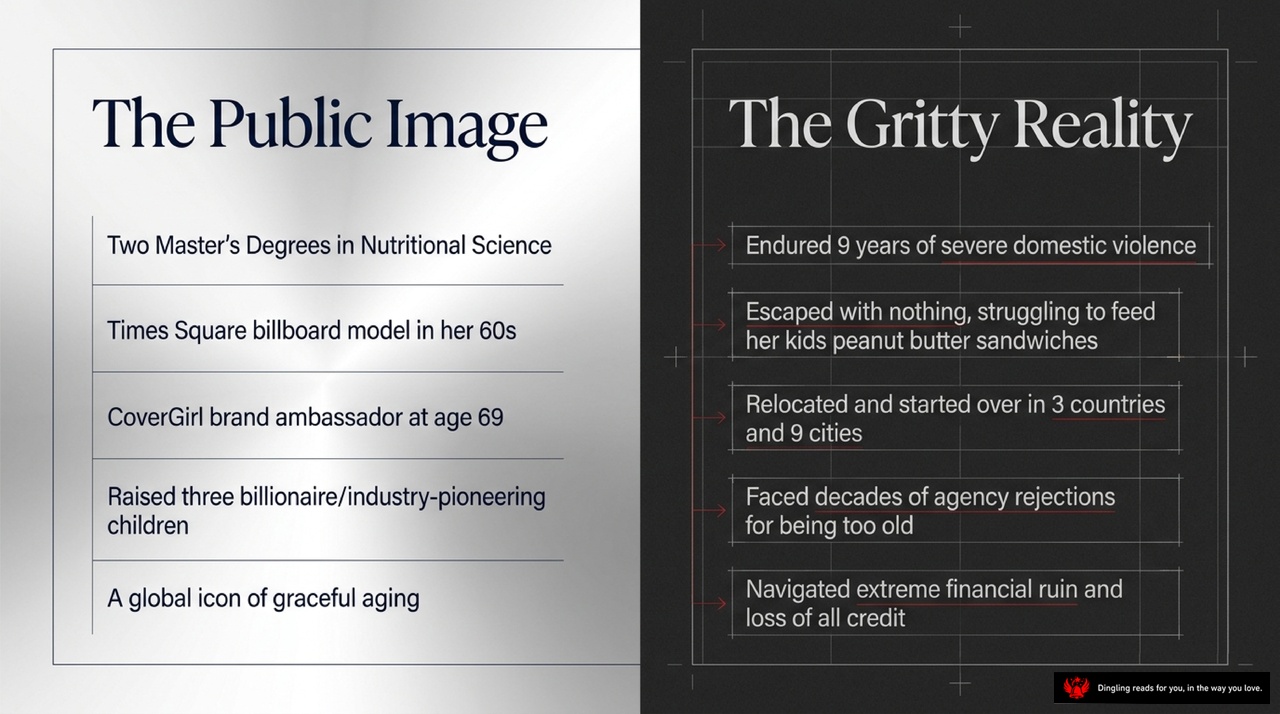
Look at this slide. On the left, we see the polished public image: two master's degrees, a Times Square billboard model in her 60s, a CoverGirl ambassador at 69, and a global icon of graceful aging. On the right, we see the gritty reality that built that image. She endured nine years of severe domestic violence, escaped with nothing, and struggled to feed her kids peanut butter sandwiches. She relocated and started over in three countries and nine cities, faced decades of agency rejections for being too old, and navigated extreme financial ruin and the loss of all credit.
This isn't just a story of resilience; it's a masterclass in reinvention. While the world saw a successful model, she was actually fighting for her life and rebuilding from scratch. The key takeaway here is that your public image is often just a highlight reel, while the real magic happens in the messy, unseen work behind the scenes. Don't let the polished exterior fool you; the true strength lies in the ability to endure the darkest moments and keep moving forward.
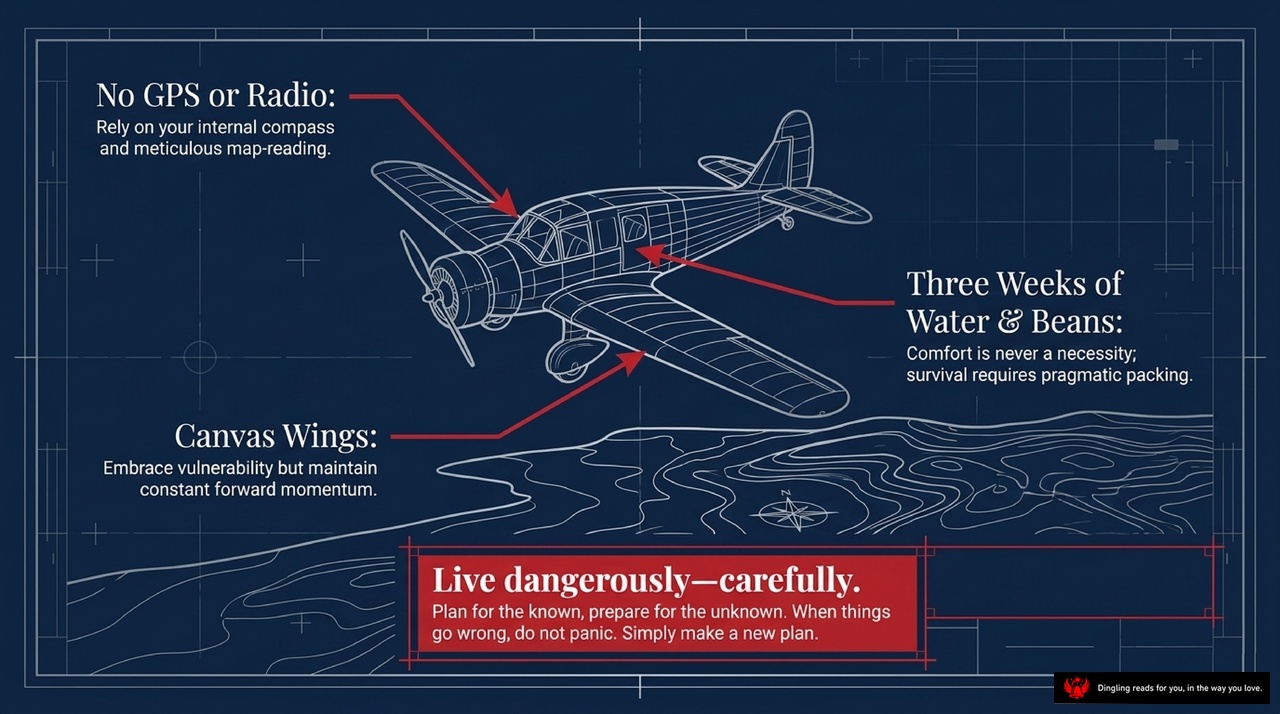
Imagine a world without GPS, radio, or modern comforts. That was the reality for my parents, who flew their canvas-winged plane around the globe in the 1950s. As the blueprint on this slide illustrates, their adventure wasn't about luxury; it was about survival. They packed only three weeks of water and beans, embracing the vulnerability of canvas wings while maintaining constant forward momentum. They learned that comfort is never a necessity. When things went wrong—like getting stuck in the desert or losing luggage in a blizzard—they didn't panic. They simply made a new plan. This spirit of living dangerously but carefully is the core of my life. Whether I'm navigating a career crisis or raising a family in a new country, I rely on an internal compass and meticulous preparation rather than waiting for rescue. When the unknown strikes, my strategy is simple: plan for what you know, prepare for what you don't, and trust that you can always find a way forward.

So, let's talk about the "Why Not Framework." Imagine an unexpected opportunity suddenly lands on your desk. The first question you ask yourself is simple: "Are you qualified?" If the answer is no, don't panic. Ask yourself, "Can you learn it quickly?" If you can, proceed; if not, it's okay to pass. But if you are qualified, the real work begins. You might feel scared, and that's normal. The crucial question is: Is this fear based on other people's expectations? If yes, ignore them. Now, ask the final question: "Will this bring you joy, curiosity, or a better situation?" If the answer is a resounding yes, then you say "Why Not?"
Look at the example on the right. At 20, she entered the Miss South Africa pageant as a nerd. Why not? It launched her 50-year modeling career. At 69, she accepted a hip-hop street-style shoot. Why not? It redefined her as a modern style icon. The framework isn't just a chart; it's a permission slip to say yes to life's surprises. When you follow these steps, you stop waiting for permission and start creating your own path. So, the next time an opportunity knocks, don't hesitate. Ask yourself the questions, trust your gut, and say "Why Not?"
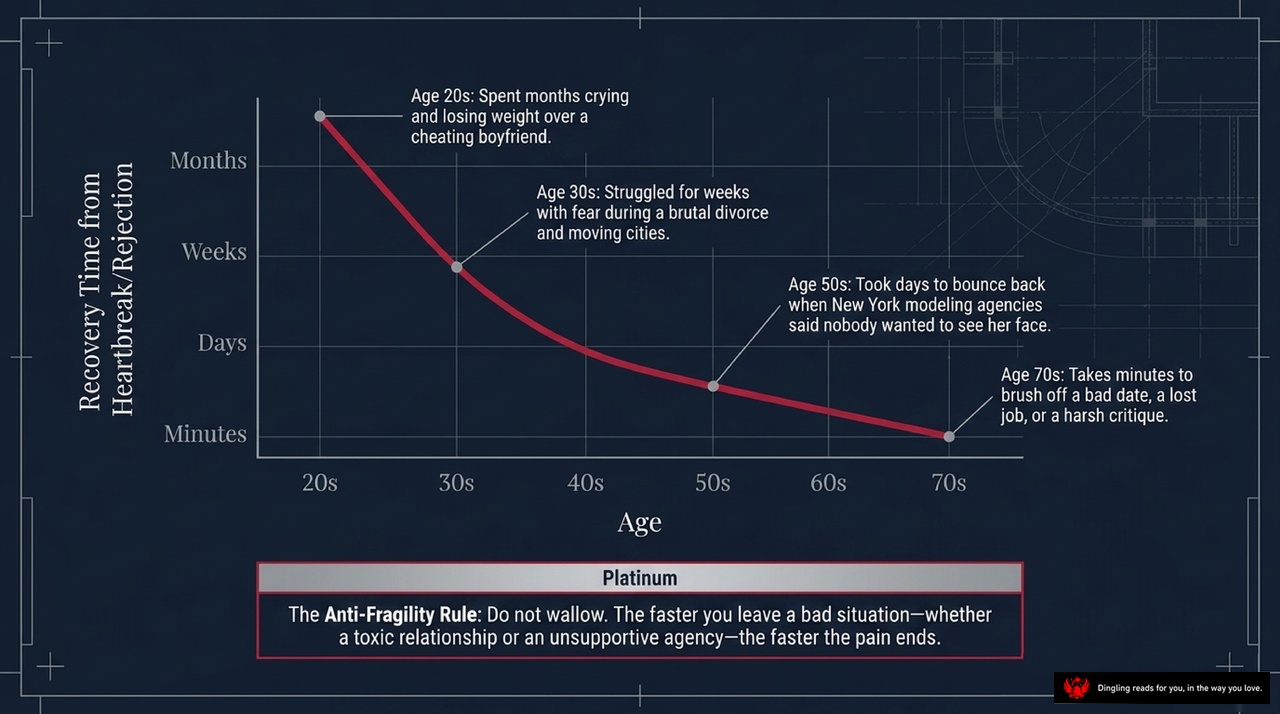
Look at this graph. It tells a powerful story about how we age, but not in the way you might expect. Notice the curve labeled "Recovery Time from Heartbreak/Rejection." In our 20s, a cheating boyfriend can leave us crying for months, losing weight and struggling to function. By our 30s, facing a brutal divorce takes weeks. But look at the 50s and 70s. It takes only days, then just minutes, to bounce back from a bad date, a lost job, or harsh criticism.
This visual perfectly illustrates what I call the "Anti-Fragility Rule." The core message is simple: do not wallow. The faster you leave a bad situation—whether it's a toxic relationship or an unsupportive environment—the faster the pain ends.
I learned this the hard way after my first marriage ended. For years, I felt paralyzed by grief, waiting for the pain to fade on its own. I stayed in a toxic cycle, letting rejection define me. But eventually, I realized that staying in the pain only prolongs it. When I finally made the decision to walk away from that dark chapter, the healing process accelerated dramatically. I didn't just recover; I rebuilt myself stronger than before.
So, when life knocks you down, don't stay on the ground. Whether you're dealing with a failed project, a broken relationship, or a harsh critique, get up immediately. Don't give the pain a place to take root. Move forward, embrace the new, and trust that your ability to recover only grows stronger with time. Your resilience is your superpower.
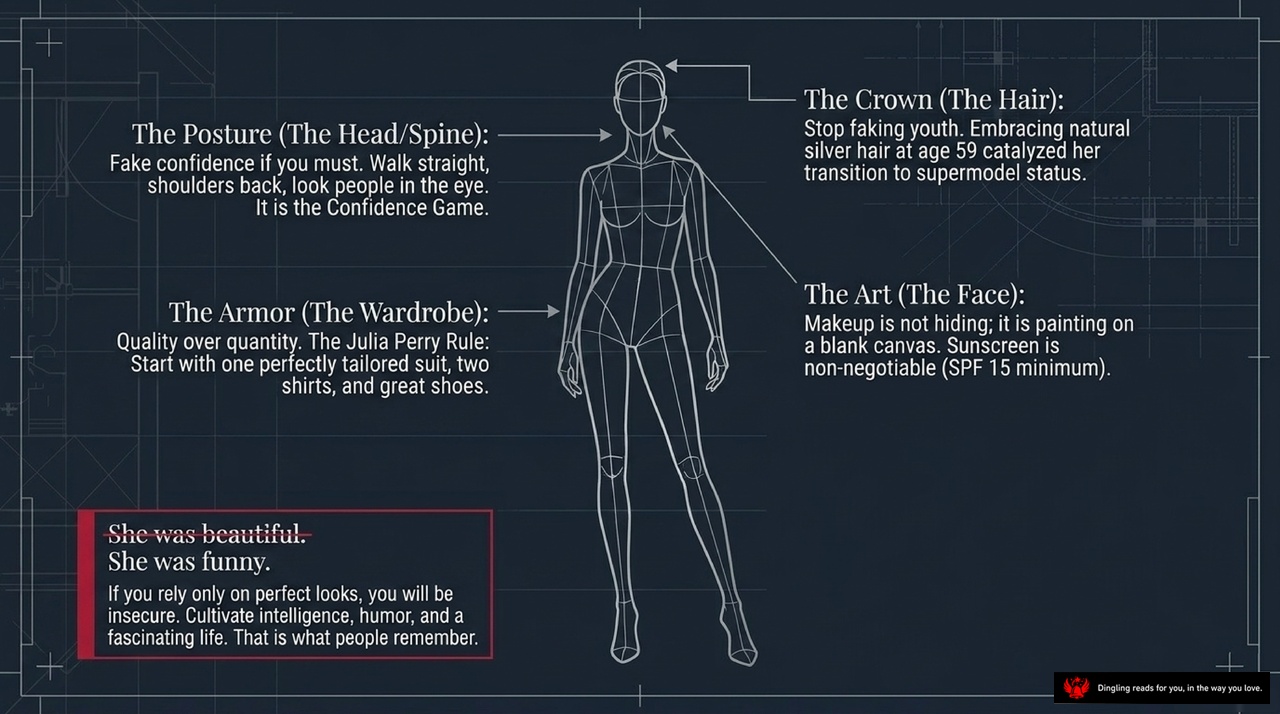
Let's talk about the art of aging gracefully, not by hiding who you are, but by embracing the details that make you uniquely you. Think of your appearance as a blueprint for confidence, broken down into four key areas.
First, look at your posture. This is what we call the Confidence Game. If you need to fake it, do it anyway. Walk straight, pull your shoulders back, and make sure you're looking people in the eye. It's not just about looking good; it's about projecting strength from the inside out.
Next, consider your wardrobe. Here, the rule is simple: quality over quantity. Think of the "Julia Perry Rule"—start with one perfectly tailored suit, two crisp shirts, and great shoes. A well-fitted piece of clothing gives you an instant boost of self-assurance that cheap, ill-fitting items never can.
Then, there's the crown, which is your hair. The biggest mistake we make is trying to fake youth. Instead, stop fighting the clock. Embracing your natural silver hair, like I did at age 59, actually catalyzed my transition to supermodel status. It signals that you are comfortable with who you are.
Finally, look at the art on your face. Makeup isn't about hiding; it's about painting on a blank canvas to highlight your features. And let's be clear about one non-negotiable rule: sunscreen. An SPF 15 minimum is essential. Protecting your skin is the best anti-aging tool you have.
But remember, none of this matters if you rely solely on perfect looks. That path leads to insecurity. What people truly remember is that you were beautiful, yes, but more importantly, that you were funny. Cultivate intelligence, humor, and a fascinating life. That is the real secret to being unforgettable.

Look at this comparison matrix. On the left, we see "Helicopter Parenting"—the manager and protector who checks homework daily and fills out college applications. On the right, we see "The Musk Independence Model," where the parent shifts to being a supporter and role model. Instead of micromanaging school or paperwork, the child takes full responsibility for their loans and forms. Instead of guiding them toward safe professions, the parent simply observes their interests at age twelve and lets them lead. The ultimate outcome? One path leads to dependent, sheltered adults, while the other builds autonomous, resilient innovators. As I often tell my children, I never treated them like babies or scolded them. I didn't check their homework; that was their responsibility. I didn't plan their careers; I just trusted their twelve-year-old magic. By stepping back, I gave them the freedom to become the leaders of their own lives.
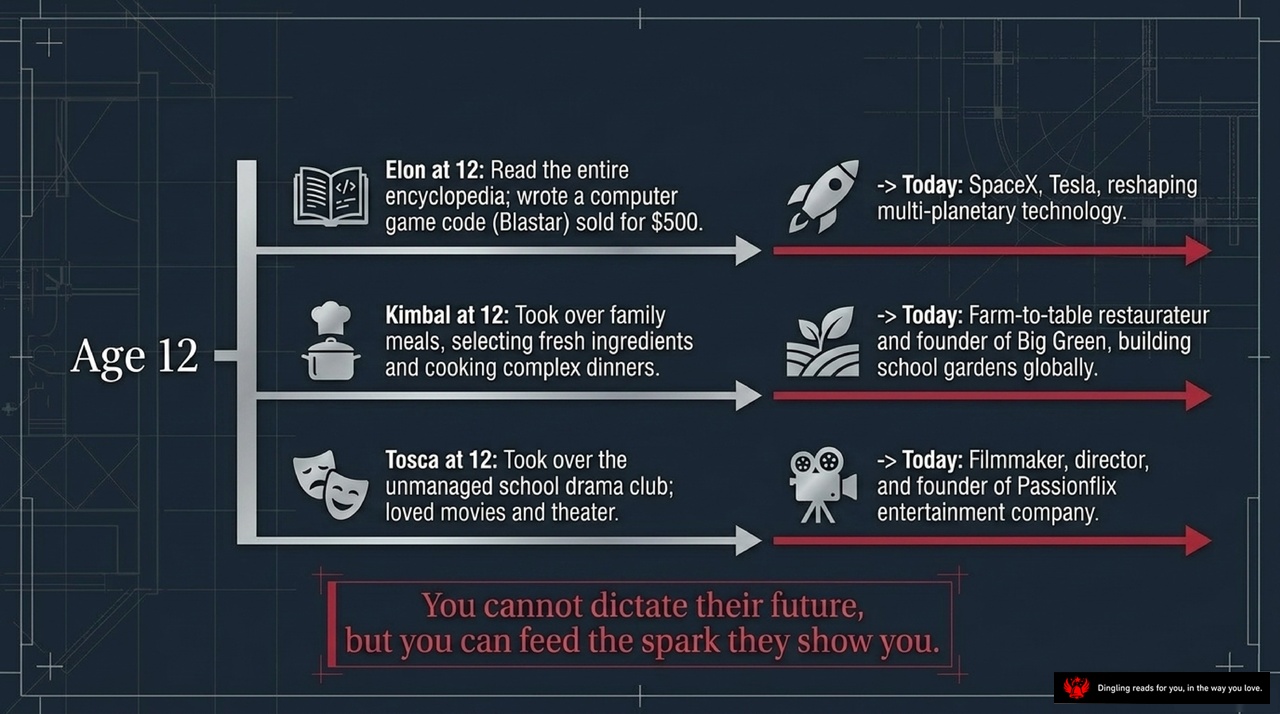
Look at this timeline. It all starts at a single, pivotal moment: Age 12. See the three paths branching out? This is the "Twelve-Year-Old Magic."
Take Elon. At twelve, he didn't just read encyclopedias; he wrote computer code. That little game he sold for five hundred dollars? It wasn't a fluke. It was the seed of SpaceX and Tesla.
Then look at Kimbal. At twelve, he took over the family kitchen, picking fresh ingredients and cooking complex dinners. That passion for food and community didn't disappear; it grew into Big Green, building school gardens globally.
And Tosca? At twelve, she ran the school drama club. She loved movies and theater. That spark turned her into a filmmaker and the founder of Passionflix.
Notice the pattern? None of them followed a script. They didn't wait for permission. They just acted on what they loved.
This slide drives home a crucial point: You cannot dictate their future. You can't force them to be an engineer, a chef, or an artist. But you absolutely can feed the spark they show you. Your job isn't to build the road for them; it's to notice where they want to go and give them the fuel to keep moving. Don't try to control the outcome. Just protect the curiosity. That's where the real magic happens.
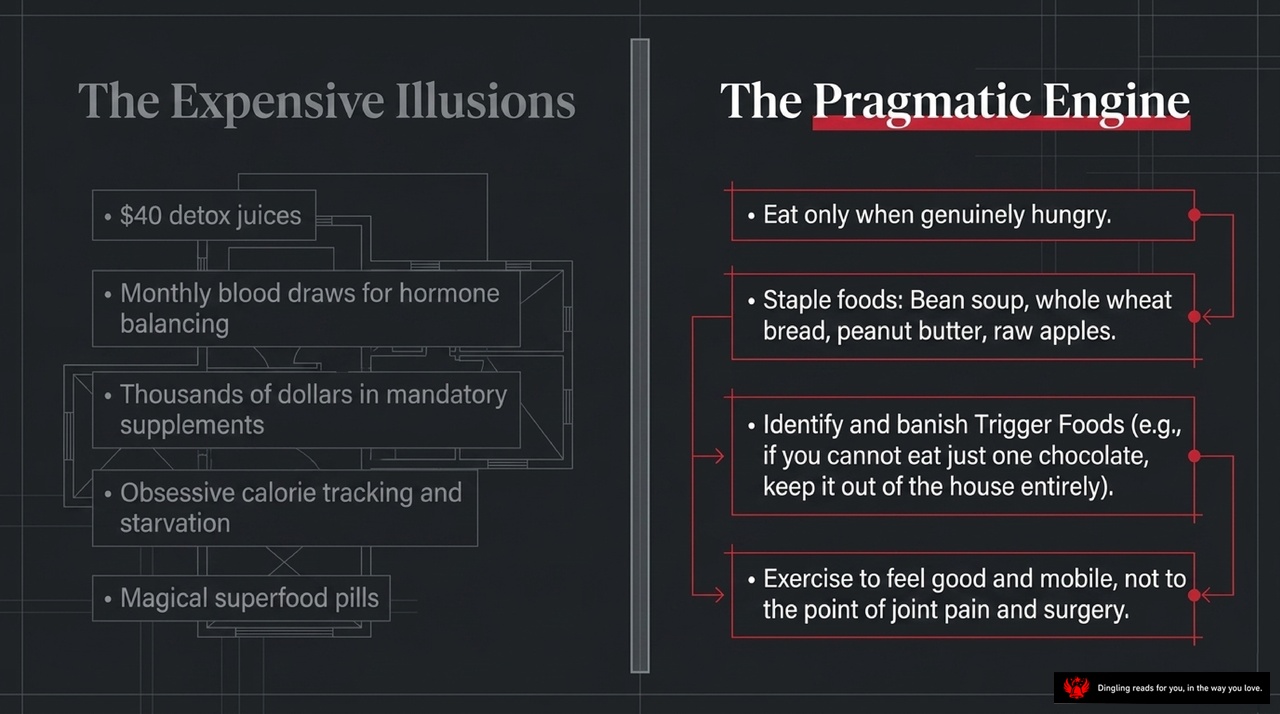
On the left, we see "The Expensive Illusions"—a blueprint of a broken relationship with food. We're talking about $40 detox juices, monthly blood draws just to balance hormones, and thousands of dollars spent on mandatory supplements. It's the modern version of starving yourself while obsessively tracking every calorie, chasing magical superfood pills that promise miracles but deliver nothing. It's a system built on fear, designed to make you feel like your body is an enemy you need to conquer at any cost.
But on the right, we have "The Pragmatic Engine." This is how real life actually works. First, eat only when you are genuinely hungry. Stop using food as a mood patch for anxiety or boredom. Second, build your diet around simple staple foods like bean soup, whole wheat bread, peanut butter, and raw apples. No need for expensive, processed "clean" alternatives. Third, identify and banish your trigger foods. If you can't eat just one chocolate bar without binging, keep it out of the house entirely. It's not about restriction; it's about removing the temptation so you don't have to fight yourself. Finally, exercise to feel good and stay mobile, not to the point of joint pain and surgery. Movement should be joyful, not a punishment.
The truth is, you don't need to spend a fortune or sacrifice your sanity to feel healthy. You just need to stop the noise, trust your body's signals, and choose simple, sustainable habits over expensive illusions.
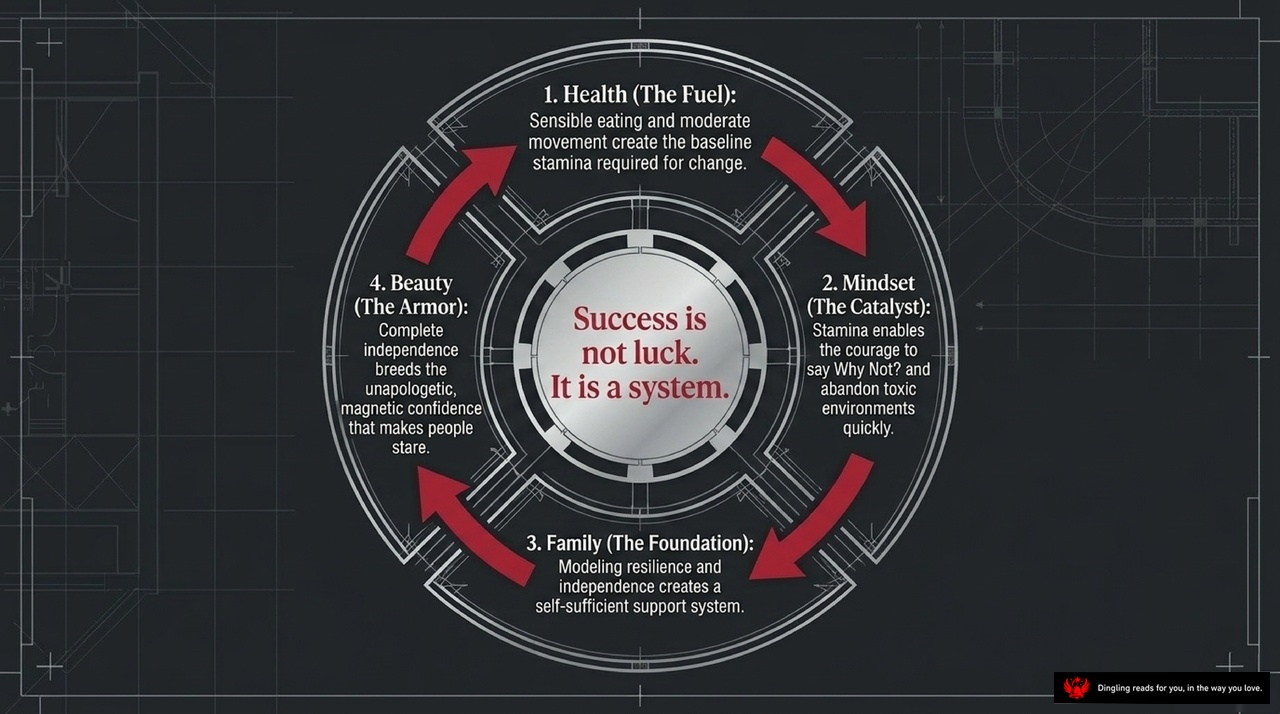
Success isn't luck; it's a system. Look at this blueprint for a fulfilling life. It starts with Health as the fuel—sensible eating and moderate movement create the stamina you need to change. But fuel alone isn't enough; you need Mindset as the catalyst. That inner drive gives you the courage to ask "Why not?" and walk away from toxic environments quickly. Without that foundation, even the best health habits won't stick.
Then, Family becomes the foundation. Modeling resilience and independence creates a self-sufficient support system. When you see your parents prioritize their work and family, you learn that you don't need to sacrifice one for the other. Finally, Beauty acts as the armor. Complete independence breeds the unapologetic, magnetic confidence that makes people stare. This isn't about vanity; it's about the confidence that comes from knowing you can handle anything. When you combine these four elements, you build a life where success feels inevitable, not accidental.
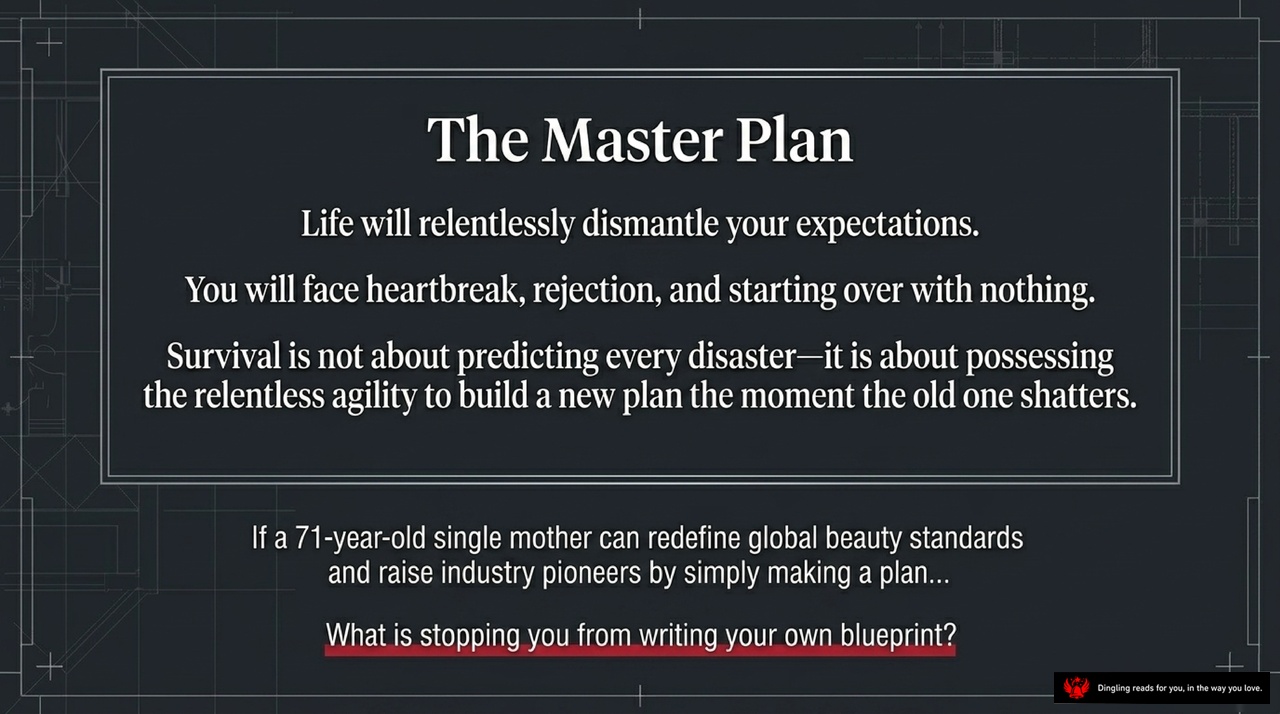
Look at the blueprint on your screen. Life, it turns out, is not a straight line we can predict. As the slide says, life will relentlessly dismantle your expectations. You will face heartbreak, rejection, and moments where you feel like you're starting over with nothing. But here is the secret to survival: it is not about predicting every disaster before it happens. It is about possessing the relentless agility to build a new plan the moment the old one shatters.
Think about this: if a 71-year-old single mother can redefine global beauty standards and raise industry pioneers simply by making a plan, what is stopping you from writing your own blueprint? The key isn't waiting for the perfect conditions or fearing the unknown. It's about taking that first step, even when the path is unclear. Whether you are facing a career pivot, a personal loss, or a fresh chapter, remember that your ability to adapt is your greatest asset. Don't let fear of the future paralyze you in the present. Embrace the chaos, trust your ability to rebuild, and start drawing your new lines today. Your master plan begins the second you decide to move forward, regardless of how broken things feel right now.