


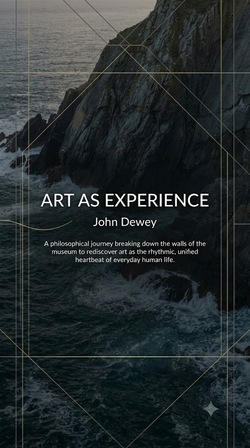
Dewey proves art is just living fully.
Your Review
Dewey proves art is just living fully.

Dewey brilliantly argues that aesthetic experience is woven into our daily lives, from kneading bread to watching sunsets, proving that art isn't a luxury for the privileged few but a fundamental part of being human, where complete, immersive engagement with the world transforms mundane tasks like cooking or folding laundry into meaningful artistic interactions, challenging the elitist museum mentality that has alienated us from beauty right in front of us by showing how rhythm and medium bind our lived experiences into a cohesive whole.

Dewey shows how daily actions like cooking or gardening become art when we focus fully on the task, transforming ordinary chores into complete, meaningful experiences where doing and feeling merge into a single, cohesive flow rather than separate steps, reminding us that beauty exists in our constant, rhythmic interaction with the world around us.

Life itself is art.

Dewey shatters the elitist myth that art belongs only in museums, arguing instead that aesthetic experience lives in our daily rhythms of imbalance and recovery, from cooking bread to watching a sunset, making art a fundamental part of being human rather than a luxury for the privileged few.

Dewey argues that aesthetic experience isn't a privilege for the wealthy few but a natural rhythm woven into the fabric of our daily interactions, transforming mundane acts like kneading bread or watching a sunset into complete, immersive artistic engagements where doing and undergoing merge seamlessly, allowing us to reclaim beauty from the sterile museum mentality and find transcendent etherial things in ordinary life, proving that art is something we live every single day rather than something we have to get through intellectual effort or elite education, ultimately shifting our understanding from viewing art as a distant luxury to recognizing it as the fundamental source of human flourishing found in the rhythmic cycles of imbalance and recovery that define our existence as live creatures constantly interacting with our surroundings.
Dewey proves art lives in simple acts like baking bread or watching sunsets, making it accessible to everyone instead of just museum experts.

Dewey argues that aesthetic experience comes from fully engaging with life, not just visiting museums. He explains that moments like kneading bread, watching a sunset, or even getting lost in a conversation are all forms of art because they involve complete immersion where the means and ends merge. Instead of viewing art as a distant luxury for the privileged few, he suggests we should notice the 'etherial things' in ordinary tasks, like a firefighter's focus or a gardener's tenderness. This perspective shifts art from a static object to a dynamic process of living, helping us reclaim beauty from the mundane chaos of our busy, distracted routines by simply showing up fully for each moment.

The idea that art stems from rhythmic life cycles feels radical yet strangely familiar to anyone who has ever felt fully absorbed in a task, whether kneading bread or watching a storm, turning mundane actions into aesthetic experiences that bridge the gap between doing and undergoing, making me realize I don't need a degree to find beauty, just the willingness to be present and notice how imbalance and recovery shape every single day of my existence.

This book changed how I see my daily life as art.

Dewey argues art isn't a museum privilege but a natural part of being human, woven into our daily interactions where aesthetic seeds like the firefighter's focus or the gardener's tenderness spark that quiet, transcendent wonder we call art, turning ordinary moments into meaningful shared experiences rather than distant elite trophies, proving that complete immersion in doing and undergoing transforms mundane tasks into aesthetic richness without needing formal training or expensive gallery tickets to access the beauty already right in front of us.

A powerful reminder that we don't need a degree to find beauty, just the willingness to be present and engaged with our surroundings.

Dewey brilliantly proves that art lives in our daily rhythms, not just in distant museums, turning mundane moments into meaningful aesthetic experiences.

This book changed how I see ordinary moments as art.

This book changes how I see everyday moments as true art.

While Dewey argues art is everywhere, his ideas feel a bit abstract and hard to apply directly to my busy, distracted daily routine.

Dewey brilliantly argues that art lives in everyday actions like kneading bread or watching a sunset, proving we don't need museums to find meaning. This book dismantles elitist barriers and shows how complete, immersive experiences in our mundane lives are actually aesthetic experiences rooted in rhythm and emotion, transforming how we view our own daily interactions as valuable artistic expressions rather than just tasks.

Dewey argues that art is not a distant luxury reserved for the privileged few, but a natural part of being human woven into the fabric of our daily interactions with the world. He explains that aesthetic experience is not something you have to go out of your way to find in a gallery, but something you create through full engagement with your surroundings, whether you are painting, cooking, gardening, or simply sitting with a friend over coffee. By shifting our understanding of art away from museum masterpieces toward the moments we live every day, Dewey helps us reclaim art as a fundamental part of human flourishing rather than a commodity for the wealthy. This perspective changes how we engage with everything from a song on the radio to a walk in the park, allowing us to see that every complete, immersive experience—defined by a clear beginning, middle, and end where doing and undergoing unite—is inherently artistic. Even mundane tasks like folding laundry can become aesthetically rich moments if we show up fully and focus on the sensory details, proving that the key to a meaningful life is noticing the beauty already all around us waiting to be engaged with and celebrated.

Dewey's idea that art is just rhythm and medium woven into life is profound, yet his historical critique of museums feels overly critical and ignores their real value today.

The section on imagination as a glue for fragmented experiences resonates deeply, showing how art helps us make sense of our chaotic lives.