



Mei's walk to school every morning shows how hard rural kids work just to get an education.
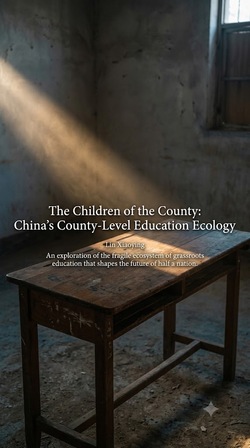
Your Review
Mei's walk to school every morning shows how hard rural kids work just to get an education.

The story of Mei walking miles to school and Li losing his clinic mirrors the quiet struggles of rural American teens perfectly. Lin Xiaoying exposes how systemic underfunding traps generations in cycles of poverty by denying basic resources like updated textbooks, reliable transportation, and accessible healthcare. When a local clinic closes or a physics teacher leaves due to budget cuts, rural youth lose their pathways to college and stable careers. This isn't about individual failure but a deliberate lack of investment that leaves communities invisible to policymakers. While volunteer programs like Ms. Chen's offer hope, they cannot fix the deep gaps caused by decades of neglect. We must shift from charity to justice by demanding equitable funding for rural schools and clinics, ensuring every child regardless of location has the chance to thrive and break the cycle of stagnation that defines their lives.

The story of Li losing his local clinic feels so heartbreaking and realistic for rural kids everywhere.

Mei walking miles daily mirrors my own childhood struggles with distance to school.

Lin Xiaoying's book acts as a powerful mirror, revealing how rural underfunding in China echoes the quiet, systemic neglect faced by American teens today.

The parallels between Mei's walk to school and rural American teens are striking. It made me realize how systemic underfunding traps kids everywhere.
This book made me realize how similar the struggles of rural kids in China and America really are.

Smooth writing; easy to finish in short sessions.

The comparison between Mei's walk and rural American teens made me realize how invisible these struggles are everywhere.

The story of Mei walking miles to school made me realize how hard rural kids work just to learn.
Reading Mei's story about walking three miles to school with damp socks really hit home for me.

The story of Mei walking miles to school made me realize how hard rural kids work just to get an education, and it felt really close to home.

Mei walks miles daily to school with old shoes and books.

The book shows how closed clinics hurt rural kids like Li deeply. Without regular doctor visits for his asthma, Li could not play or help on the farm. He had to sit on a stool to breathe. His grades dropped because he was too sick to learn. This proves that health access is needed for dreams. Many rural areas lack this basic care now.

The story of Mei walking miles to school with no bus really hit home for me.

Li missed school often because his asthma got worse without care.

Great discussion material for the team.
Li losing his clinic made his asthma much worse and sad.

The parallel between Mei walking to school and rural American kids made me realize how similar our struggles really are.

Mei walking three miles in rain while skipping homework hit home for anyone who knows rural struggle.