
Kitchen Confidential: Adventures in the Culinary Underbelly: Complete Chapter-by-Chapter Summary
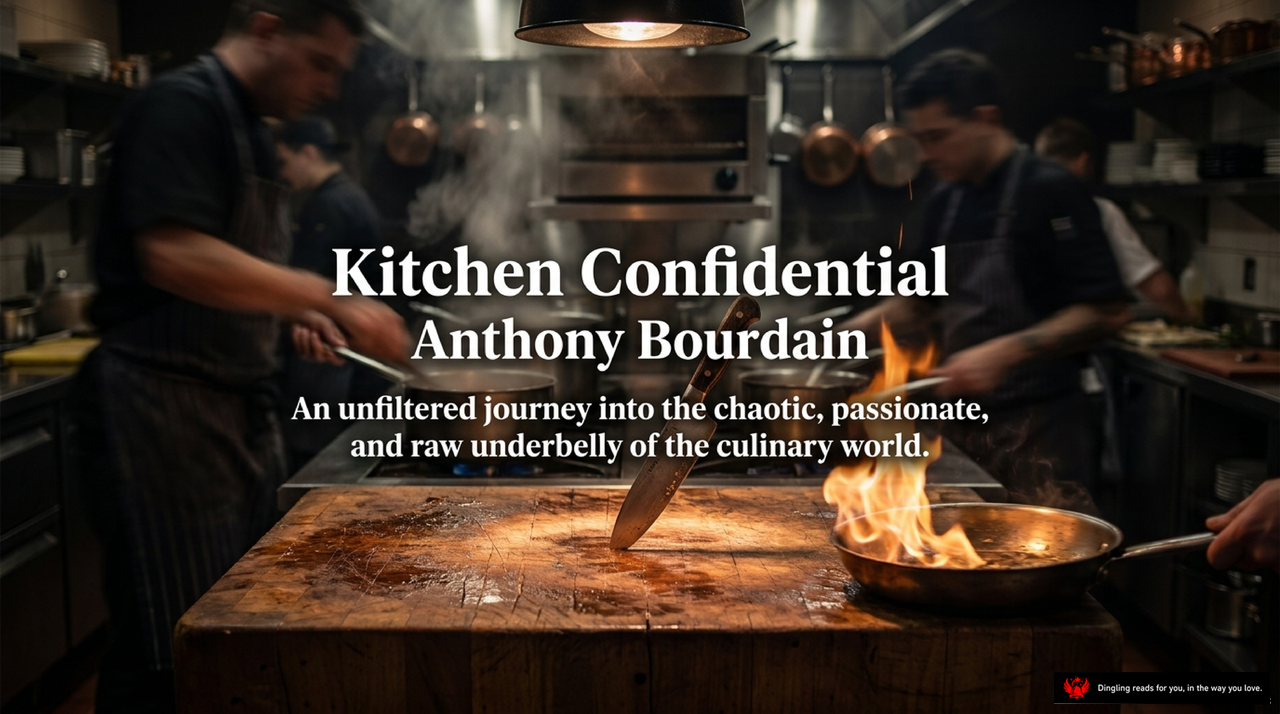
Ever wondered what really goes on behind restaurant kitchen doors? Anthony Bourdain’s Kitchen Confidential yanks back the curtain on the messy, fiery, and unapologetically real side of the food world. This isn’t your glossy food show or fancy cookbook—Bourdain dives straight into the chaos: late nights, intense passion, and all the raw, unfiltered moments that make a kitchen hum. It’s a wild ride through the culinary underbelly, and once you read it, you’ll never look at your favorite eatery the same way again.

Let’s talk about that one bite that flips your whole world on its head—you know, the kind that makes you stop and go, “Wait, food isn’t just something to shovel in?”
For me, growing up in 1960s America, food was just fuel. Campbell’s soup, burgers—nothing special, just stuff to keep you going. That was my baseline, my normal. Then came this transatlantic trip on the Queen Mary. I was a kid, seasick, watching Jerry Lewis flicks, but then… a bowl of cold vichyssoise. Silky, made with leeks and potatoes, served in a silver tureen. That’s when I realized food had secrets. It wasn’t just about filling your stomach—it could make you feel something.
But the real game-changer? A French fishing boat off the coast. An old fisherman named Saint-Julien pried open a fresh oyster straight from the water. I took a bite—and whoa. It tasted like seawater, brine, flesh… and somehow, the future. That’s when I knew I wanted to chase those sensory hits for life.
And here’s the truth: Great chefs aren’t born in culinary schools first. They’re born the moment they realize food has power—to inspire, to shock, to make you see the world differently. That oyster didn’t just taste good. It lit a fire in me that’s still burning today. It was the bite that changed everything.
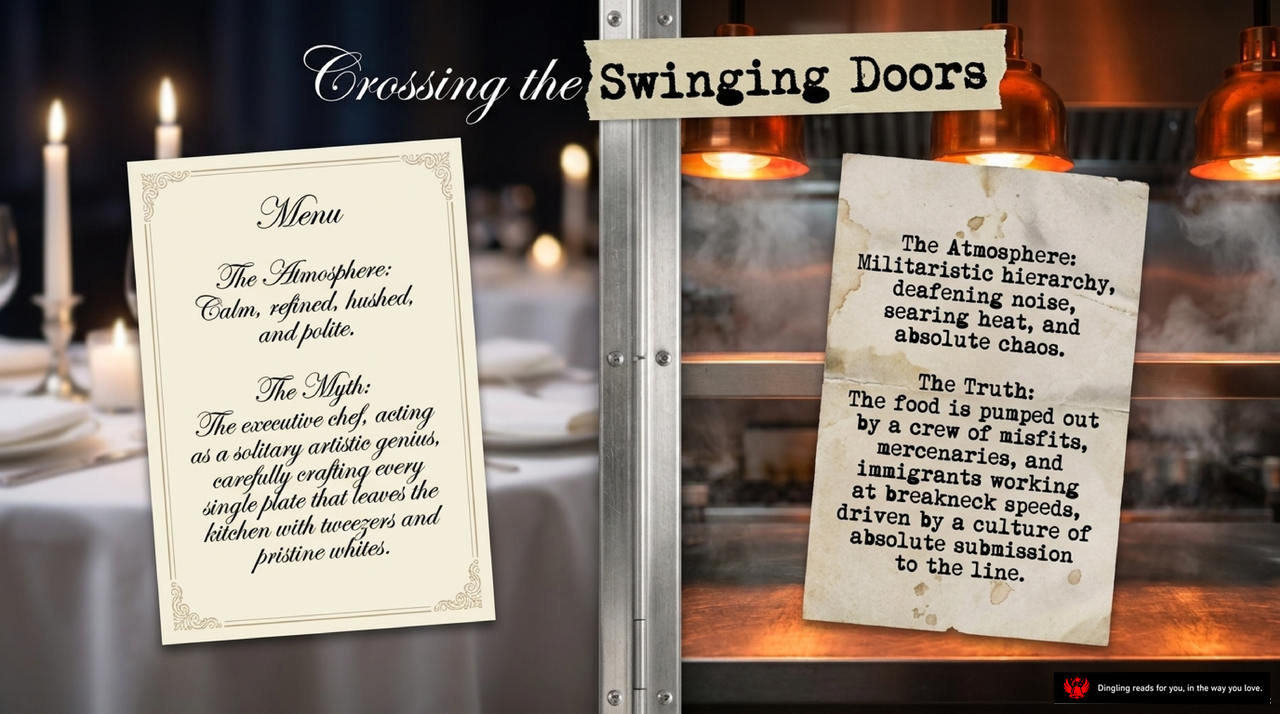
Ever stood in a calm, refined restaurant—soft lighting, hushed conversations—and stared at the chef through the pass, imagining them a solitary artistic genius carefully crafting each plate with tweezers? That’s the myth the front of house sells you. But swing those kitchen doors open, and you’ll step into a world that’s the polar opposite.
The reality? A militaristic hierarchy where deafening clatters, searing heat, and absolute chaos rule. The food isn’t pumped out by one genius—it’s made by a crew of misfits, mercenaries, and immigrants working at breakneck speed, driven by a culture of submission to the line. These are the folks who’ve climbed from dishwashing to line cook, who don’t need praise to keep going, who show up even when they’re sick because the kitchen can’t afford to slow down.
Immigrants from places like Ecuador or Mexico are the backbone here. They follow orders without backtalk, master every station, and keep the machine running. Unlike some American cooks who demand constant validation, these workers just get the job done. Discipline is non-negotiable: no messy stations (a cluttered station means a cluttered mind), no random days off, and everyone knows their role down to the second.
Next time you take a bite of that perfect dish, remember the swing doors. Behind them, it’s not about art—it’s about survival, speed, and a team that’s turned chaos into something delicious. The genius isn’t in one person—it’s in the crew that’s mastered the dance of the line, one plate at a time.
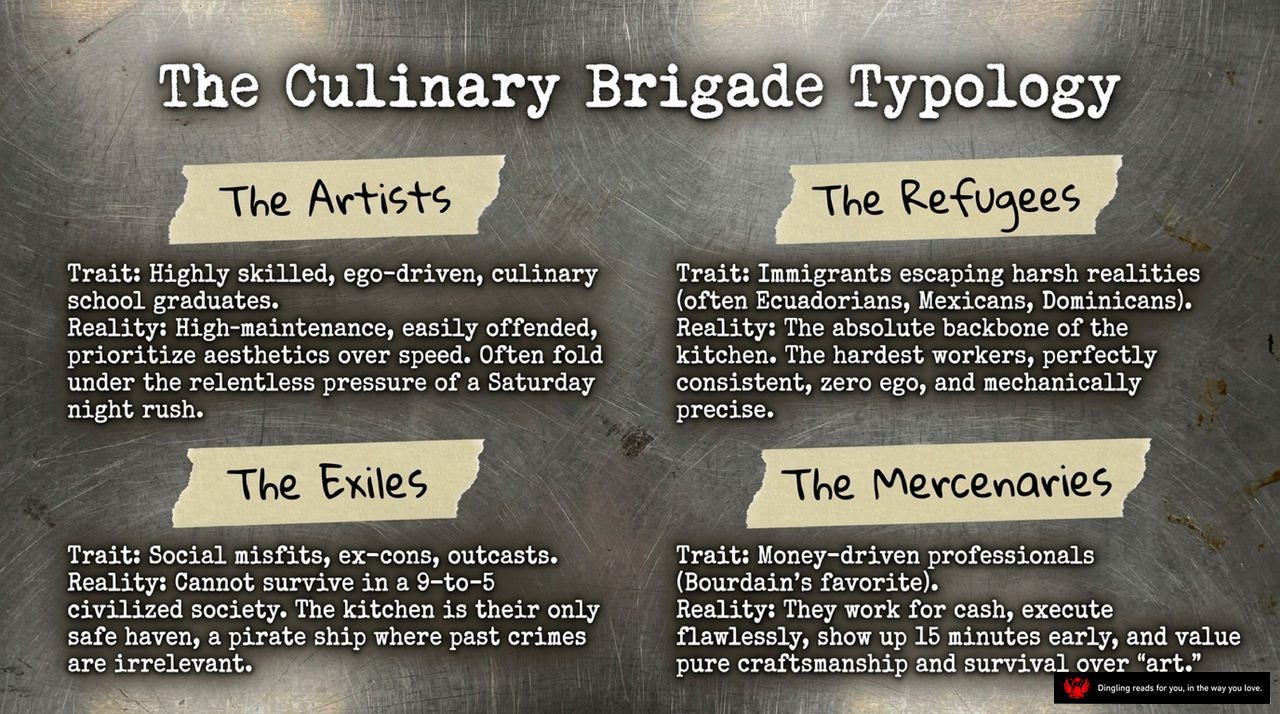
Ever step into a busy kitchen and think, “Who are these people?” Well, Bourdain had a way of categorizing them—four distinct types that make up what he called the culinary brigade typology.
Let’s start with The Artists. These are your fancy culinary school grads—they’ve got the skills, but their egos are just as big. They’ll spend half an hour tweaking the foam on a dish, but when Saturday night rush hits and the tickets pile up like a tsunami, they’re the first to crumble. For them, aesthetics often beat speed, and that can be a problem when the line is out the door.
Then there are The Refugees. These are immigrants—Ecuadorians, Mexicans, Dominicans—who fled harsh realities back home. And let me tell you, they’re the unsung heroes of every kitchen. No ego, no drama—just the hardest workers you’ll ever see. They can prep 50 pounds of onions in record time, they’re mechanically precise, and they show up rain or shine. Without them, most kitchens would grind to a halt.
Next up: The Exiles. These are the social misfits, ex-cons, outcasts—folks who don’t fit into the 9-to-5 world. The kitchen is their safe haven. Here, their past doesn’t define them. All that matters is if they can handle the heat, keep up with the pace, and get the job done. They’re loyal, they’re tough, and they’ll have your back when things get messy.
And finally, The Mercenaries—Bourdain’s absolute favorite. These are money-driven pros. They’re here to make cash, but they do their job with flawless execution. They show up 15 minutes early, they value pure craft over flashy “art,” and they don’t mess around. No excuses, no drama—just solid, reliable work.
The beauty of a kitchen is how all these different types come together. Each brings something unique to the table, and that’s what makes the chaos feel like magic. It’s not just about the food—it’s about the people who cook it, and the stories they bring with them.
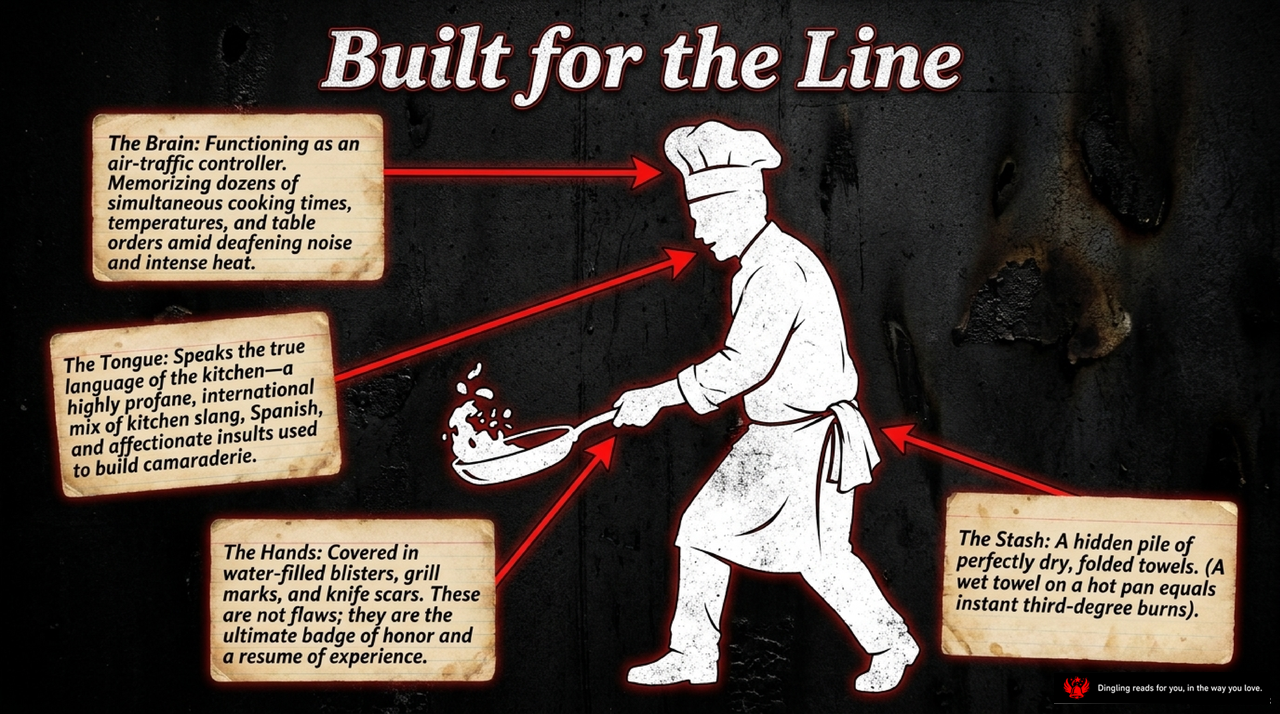
Let’s talk about what it means to be built for the line— that chaotic, high-pressure heart of the kitchen where every second counts. First off, your brain’s gotta act like an air traffic controller: memorizing a dozen cooking times, temperatures, and table orders all at once, while tuning out the deafening clatter and sweltering heat. It’s not just about remembering— it’s about juggling everything without dropping a single plate or burning a steak.
Then there’s your tongue. It’s not just for tasting; it’s for speaking the kitchen’s secret language. We’re talking a wild mix of profanity, kitchen slang, maybe some Spanish, and those affectionate insults that actually build camaraderie. Polite small talk doesn’t fly here— you bond over “cabrone” or “chúpame un huevo” like it’s a handshake. It’s our way of saying we’re in this together.
Your hands? They’re gonna get beat up. Blisters filled with water, grill marks, knife scars— but these aren’t flaws. They’re badges of honor, a resume of every shift you’ve survived, every dish you’ve nailed. I’ve got a 4-inch callus on my right index finger from 27 years of holding a knife, and a twisted pinky from a blender accident— every mark tells a story of the line.
And don’t sleep on the stash: that hidden pile of perfectly dry towels. A wet towel on a hot pan is instant third-degree burns, so we guard those dry ones like gold. They’re our first line of defense against the heat and chaos.
Being built for the line isn’t just about being tough—it’s about being part of a team that’s got each other’s backs. The line tests every part of you, but if you can hang? There’s no better place to feel alive. It’s where the magic happens, one scar, one swear word, one perfectly timed dish at a time.
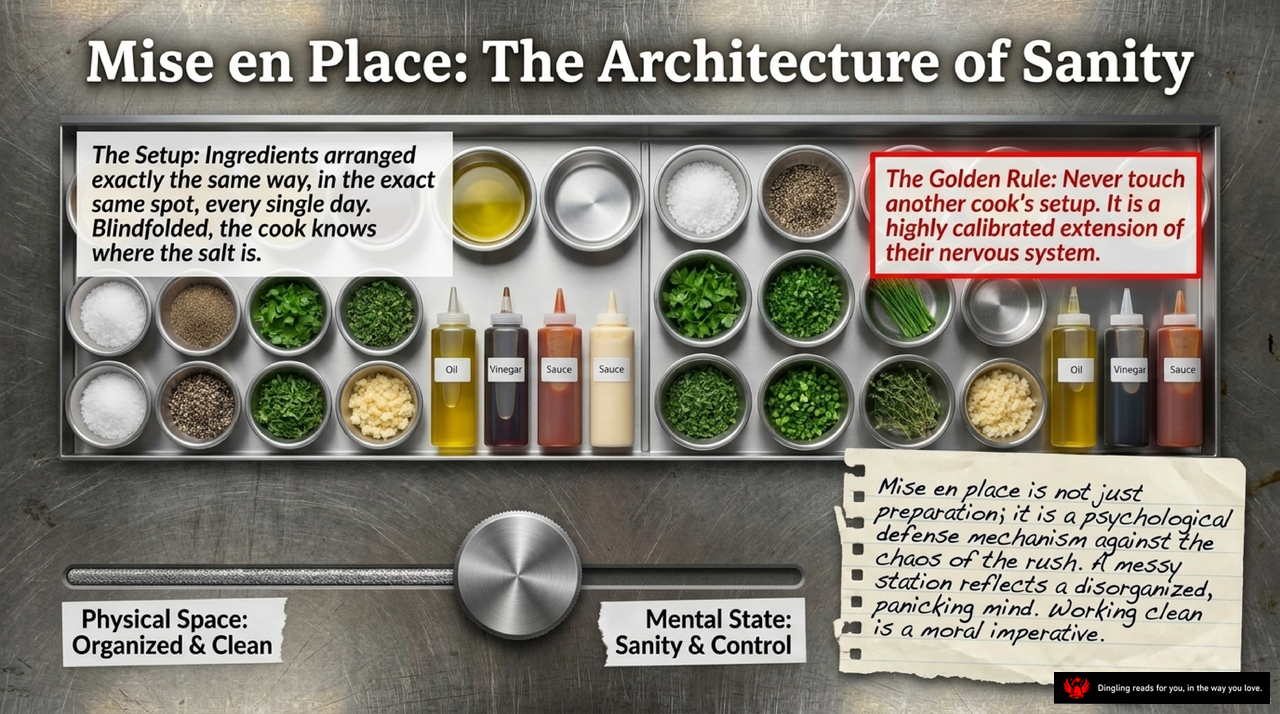
Let’s talk about mise en place—you know that fancy French phrase chefs love to drop, but it’s way more than just chopping veggies ahead of time. It’s the architecture of sanity in a kitchen, plain and simple.
First, the setup: ingredients arranged exactly the same way, in the exact same spot every single day. Think about it—blindfolded, a cook should still know where the salt is. That’s the kind of muscle memory we’re building here. And then there’s the golden rule: never touch another cook’s setup. It’s a highly calibrated extension of their nervous system—mess with it, and you’re asking for a fight (or at least a very icy stare).
Why does this matter so much? Because your physical space—organized and clean—directly ties to your mental state: sanity and control. A messy station isn’t just an eyesore; it reflects a disorganized, panicking mind. Mise en place isn’t just preparation—it’s a psychological defense mechanism against the chaos of the rush. Keeping your space clean isn’t optional; it’s a moral imperative.
I’ve seen chefs call each other out mid-rush: “Hey, your station looks like your brain right now—fix it!” Because they know disorganization leads to burned dishes, missed orders, and total chaos. When every ingredient is in its place, you’re not wasting time searching; you’re in the zone, focused on what matters: making great food.
So next time you walk past a chef’s station and see every jar, bowl, and knife perfectly positioned—remember, it’s not just about being neat. It’s their way of holding onto control when the kitchen is screaming and orders are piling up. That’s the magic of mise en place: it turns chaos into calm, one perfectly placed ingredient at a time.
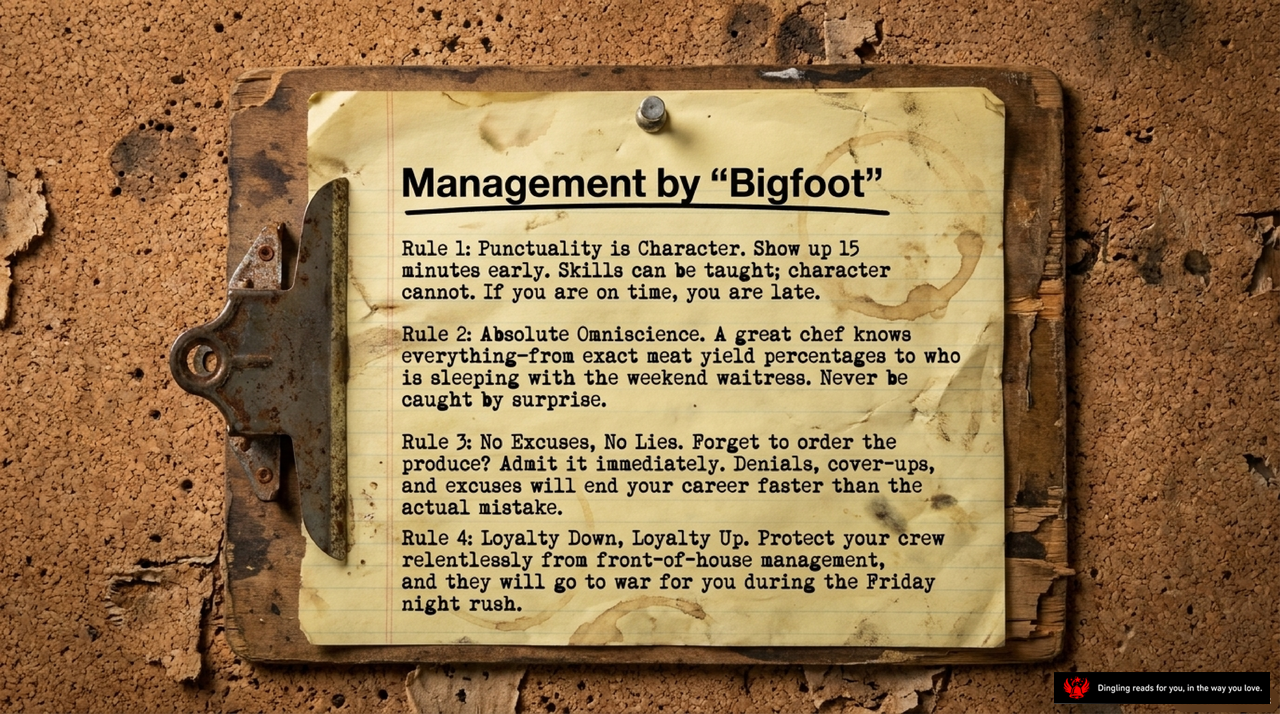
Let me tell you about this legendary figure I worked with—they called him "Bigfoot." His management style was rough around the edges but dead effective, and he lived by four hard-and-fast rules that stuck with me forever.
First rule: Punctuality is Character. Show up 15 minutes early. If you’re on time, you’re late. Bigfoot didn’t mess around here. Miss a shift without a real, honest reason? You were gone. But if you called and told the truth—even if it was from a wild night you couldn’t shake—he might cut you some slack. He always said skills can be taught, but character? That’s something you either have or you don’t.
Second rule: Absolute Omniscience. A great chef knows everything—from exact meat yield percentages to who’s hooking up with the weekend waitress. Bigfoot was obsessed with details. He’d track every chef’s fish fillet yield: Mike got 62.7% from snapper, so he got the snapper job. He never wanted to be caught off guard—like, ever.
Third: No Excuses, No Lies. Forget to order produce? Admit it right away. Denials or cover-ups? They’ll end your career faster than the mistake itself. One waitress tried to lie about a delayed flight—Bigfoot checked, found out she was fibbing, and fired her on the spot. Honesty was non-negotiable.
Fourth: Loyalty Down, Loyalty Up. Protect your crew relentlessly, and they’ll go to war for you during the Friday night rush. Bigfoot had these doormen from the former presidential guard—he trained them to fix pipes, electrical stuff, anything to skip hiring expensive pros. When they got stuck in a sewage tunnel (too fat to squeeze through a bend), he grabbed me (skinny enough to crawl in) to help. And when we were burnt out, he’d surprise us with warm jackets or nice watches—right when we were about to quit. That’s how he kept people loyal, through thick and thin.
Bigfoot was a tough son of a gun, but those rules? They made sense. They built a team that didn’t just work together—we had each other’s backs. And that’s the kind of management that sticks with you, long after you leave the kitchen.
Let me tell you about my wild Tokyo adventure and what it taught me about being a chef. Back in 1999, I thought my risky days were over—until my Les Halles partners sent me to Japan to fix their Tokyo branch. Imagine a 6'3" guy crammed into a tiny, spotless kitchen with low hoods, surrounded by French, Japanese, Sri Lankan, and Burmese chefs all speaking French. We had to adapt everything: smaller portions for Japanese diners, local ingredients that cost a fortune, and even teaching them how to use truffle oil properly. No runners here—we had to hand dishes directly to the bar, and the cold station manager would lead the team in a welcome chant that kept scaring the jet-lagged me.
But Tokyo’s food scene blew my mind. My buddy Philippe took me to this tiny sushi bar in Roppongi with a fish-shaped sign. We ate octopus tentacles, live clam innards, and the most amazing tuna belly I’ve ever tasted. The chef just kept bringing more until we were stuffed. And don’t even get me started on Tsukiji Market at 4:30 a.m.—mountains of fresh fish, no bad smells, just pure ocean freshness. I ate sushi for breakfast and bought fancy Japanese knives for my sous chefs back home.
If you’re thinking about becoming a chef, let me hit you with some real talk. This isn’t a 9-to-5 gig—no weekends off, no family vacations, and no respect until you earn it. First off, learn Spanish—most kitchen crews speak it, and you’ll need it to communicate. Show up on time, no excuses. Don’t lie, don’t steal, and don’t blame others when things go wrong. And for God’s sake, keep a sense of humor—this job will break you if you don’t laugh through the chaos.
I met this chef Scott Bryan who changed my whole perspective. He’s a Brooklyn kid who worked his way up, studied in France, and now runs Veritas. His kitchen is quiet but precise—no yelling, just focused work. He doesn’t care about fame; he just wants to make perfect food that pairs with wine. That’s the kind of chef I respect.
Looking back at my 27 years in kitchens, my hands tell the story—calluses from holding knives, a twisted finger from a blender accident, scars from oyster shucks. But I still love it. There’s nothing like nailing a perfect油封鸭 or seeing a customer’s face light up when they take that first bite. Yeah, this job takes its toll, but it’s worth every scar. I’ll stay in the kitchen until they drag me out.
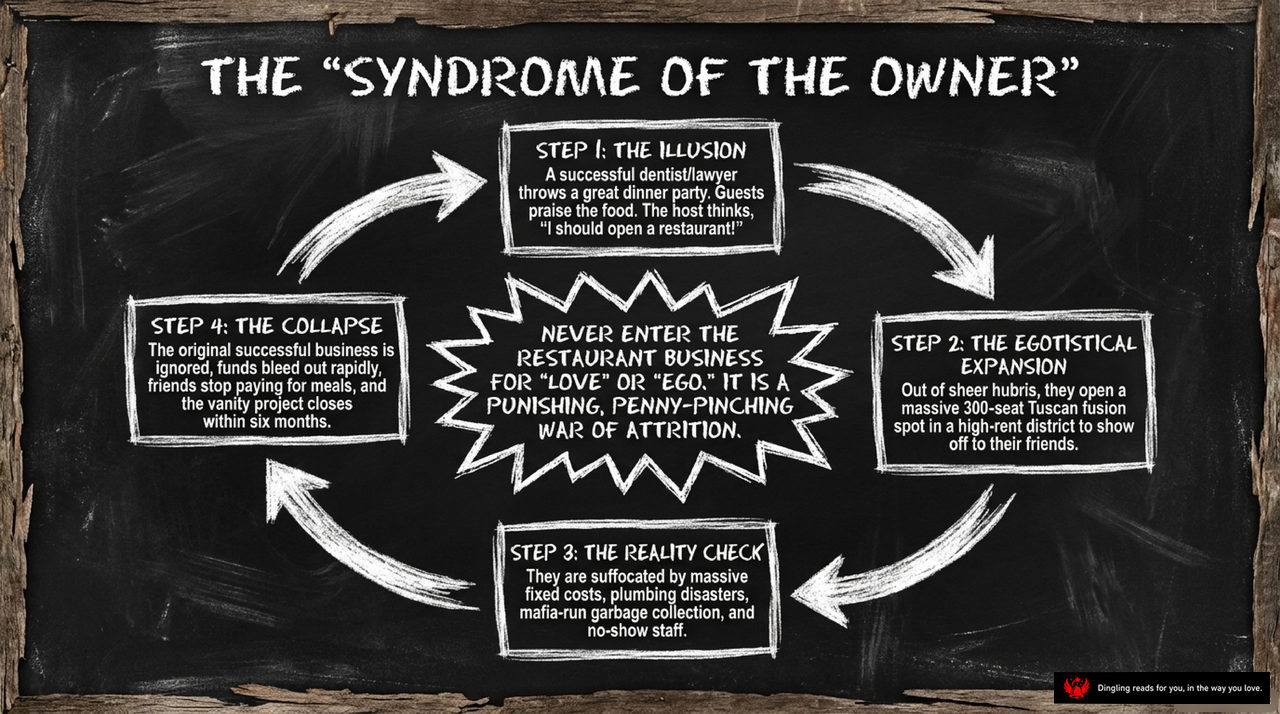
Let’s dive into this thing called the "Syndrome of the Owner"—that sneaky, often destructive urge people get to open a restaurant for all the wrong reasons.
First up, the illusion. Imagine a successful dentist or lawyer throws a dinner party, friends gush over the food, and suddenly they’re thinking, “Hey, I should open a restaurant!” They’re starry-eyed, fixated on the fun of hosting, not the gritty work behind every plate.
Then comes the egotistical expansion. Fuelled by that initial praise, they go all in: a fancy 300-seat Tuscan fusion spot in a high-rent area, just to show off to their pals. No thought to margins or daily chaos—just pure ego.
But reality hits like a brick wall. They get suffocated by massive fixed costs: rent, utilities, supplies. Then the unexpected piles on: plumbing disasters, sketchy garbage collection, staff no-shows. The dream fades fast—it’s now a grind.
And finally, the collapse. Their original successful business gets ignored, cash bleeds out quickly, friends stop coming (and paying), and before six months are up, the whole vanity project shuts down.
Here’s the hard truth: Never enter the restaurant business for love or ego. It’s a punishing, penny-pinching war of attrition. Stats say only one out of five restaurants recoup their investment—so think twice before trading your stable career for a chef’s coat and a lease. This isn’t a hobby; it’s a brutal business.
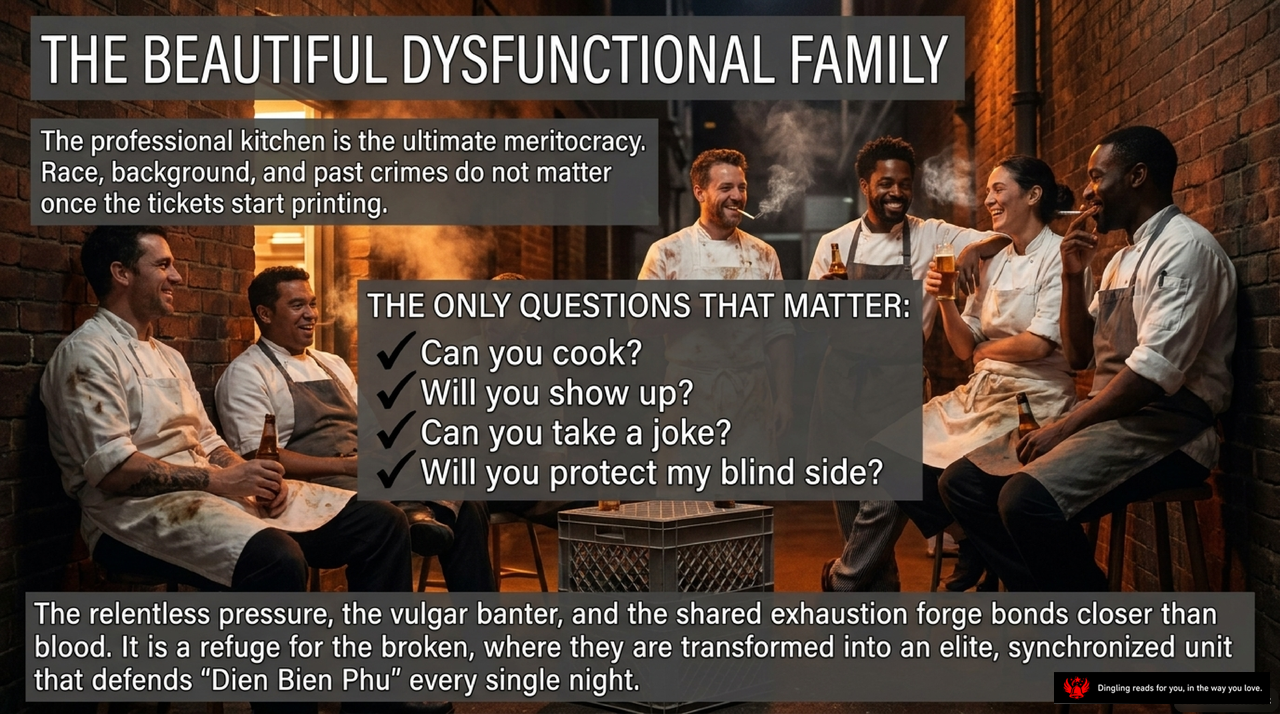
The professional kitchen—let’s cut to the chase: it’s the ultimate meritocracy. Once those order tickets start rolling out, none of the usual noise matters. Your race? Irrelevant. Where you came from? Doesn’t count. Even the mistakes you made back in the day? They’re forgotten the second the first pan hits the stove.
So what *does* matter? Let’s list the only questions that count. First: Can you cook? Obvious, right? But then there’s: Will you show up? Every shift, no excuses—rain, shine, or a hangover that feels like a truck hit you. Can you take a joke? Because the banter gets rough—we’re talking vulgar, unfiltered, and if you can’t laugh it off, you’re out. And most importantly: Will you protect my blind side? In this chaos, your team is your family. You watch their back when they’re swamped, and they watch yours.
All that relentless pressure, the crude jokes, the shared exhaustion that makes your bones ache at the end of the night? It forges bonds tighter than blood. This place is a refuge for the broken—people who didn’t fit in anywhere else. But here? We turn into this elite, synchronized unit. Every night feels like we’re defending Dien Bien Phu—fighting to keep the kitchen running, to get every plate perfect, to make it through together.
I’ve seen it a thousand times: a chef raises an eyebrow, and the sous chef grabs the right sauce without a word. We don’t need to yell (okay, sometimes we do) but we get each other. It’s dysfunctional as hell—there’s yelling, there’s mess, there are days we want to walk out. But it’s beautiful too. Because when it clicks? There’s nothing like it.
So if you’re thinking about stepping into this world, know this: it’s not for the weak. But if you can cook, show up, take a joke, and watch your team’s back? You might just find the most loyal family you’ll ever have. And that’s the magic of the beautiful dysfunctional kitchen family.
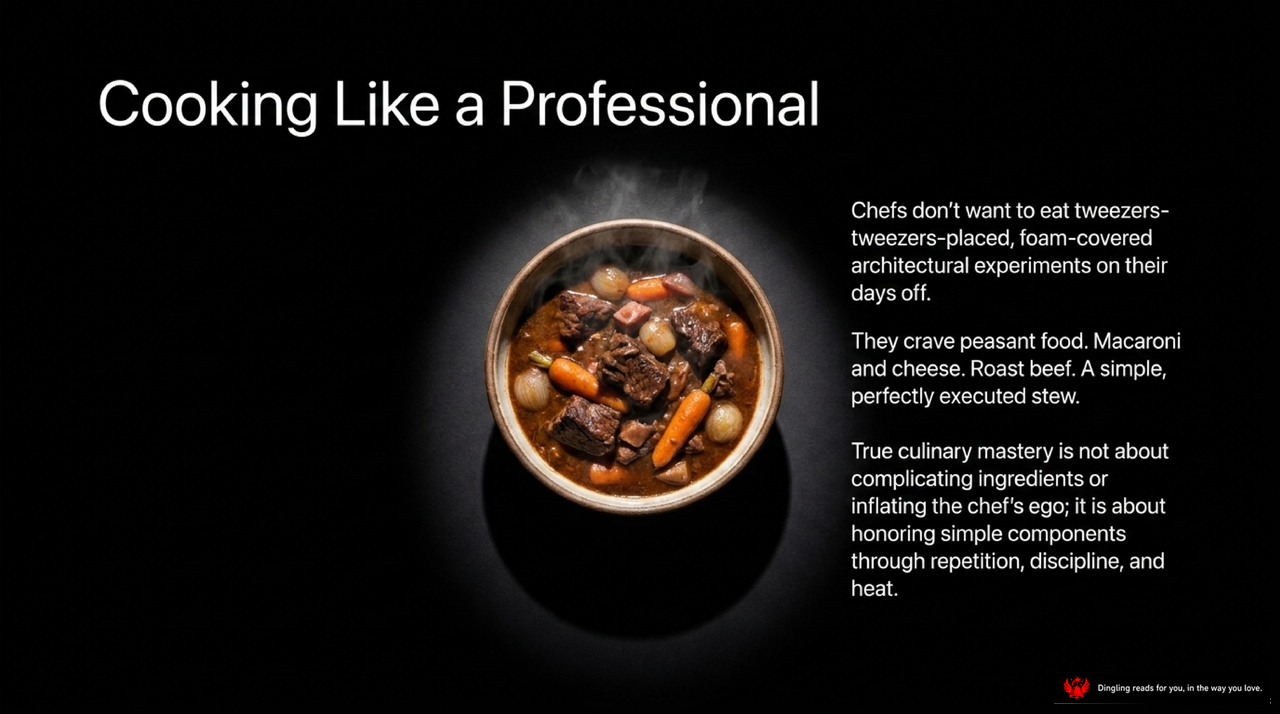
Let’s dive into what it really means to cook like a professional. You might picture top chefs chowing down on those fancy, tweezered dishes with foam and weird architectural garnishes on their days off—but nope, that’s not us. When we’re out of the kitchen, we crave the good stuff: creamy mac and cheese, roast beef with a crispy crust, or a stew that’s been simmered slow and steady, no frills needed.
True culinary mastery isn’t about overcomplicating ingredients or feeding your ego. It’s about doing the simple things over and over until they’re perfect. Like how I’ve held a knife for 27 years—my right index finger has a 4-inch callus from gripping it so tight, and my left thumb has a scar from a dumb mustard jar accident. Those marks aren’t just injuries; they’re proof of repetition, of showing up every day to get better.
It’s about discipline too: keeping your station spotless, knowing exactly when to turn the heat up or down, not cutting corners. I remember watching Tyron in Mario’s kitchen years ago—his hands were covered in blisters and scars, and I thought, “That’s what a real chef looks like.” Now my hands look just like his. And when I make a stew or a steak, it’s not about being flashy. It’s about honoring the simple components—meat, veggies, heat—through all that time and effort. That’s the secret to cooking like a pro: it’s not the fancy tools or the complicated recipes. It’s the repetition, the discipline, and the respect for the basics.
So next time you think professional cooking is all about the glitz, remember: the best chefs are the ones who can make a perfect stew or a great mac and cheese, because they’ve put in the work to get those simple things right. That’s what cooking like a professional really is.
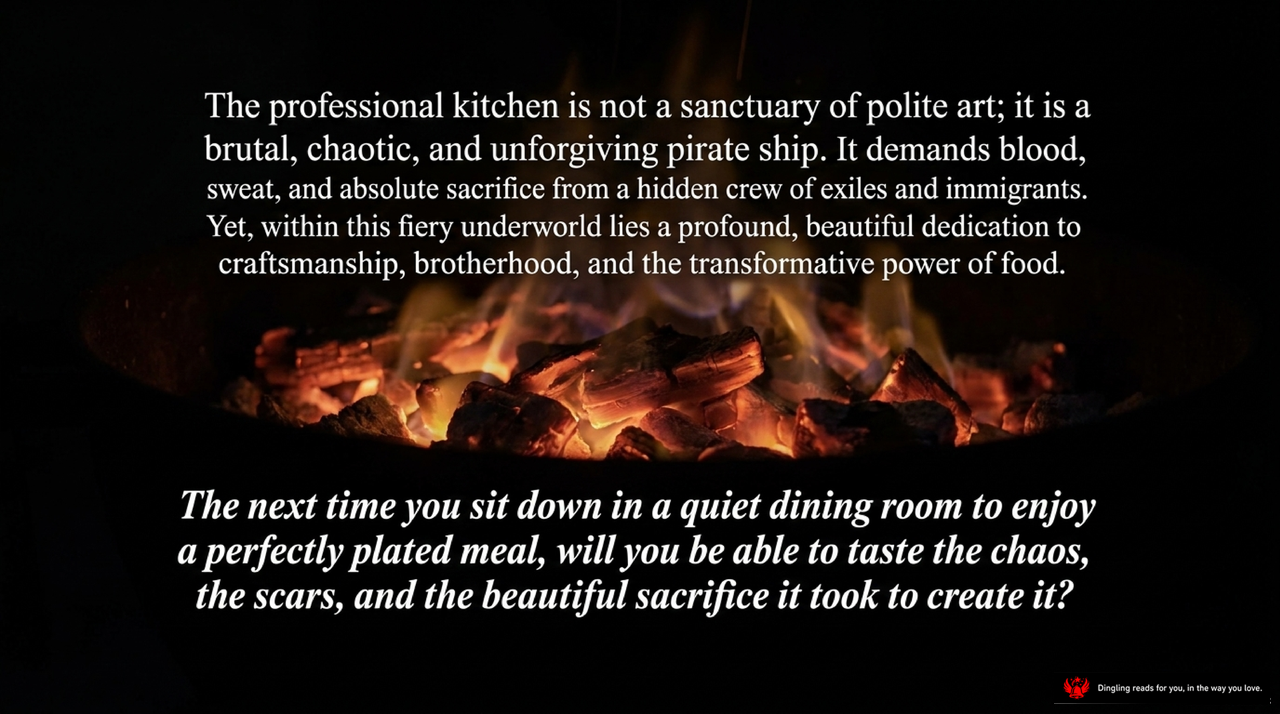
Let’s cut to the chase with what this slide says: The professional kitchen isn’t some polite sanctuary of art—it’s a brutal, chaotic, unforgiving pirate ship. I know this firsthand. Back in my early days at Dreadnaught, the kitchen was exactly that: a crew of exiles, immigrants, former prisoners, all scrapping to get through the shift. We’d work 14-hour days, hands submerged in greasy water, yelling over the roar of stoves, dealing with broken fryers and last-minute orders that made your heart race. It demands blood—literally, from the knife cuts and grill burns—and sweat that drips onto the floor before the first customer even walks in.
But here’s the flip side the slide highlights: beneath all that chaos, there’s a profound beauty. Those exiles and immigrants? They’re the backbone of the kitchen. I remember an Ecuadorian line cook who could make fresh pasta so tender it melted in your mouth, or a former prisoner who turned into the best grill cook I ever worked with—his steaks were perfect every time. Brotherhood? It’s the guy next to you passing a clean towel when your hands are burning, or covering your station when you need a 2-minute break to catch your breath. And the food? It’s transformative—like that oyster I ate as a kid that changed my life, or the way a perfectly made dish can turn a stranger’s bad day around.
I’ve got scars all over my hands from this life—cuts, burns, calluses from holding pans for hours. Those are the marks of the sacrifice the slide talks about. So the next time you’re sitting in a quiet dining room, staring at that perfectly plated meal—take a second to think. Can you taste the chaos? The scars on the chef’s hands? The sacrifice of the crew who got up at 5 a.m. to prep? That meal isn’t just food—it’s a story of struggle, dedication, and the quiet magic that happens in the fiery underworld of the kitchen.