


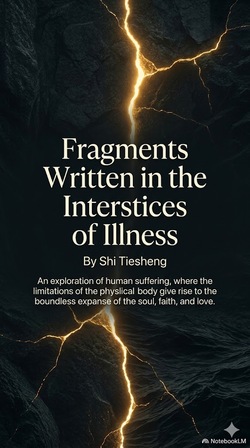
This book taught me that dignity isn't something you earn by being productive or able-bodied, but an inherent part of being human that deserves protection regardless of our physical limitations.
Your Review
This book taught me that dignity isn't something you earn by being productive or able-bodied, but an inherent part of being human that deserves protection regardless of our physical limitations.

Shi Tiesheng reframes disability as a malfunctioning airplane, turning his broken body into a lesson on finding purpose within strict limits rather than fighting them away.

Shi Tiesheng compares his body to a broken airplane, which helped him stop seeing his disability as an enemy punishing him. Instead, he viewed it as a machine with parts that had simply worn out, reshaping the specific role he was assigned in life. This airplane metaphor was the foundation for his entire understanding of fate, showing that we cannot swap our parts but must find meaning within the role we are given, turning his limitations into a lens that focused on what truly mattered rather than fighting against the unchosen circumstances that defined his existence.
A powerful reminder that dignity comes from being human, not from fitting society's narrow idea of normal or productivity.
The interpretation of Tiesheng's airplane metaphor for his broken body and the distinction between resignation and acceptance really changed how I see my own limitations. It shifts the focus from asking why suffering happens to discovering what it can teach us about our lives. His rejection of transactional faith where we bargain for miracles is also a powerful reminder that true dignity comes from being human rather than being productive. This perspective helps me understand that my unchosen circumstances don't define my worth, but can actually become the very things that give my life unique depth and meaning if I choose to lean into them instead of fighting against them.
The airplane metaphor for his body makes his limitations feel like assigned roles rather than cruel punishments.
The author compares his broken body to a malfunctioning airplane, which helped him stop seeing his disability as a punishment and instead view it as a specific role in life's story. This shift from feeling like a victim to accepting his assigned part was the most powerful lesson for me, showing that dignity comes from within rather than from fitting society's narrow definition of success or ability. Even though I cannot face such extreme physical challenges, understanding that we all receive unchosen scripts and must learn to write meaning into them rather than constantly bargaining with fate for a better outcome changed how I view my own struggles and limitations, reminding me that true faith and love are about growth and connection, not transactional rewards.

Hard read but deeply honest about life's limits.
Shi Tiesheng reframing disability as an airplane metaphor helped me stop seeing my limitations as punishments and start viewing them as specific roles in life's story.
This book changed my view on faith and love by showing how true connection requires stripping away our defenses to see each other's messy souls without expecting anything in return.
Shi Tiesheng turns his paralyzed body into a malfunctioning airplane, a brilliant metaphor that helps him stop fighting his fate and start finding meaning in every broken part.
Powerful read.
A beautiful reminder to find meaning in unchosen paths.

Shi Tiesheng turns his sickbed into a classroom, teaching us that accepting limitations isn't resignation but an active choice to find meaning where we are.

Shi Tiesheng compares his body to a broken airplane, which helped him stop seeing his disability as an enemy and instead view it as just worn-out parts.
Shi Tiesheng rejects transactional faith, arguing true belief is about becoming a better person through humility and daily acts of kindness rather than bargaining with the divine for specific rewards like health or wealth, which transforms his suffering into a path for deep human connection and growth instead of a source of despair or resentment.

Shi Tiesheng turns his paralyzed body into a metaphor for a broken airplane, teaching us that our limitations are not punishments but assigned roles that give our lives unique depth and meaning when we stop fighting them.

Shi Tiesheng turned his pain into purpose through writing. It changed how I see my own struggles.
Shi Tiesheng reframed his broken body as a malfunctioning airplane, turning his limitations into a unique lens for finding meaning.
The airplane metaphor for his legs and kidneys really helped me understand how he reframed his limitations as assigned roles instead of punishments.