
Fate: Complete Chapter-by-Chapter Summary
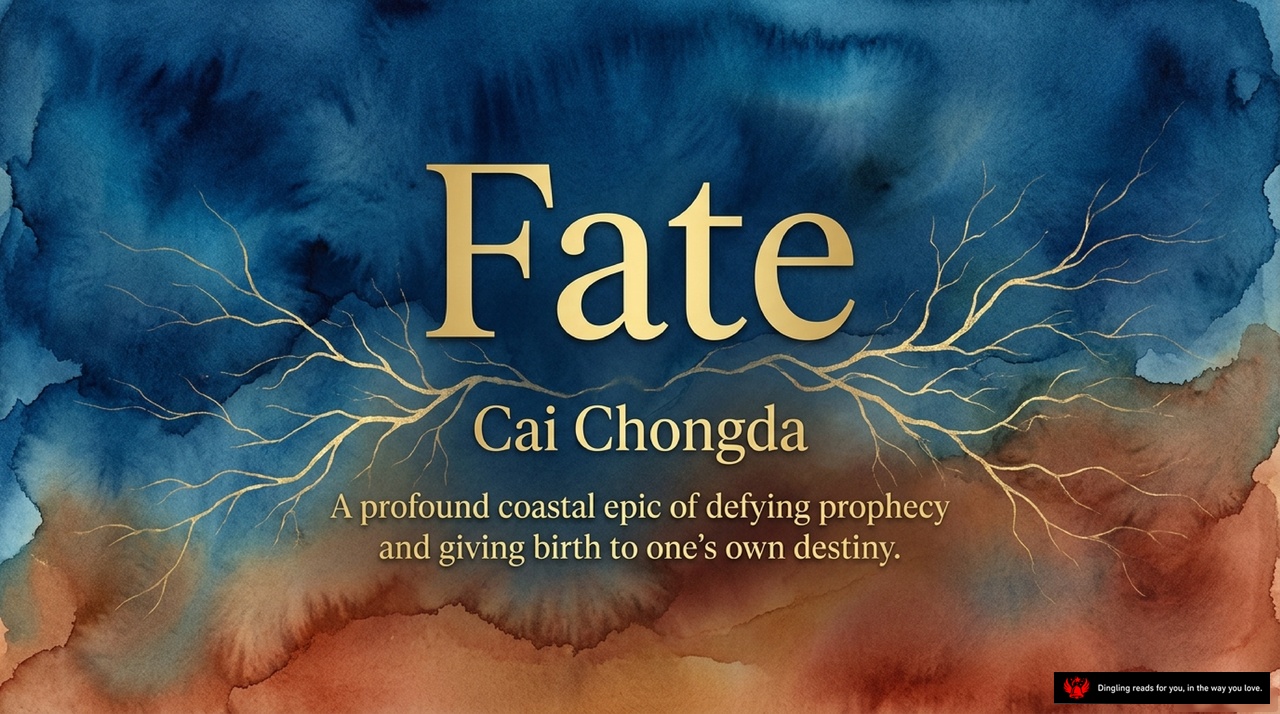
Welcome to our book club session on "Fate" by Cai Chongda. Today, we dive into the very beginning of this profound coastal epic.
The cover sets a powerful tone: a deep blue ocean merging with earthy reds, symbolizing the clash between the sea and the land, fate and choice. The golden roots spreading across the background represent the tangled, invisible threads of destiny that bind us all.
The book describes itself as a story of defying prophecy and giving birth to one's own destiny. It begins with the narrator's grandmother, "A-Tai," who lived to be ninety-nine. From her sixties, she treated death not as a terrifying end, but as a subject to be studied in advance. She would visit neighbors on their deathbeds, asking blunt, almost clinical questions about the sensations of dying, turning a taboo into a practical lesson.
This book isn't just about death; it's about how we prepare for the inevitable. Through the eyes of A-Tai and her family, we see a culture where death is a final exam everyone must pass, and where understanding the rules of this final journey is the only way to truly live.

Standing at the edge of her ninety-nine-year journey, A-Tai never expected to live this long. Now, she finds herself at the very estuary of her life, looking back at the winding streams of her past. For thirty years, she eagerly participated in a local death observation group, patiently waiting for a death that constantly missed its appointment with her. In that seaside town, death wasn't feared; it was treated as the final, most important lesson of life, a technical skill everyone must master to complete their story. She stood at the estuary of destiny, looking back at every stream of her life, watching the tides of memory rise and fall until she finally found her place.

In this coastal Minnan town, death isn't a sudden tragedy, but a meticulously choreographed graduation. Think of it as the final exam in life, a path that offers comfort instead of terror. The journey begins with "The Skin," or *Pi Nang*—the raw fear of the physical body breaking down. But the story moves quickly to "The Graduation." This is where the family moves the bed to the central hall under the gaze of the gods, treating death not as an end, but as a highly technical, communal exam that everyone must pass. Finally, we reach "The Harvest." Here, death is conceptualized not as a tragedy, but as a sweet potato falling naturally and effortlessly from the ripened vine. It's a quiet, dignified conclusion, a harvest of a life well-lived, waiting to be gathered.
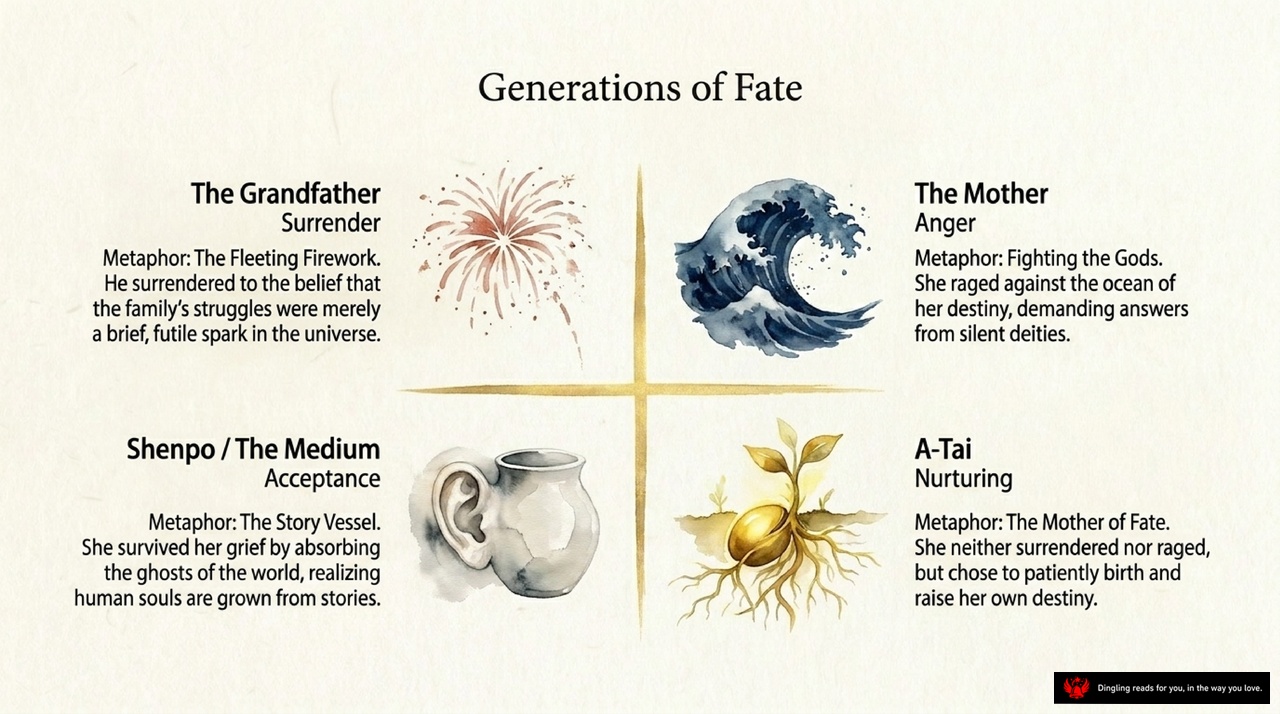
The Grandfather chose surrender, viewing the family's struggles as merely a fleeting firework—a brief, futile spark against the vast universe. But his daughter, The Mother, refused to accept that silence. She raged against the ocean of her destiny, fighting the gods and demanding answers from the silent deities. She was the one who asked the hard questions about death, treating it not as a taboo, but as a technical skill to be mastered. She joined the "Death Observation Group," watching others pass away with a fierce, almost angry curiosity. When her husband finally left her, she didn't just grieve; she confronted the temple gods, shouting her questions until she exhausted all her anger. It was only after she burned through her rage that she began to understand that living meant accepting the story, even when the gods remained silent.

At fifteen, A-Tai received a devastating prophecy from a local medium: "You will die with no sons, no grandsons, and no one to bury you." It was a crushing sentence, a curse that felt like a death sentence before she even took her first breath. But instead of crumbling, her response was fierce. She looked at that dark future and declared, "Then I'm angry. I'm going to pick a fight with Fate." That moment defined her life. She refused to be a victim of circumstance. Instead of waiting for the end, she chose to build a legacy that would outlast her. Through sheer will, she eventually defied the curse, raising two sons and a granddaughter who would one day bury her with honor. Her story is a powerful reminder that while we cannot control the hand we are dealt, we always have the power to rewrite the rules of the game.
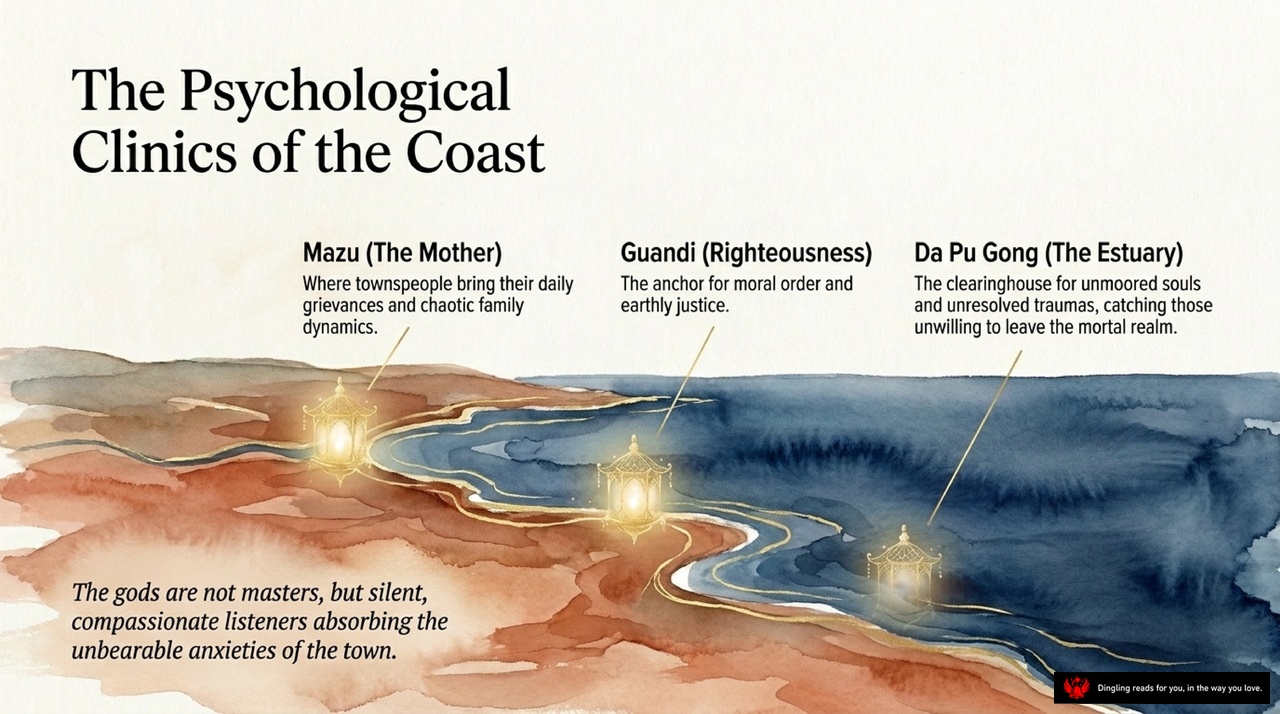
The gods on the coast aren't masters ruling over us; they are silent, compassionate listeners, quietly absorbing the unbearable anxieties of our town. Think of them as three psychological clinics scattered along the shoreline, each offering a different kind of healing for the human soul.
First, there is Mazu, known as The Mother. This is where townspeople bring their daily grievances and chaotic family dynamics. It's the place for emotional release, a sanctuary for the messy, tangled threads of our personal lives where we can finally speak our truths.
Moving further out, we find Guandi, the embodiment of Righteousness. He serves as the anchor for moral order and earthly justice. When the world feels chaotic or unfair, Guandi stands firm, reminding us of the boundaries between right and wrong, offering a sense of stability in a shifting world.
Finally, at the very edge where the land meets the sea, lies Da Pu Gong, The Estuary. This is the clearinghouse for unmoored souls and unresolved traumas. It catches those unwilling to leave the mortal realm, offering a gentle transition for those who are stuck, lost, or simply not ready to let go.
In this coastal worldview, death isn't something to fear. Instead, the gods help us navigate the difficult journey of living and eventually leaving, ensuring that no soul is left behind in the dark.

Look at this powerful image: a single, delicate ballet shoe floating in the void, while a massive, churning ocean of dark waves crashes on the right. This visual perfectly captures the tragic story of A-Tai's mother. She spent her later years marching from temple to temple, furiously interrogating the gods, desperate to find a reason for her suffering. She was completely "stuck" in her fate, trying to fight the ocean of destiny by treating it as an enemy to be defeated, rather than a current to be navigated.
Here is the hard truth she learned too late: fighting fate without acceptance only anchors you to the trauma. By refusing to flow with life's inevitable currents, she remained trapped in the past, exhausting herself in a battle she could never win. Her story is a stark reminder that true freedom often begins not with resistance, but with the courage to accept where we are.
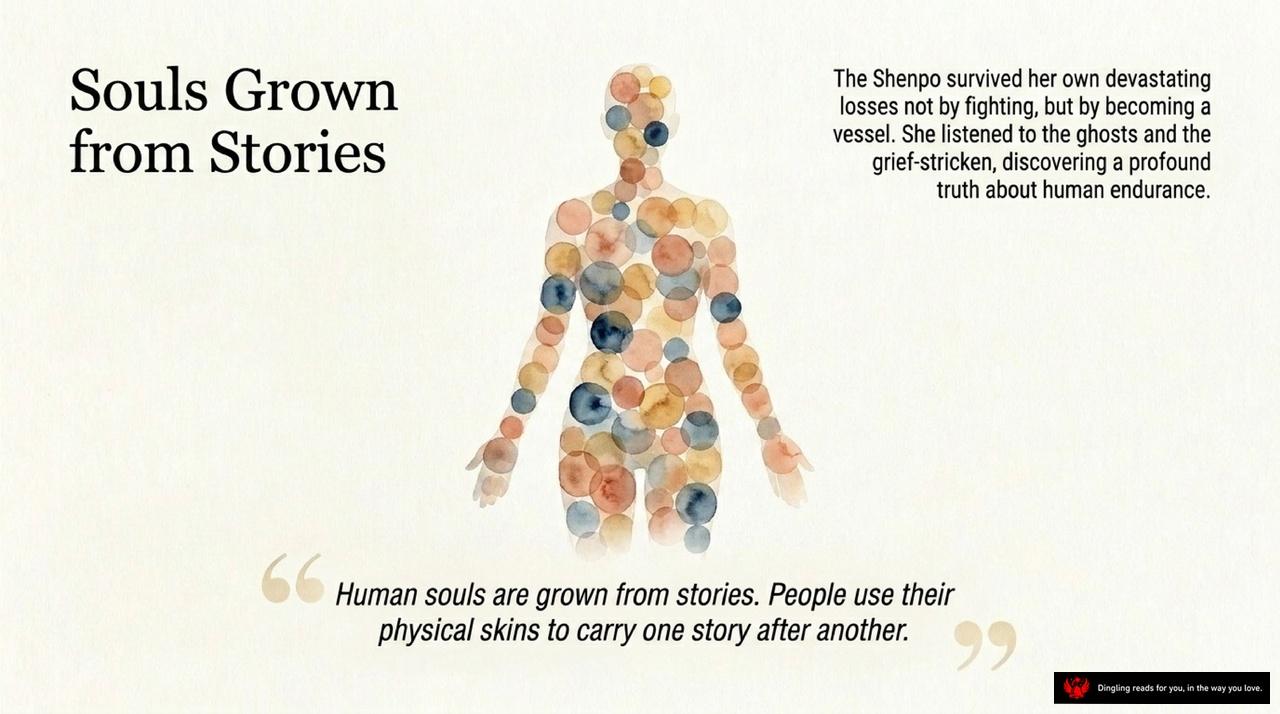
The Shenpo survived her own devastating losses not by fighting, but by becoming a vessel. She listened to the ghosts and the grief-stricken, discovering a profound truth about human endurance. As the slide reminds us, human souls are grown from stories. People use their physical skins to carry one story after another. Just like the Shenpo, who eventually joined the "death observation group" herself, learning that death isn't something to fear, but a final lesson to be completed. She realized that even when life feels like a chaotic storm, you can still find a way to anchor yourself, turning your own skin into a canvas for the stories of others.
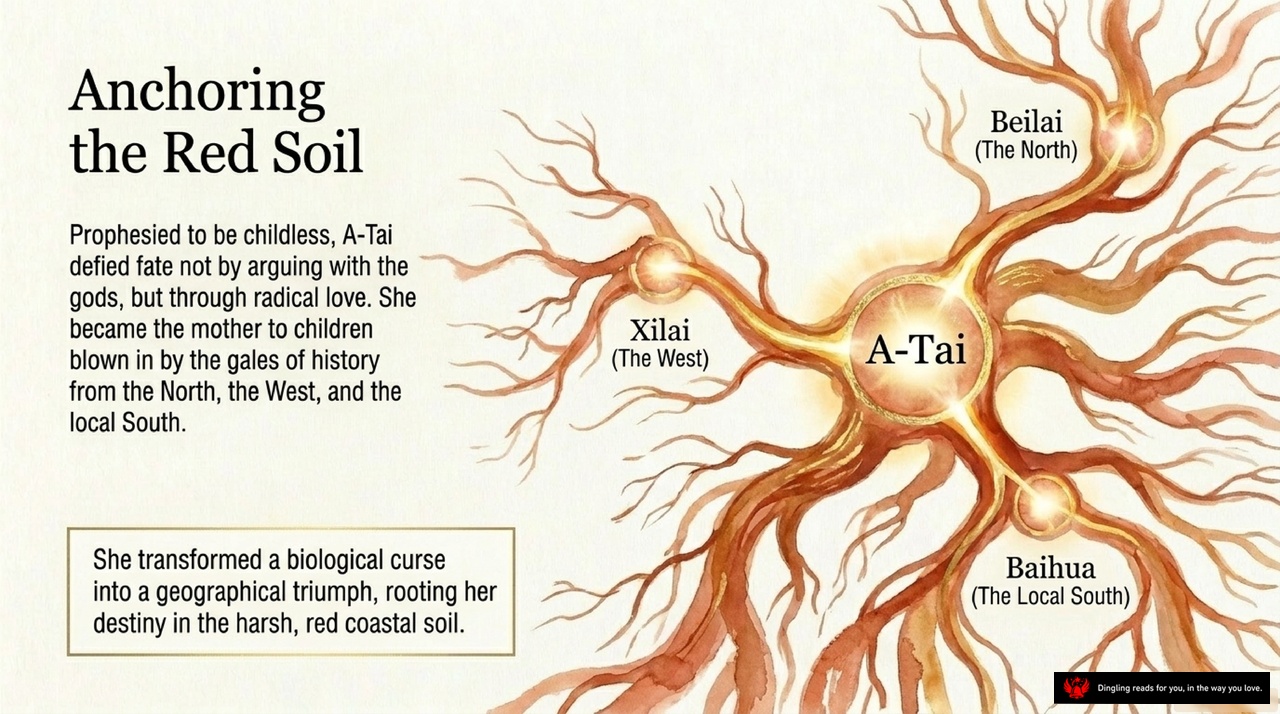
Anchoring the Red Soil isn't just about surviving a harsh landscape; it's about rewriting your own destiny through radical love. Look at this diagram: at the very center sits A-Tai, the anchor holding everything together. While prophecy claimed she would be childless, she didn't argue with fate or beg the gods. Instead, she defied it by becoming a mother to everyone the world tried to push away.
The roots radiating from her represent the children blown in by the gales of history—from the North, the West, and the local South. She transformed a biological curse into a geographical triumph, taking root in that harsh, red coastal soil where others might have seen only death. In a place where life was often fragile, A-Tai proved that destiny isn't something that happens to you; it's something you build, one act of fierce, unwavering love at a time.

Look at this image. It shows a sweet potato plant pushing its way up through cracked, dry earth, while its vital roots and tubers stay safely hidden underground. This is the wisdom of the soil, and it mirrors the life of A-Tai.
The coastal land is salty, hard, and unforgiving. Yet, like the sweet potato, A-Tai learned to survive by burying the most vital parts of herself deep underground, safe from the turbulent storms above. She didn't focus on the fragile flowers above ground; she chose endurance over elegance. She focused on her hidden roots.
This teaches us a powerful lesson about reciprocity. The harsh land only yields survival to those who patiently and tenderly massage their love into it. You cannot force growth in difficult times; you must nurture the unseen foundation until the strength is ready to break through. A-Tai understood that true survival isn't about looking pretty on the surface, but about building a deep, resilient core that can weather any storm.
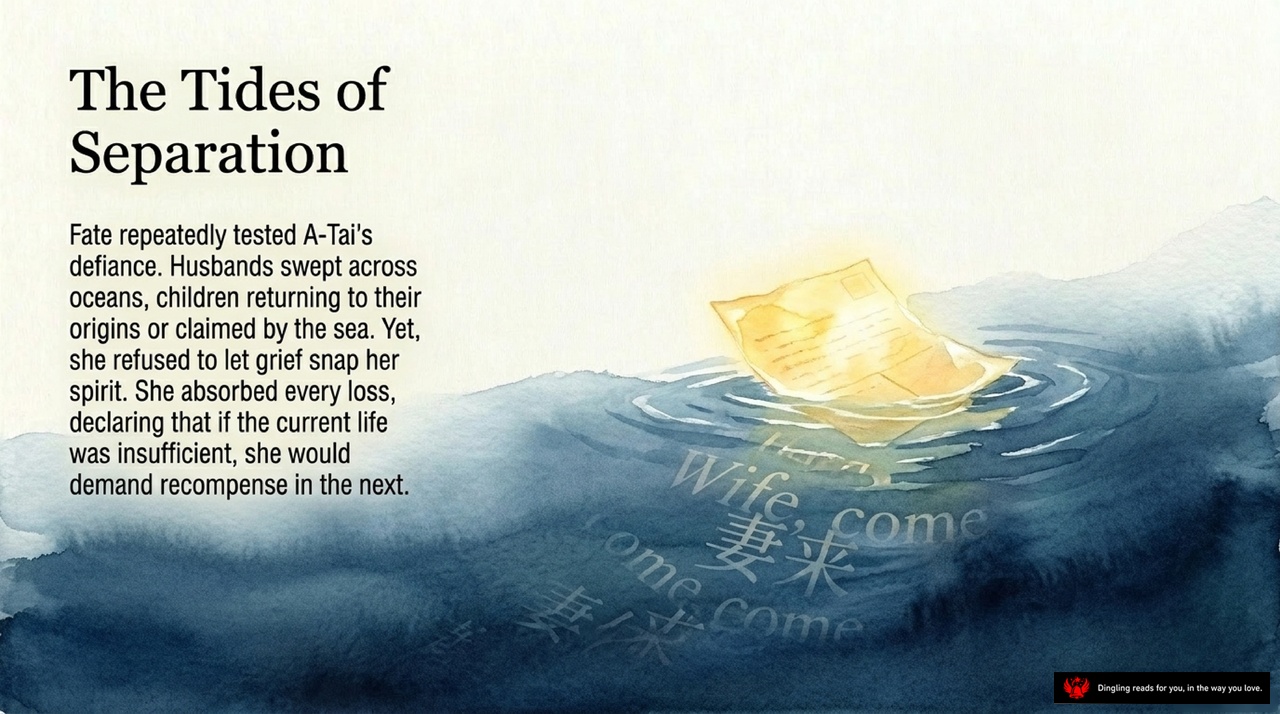
Fate is relentless, testing A-Tai's defiance time and again. Husbands were swept away by the tides, children returned to their origins or were claimed by the sea. Yet, she refused to let grief snap her spirit. She absorbed every loss, declaring that if the current life was insufficient, she would demand recompense in the next. Just like the tides that rise and fall without asking permission, life takes what it needs and leaves behind only the memory of the waves.
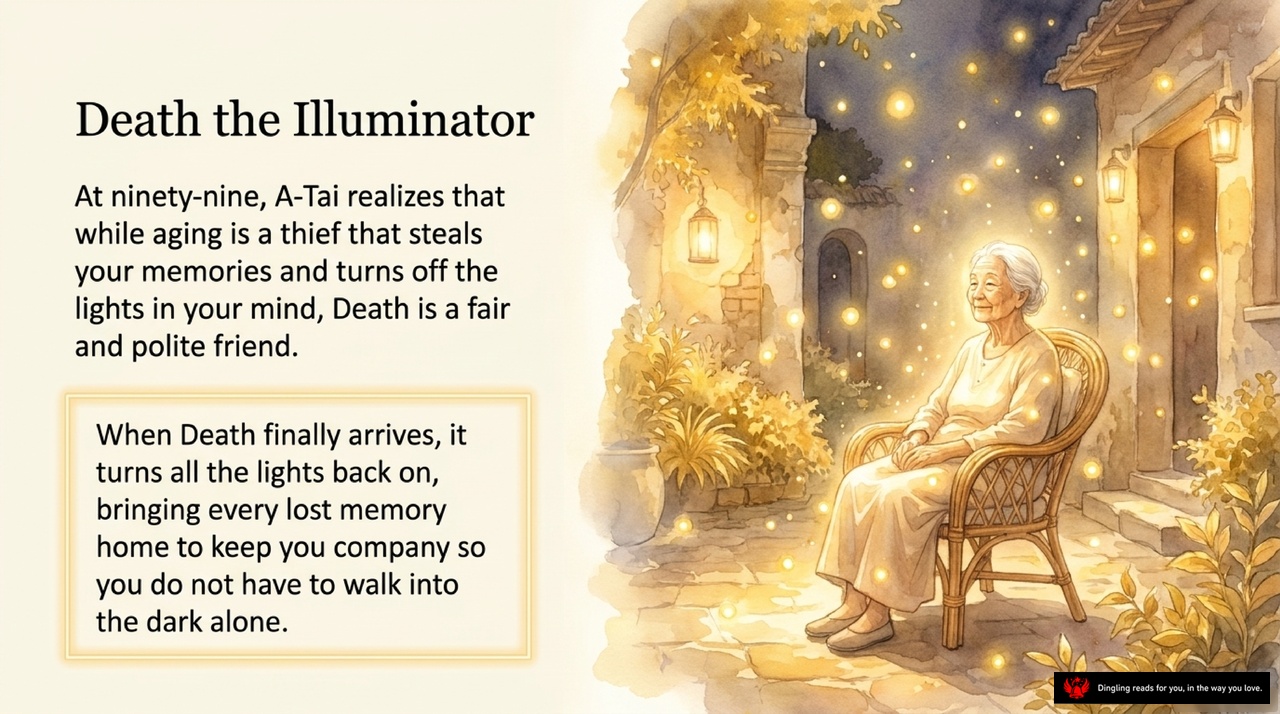
At ninety-nine, A-Tai finally understands the true nature of aging. While growing old feels like a thief stealing your memories and dimming the lights in your mind, she sees Death not as an enemy, but as a fair and polite friend. When Death finally arrives, it doesn't leave you in the dark. Instead, it turns all the lights back on, bringing every lost memory home to keep you company. This way, you never have to walk into the darkness alone.
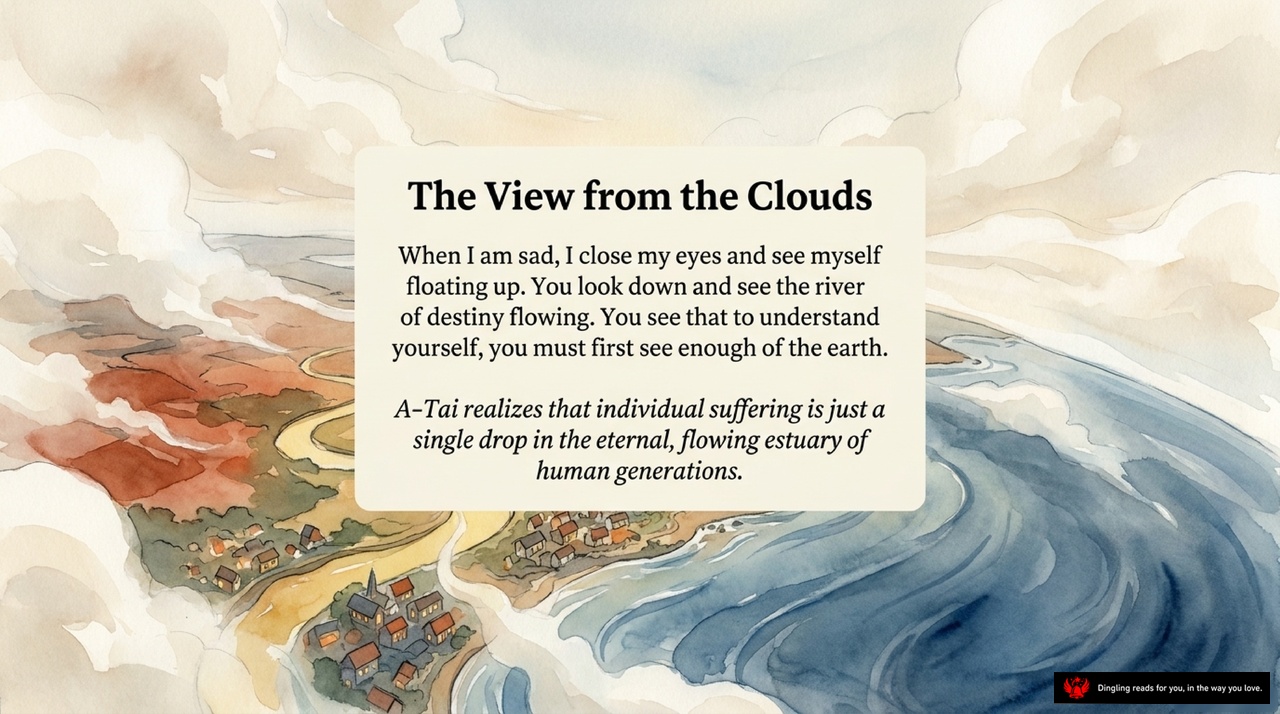
When we feel overwhelmed by life's struggles, it helps to shift our perspective. Imagine closing your eyes and floating up into the clouds, looking down at the river of destiny flowing beneath you. From this high vantage point, you realize that your personal pain is just a single drop in the vast, eternal estuary of human generations. This is the view A-Tai taught me: to truly understand yourself, you must first see enough of the earth. By lifting your gaze above the immediate storm, you find peace in the realization that you are part of something much larger and enduring.

Look at this image. We see a golden sun, representing fate, cradled by the swirling waves of life and the tangled roots of our own choices. This visual perfectly captures the book's ultimate revelation about A-Tai's century-long journey.
The text tells us that fate is not a cruel master to be feared, nor an enemy to be defeated. Instead, fate is a child. It will throw tantrums, cause pain, and break your heart—just like any difficult child. But here is the profound truth: as long as you refuse to stop living, you remain its mother.
This means we must patiently, painfully, and lovingly give birth to our own destiny. We don't wait for fate to save us; we nurture it through our resilience. Even when life feels chaotic and overwhelming, our choice to keep going gives us the power to shape our future. We are not victims of circumstance; we are the creators of our own story.

From a cursed fifteen-year-old girl destined to die alone, A-Tai transformed into the mother of children from every corner of the earth, rooting herself in the harsh coastal soil and peacefully greeting death as an old friend at the estuary of a century.
If fate is not a master to be feared, but a child waiting to be born from your choices, what kind of destiny are you currently raising?