
Fate: Reader Reviews & Ratings

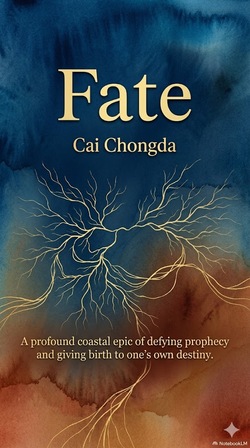
Fate
Loading…

Fate

Cai Chongda

Write a Review

Your Review

0/500

Other reviews

23 total
Marc95

The way Ah Mu fought against her father's control by rejecting suitors until the thirtieth stranger, Huang Youhai, felt incredibly powerful and showed how small choices can rewrite destiny. Her refusal to accept the quiet life assigned to her, even after he vanished at sea, highlighted the book's core theme that fate isn't a fixed script but a series of brave decisions made when the world tries to dictate your path, turning her grief into strength rather than letting it break her spirit forever.

Jorge

The way Ah Mu fights the gods feels so raw and real, showing how anger can actually be a powerful tool for women trying to rewrite their own broken stories against impossible odds.

Katelyn2

Ah Tai calling her grandson to die felt really sharp.

Calvin

The way three generations of women fight to rewrite their own stories against a fixed coastal fate feels incredibly powerful and deeply moving.

Winston66

The women in this book made small brave choices that built their own destiny instead of letting fate control them.

Jed3

Ah Mu chose to fight the gods rather than stay silent in her grief after losing her husband.

Gayle9

Ah Tai treating death like a practical skill feels very real and grounded, not scary at all.

Grady23

Ah Tai treating death like a daily skill instead of something scary really changed how I view end-of-life conversations and made me feel less afraid.

Vicki

Cai Yehao found peace by listening to ghosts instead of hiding her gift from the world.

Alexa

The way the book treats death as a normal skill feels really refreshing and honest.

Guy

The way Ah Tai treats death like a daily skill really changed how I see end-of-life conversations. It feels so practical and calm compared to our modern fear. Rating 4.

Kirby3

Ah Tai calling her grandson to say she is ready to die.

Tucker

Ah Mu's decision to reject thirty suitors before accepting the stranger from the mountains felt like a powerful, quiet rebellion against the strict coastal traditions that tried to control her life.

ZZ

These women proved that even when life pushes you toward an end you still hold more control than you think.

Adele

Ah Mu's quiet rebellion by rejecting thirty suitors felt like a powerful, small act of defiance against her father's control and the town's expectations.

Goldie

Ah Tai treating death like a practical life skill she learned. Her death-watching group asked neighbors about numbness starting in toes and seeing people who've gone before. This contrasts sharply with modern American culture where we wrap death in euphemisms and hide it behind hospital curtains. We fear the unknown, but she spent her life studying it, turning fear into curiosity. Her obsession isn't just a quirk; it's rooted in a family where every woman fought to write their own story. Her daughter refused the sea-dependent life, clinging to anger after her husband vanished. The granddaughter raised adopted children through war and famine. These women didn't accept fate as a fixed script. They tore it up and rewrote it with small brave choices. In a world feeling powerless against pandemics and uncertainty, this book reminds us that destiny isn't something that happens to you. It's something you build one day one choice one conversation at a time. Ah Tai made peace with fate, but her family spent their lives fighting for life. Together they teach us that even when life pushes you toward an end, you hold more control than you think.

Hubert

Ah Mu yelling at gods while walking with bound feet felt like raw, unfiltered anger against a fate that refused to let her be free.

Diego

The daughter chose to adopt starving boys and built a new family based on love not bloodlines.

Tommy

The story of three women rewriting their fates through small, brave choices moved me deeply. Ah Tai treats death as a practical skill she mastered by sitting with dying neighbors, asking hard questions about numbness and seeing the past, rather than hiding it like modern culture does. Her daughter Ah Mu initially rages at gods after her husband vanishes, but she eventually learns to listen to others' grief stories at funerals instead of fighting alone, showing how connection heals. The granddaughter adopts starving children and fights to walk her polio-stricken daughter, proving that even when fate feels fixed, every choice we make adds up to a new path. This book reminds us that destiny isn't something that happens to us, but something we build day by day, turning trauma into fuel for resilience and love.

Gael

A hauntingly intimate story of three generations of women.