


George smashing the WESCAC screens instead of answering binary questions perfectly mirrors my frustration with LinkedIn algorithms forcing me into neat boxes that erase my messy, real identity.
Your Review
George smashing the WESCAC screens instead of answering binary questions perfectly mirrors my frustration with LinkedIn algorithms forcing me into neat boxes that erase my messy, real identity.

George's farm life feels so suffocatingly real.

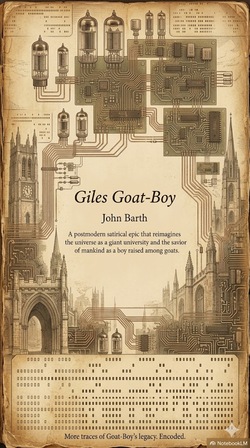
George's journey from a goat farm to New Tammany College mirrors our struggle to break free from societal labels and performative success. The absurd rituals like the rotating door entrance exam and the Scapegoat Grille perfectly satirize how modern institutions, from corporate HR tools to college admissions, force us into narrow boxes that erase our messy, authentic selves. When George smashes WESCAC's binary exam screens instead of answering 'male' or 'female', he rejects the meritocratic lie that compliance equals worth. This radical act reminds us that true freedom comes from refusing to play the game designed to keep us trapped in cycles of endless striving for status. Barth's critique of identity as a tool of control feels more relevant today than in the 1960s, as we face algorithms and databases that categorize us into manageable groups. By embracing ambiguity and rejecting the pressure to define ourselves in one sentence, we can reclaim our power to shape our own narratives instead of letting systems dictate our value. George's story teaches us that failure to conform is actually the only real success.

This goat boy story really hits home about social labels.

Funny but deep critique of labels.

George's journey from a controlled farm to a chaotic college perfectly mirrors how we struggle to break free from the rigid labels and systems that define our success today, making his rebellion against arbitrary rules feel deeply personal and validating for anyone tired of fitting into preordained boxes that erase their authentic selves.

George smashing the WESCAC screens perfectly mirrors my own frustration with LinkedIn algorithms forcing me to curate a fake version of myself instead of being messy and real.

The idea that failure is actually the real success hit me hard while reading this chaotic story.

George smashing the WESCAC screens rejected labels I face daily. The farm's rigid rules trapped him just like our social media personas trap us today. He refused binary choices like male or female, challenging systems that force us into neat boxes. This mirrors how we perform curated versions of ourselves online to gain approval. Barth critiques this performative success perfectly. George's act of breaking the clock and borders shows true freedom comes from rejecting arbitrary labels. We often hide our messy selves behind perfect profiles. The book validates our quiet frustration with these constraints. It reminds us that authentic identity defies simple definitions. George's journey from goat-boy to rebel feels deeply personal. His final choice to care for goats instead of seeking titles resonates. We should define success on our own terms, not by algorithms. The absurd campus rituals highlight how society judges conformity. George's defiance offers a path to reclaiming our real selves. This postmodern tale hits hard in our algorithm-driven age. We must stop shrinking to fit others' expectations. Embracing ambiguity is the only way to true freedom.
This book feels like a mirror for my own life online.

George smashing the screens feels like rejecting modern labels. The absurd campus rituals mirror our real-life pressure to fit into boxes, whether that's a perfect LinkedIn profile or a curated social media persona. Barth uses the goat-boy metaphor to show how systems trap us, making us perform versions of ourselves rather than being authentic. Even though the ending is bleak with George returning to the farm, his refusal to play the game offers hope that we can define our own worth outside rigid rules. The satire hits hard for anyone tired of performative success.

The book critiques modern identity systems through George, who rejects rigid labels like goat or human. WESCAC forces binary choices, but George smashes the screens instead. This mirrors our struggle with social media algorithms and job titles that shrink us. Barth shows true freedom comes from refusing to fit predefined molds. George's final act of destroying the exam system validates his messy, authentic self. We all face systems demanding conformity, yet George proves failure to conform is the real success. His journey reminds us that identity is constructed, not inherent, and we must define our own worth beyond arbitrary boxes. This postmodern satire remains powerfully relevant today.

George smashing the exam screens instead of answering made me realize that rejecting labels is the only true way to define who we actually are.

I felt really trapped by the labels this story describes.

Smashing the WESCAC screens felt like the perfect act of rebellion against a world that only wants us to fit into neat boxes and pretend we are happy all the time.

George smashing the exam screens feels like a powerful rejection of labels.

George escaping the farm made me think about breaking my own social media rules.

This absurd farm story perfectly mirrors our modern need to fit labels.
George smashing the screens rejects binary labels.

The book uses a goat boy escaping a farm to show how society forces us into boxes. George faces a college system called WESCAC that demands he pick binary labels like male or female or goat or human. Instead of answering, he smashes the screens because real identity is messy and can't fit into simple yes or no questions. This mirrors our modern life where social media and job titles force us to perform a perfect version of ourselves while hiding our true, complicated selves. Barth argues that trying to pass these rigid tests is actually a failure, while those who refuse to play by the rules and embrace their ambiguity are the ones who truly pass. The story feels absurd with rotating doors and border disputes over power lines, but underneath the humor lies a serious critique of how algorithms and bureaucracies dehumanize us by sorting people into manageable groups. George rejects the meritocracy that says success comes from conforming, showing instead that freedom comes from defining your own worth outside of any system. Even though the ending is ambiguous with George returning to a broken farm, the message is clear: you don't need a title or a passing grade to be valid. Just like the founder's scroll says, the flunked are the ones who actually passed by refusing to be defined. This novel reminds us that every time we check a box on a form or curate a photo for likes, we are letting others control our identity. Breaking free means accepting that we are neither fully goat nor fully human, but something unique that no system can box. It is a powerful reminder to stop performing and start being authentic in a world obsessed with standards.