


This book perfectly explains why I feel so anxious about my future and lack of job security.
Your Review
This book perfectly explains why I feel so anxious about my future and lack of job security.

Reading this at 7 a.m. felt like the book started before I even opened it.

Reading this felt like seeing my own life reflected back at me in a mirror.

The idea that our freedom is actually just an illusion because we have no safety net to catch us when things go wrong really hit home.


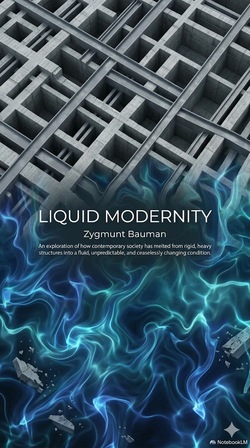
Bauman's breakdown of the shift from solid structures to liquid modernity perfectly explains why I feel so anxious about my temporary gig work and unstable identity today.

Bauman argues that digital tech lets capital move instantly, making jobs temporary and forcing workers into involuntary nomadism where they must constantly adapt to new environments without any stable support systems or fixed identities, creating a deep sense of anxiety because freedom without security feels like chaos rather than liberation for most people today.

The idea that freedom without security creates anxiety hit home when I realized my freelance gig could vanish overnight, proving Bauman right about liquid modernity's hollow promise.

Bauman explains how our temporary jobs and fluid identities create anxiety instead of freedom, making his liquid modernity concept feel deeply personal.

Bauman claims consumerism creates hollow communities by replacing deep bonds with temporary groups based on shared trends rather than mutual support or long-term commitment.

Bauman's distinction between solid and liquid modernity perfectly explains why my career feels so fragile. In the past, a job was a lifelong contract, often with a company that provided not just wages but a sense of belonging and a clear path forward. You could rely on your employer for health benefits, a pension, and even a defined social identity tied to your role. This created a predictable world where the future was manageable, almost predetermined by the institutions that acted as an iron cage. While that cage constrained freedom, it did offer safety. Now, however, everything has melted. Jobs are short-term contracts or gig work, relationships are temporary bonds with built-in exit clauses, and even our identities are fluid, requiring constant reinvention. Bauman argues this shift from a Fordist era to a liquid one was driven by capital's hunger for speed and digital technology, which allowed it to escape territorial constraints. This freedom, paradoxically, brings more anxiety because without fixed structures, every choice feels risky. We are forced into involuntary nomadism, constantly adapting to new environments with no collective safety net to catch us when we stumble. The result is a world where the promise of universal freedom is a cruel illusion for those without the resources to adapt, leaving millions trapped in precarity while elites enjoy a playground of endless opportunity. Understanding this framework helps make sense of the chaos, though finding a stable anchor in such a fluid world remains a profound challenge.

Everything is temporary now.

Bauman explains how digital tech lets capital move instantly, turning our stable lives into temporary chaos where we must constantly reinvent ourselves just to survive.

Bauman shows how digital tech lets capital move instantly across borders while workers stay stuck in one place, creating a deep inequality where only the mobile elite truly enjoy freedom.

Liquid modernity makes sense now that my career shifted from a stable office job to unpredictable freelance gigs every few months.

Bauman perfectly captures how our 'freedom' is actually just anxiety in disguise, showing that without stable structures, every choice we make feels like a risky gamble with no safety net.

I feel seen by this analysis of my unstable career path.

Bauman argues that digital tech and consumerism melted our solid social structures into a chaotic, fluid state where jobs, identities, and even relationships become temporary and disposable, leaving us as involuntary nomads forced to constantly reinvent ourselves without any safety net or fixed anchor, creating a paradox where having endless choices actually makes us feel more powerless and anxious than ever before because we lack the stable framework to give those choices real meaning or security against their consequences.
Bauman explains how digital tech and consumer culture melted our solid jobs into temporary gigs, leaving us anxious nomads who must constantly reinvent themselves without safety nets to rely on.

This short summary captures the core idea that modern freedom feels like chaos because stable structures have melted away completely.

Bauman explains how capital's speed melted our solid world, leaving us anxious nomads without safety nets or fixed identities to rely on.