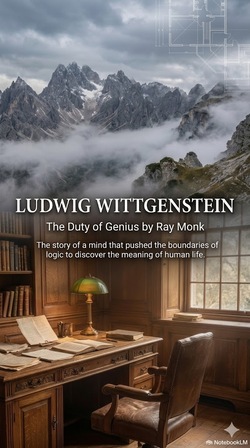
Ludwig Wittgenstein: Reader Reviews & Ratings

Ludwig Wittgenstein
Loading…

Ludwig Wittgenstein

Ray Monk

Write a Review

Your Review

0/500

Other reviews

40 total
Wilson27

This biography shows how Wittgenstein's childhood trauma and fear of inauthenticity drove his entire life, from rejecting his family fortune to eventually returning to the villages he once mistreated to apologize, proving that his philosophy was always a form of self-therapy rather than just abstract theory.

Hana

A powerful look at how childhood trauma shaped a genius.

Terry9

Monk explains how his childhood trauma shaped his later philosophy clearly. I felt moved by the description of his struggle to live honestly despite the pressure from his wealthy family and the tragic fate of his brothers. The way the book connects his personal pain to his shift from the rigid logic of the Tractatus to the more flexible idea of language games is very insightful. It makes sense why he rejected comfort and wealth, because for him, truth was more important than safety. Reading about his time teaching in the village and then apologizing to his former students showed me that his philosophy was not just abstract theory but a way to deal with real guilt and loneliness. I appreciate how the author shows that even a great thinker like Wittgenstein faced deep self-doubt and suicidal thoughts, which makes his final words about having a wonderful life feel even more earned and touching.

Sebastian99

A powerful look at how Wittgenstein's search for honesty defined his entire existence.

Kitty77

Truly inspiring story of honesty.

Doreen

This biography brilliantly connects Wittgenstein's childhood trauma with his later philosophy, showing how his father's cruelty shaped his relentless pursuit of truth and honesty throughout his life.

Chiara

Monk captures Wittgenstein's intense loneliness and his painful journey from seeking absolute order to embracing the messy reality of human life.

Tamara8

Monk explains how Wittgenstein turned his pain into philosophy. His shift from the rigid Tractatus to the fluid concept of language games shows his growth. The author details how he rejected his family's fortune to live authentically, even though it caused him loneliness. I saw how his early obsession with absolute truth crumbled when he realized certainty was an illusion. The story of him returning to his old teaching village to apologize to students was moving. It showed that he learned empathy later, even after being harsh. Monk connects his personal struggles to his ideas clearly. I understand now why he faced death without treatment, choosing integrity over comfort. This biography is a deep look at a genius who paid a high price for truth.

Colton

A compelling look at how personal pain shaped one of philosophy's greatest minds.

Norah

A quick read that perfectly summarizes his complex life and philosophical journey.

Palmer

Good read about how his family's tragedies shaped his need for absolute truth and control over his life choices.

Cade

Monk brilliantly connects Wittgenstein's painful childhood trauma with his later shift from rigid logic to fluid language games, showing how his personal struggle for authenticity shaped his entire philosophical journey.

Jorge7

Ray Monk captures the raw intensity of Wittgenstein's life, making his complex philosophical journey feel personal and deeply human rather than just an abstract history of ideas.

Fran8

Reading this biography, I saw how his rejection of wealth was a direct answer to the childhood question about lying. It showed me that for him, giving away his fortune wasn't just charity but a radical act of refusing to live a lie, even when it meant facing poverty alone. The way Monk connects his engineering years to his later philosophy is brilliant, explaining how he slowly shifted from seeking rigid logical order to embracing messy language games. This shift felt like watching him finally accept that certainty was an illusion, just as he accepted his own mortality at the end. Most importantly, the book shows that his harshness toward students wasn't just anger but a painful attempt to prove he wasn't still the privileged Viennese aristocrat he feared he was, making his eventual return to apologize feel like a true victory for his philosophy.

Ursula

A heartbreaking look at how loneliness fueled Wittgenstein's genius.

Gail27

Ray Monk brilliantly connects Wittgenstein's childhood trauma to his later philosophy, showing how his fear of inauthenticity drove him to reject his family's fortune and eventually his rigid logical systems. The narrative explains how his early belief in absolute truth, born from a need to control the chaos of his traumatic past, eventually crumbled under the weight of real human experience. Reading about his time as a teacher and his later shift to 'language games' felt like watching him finally accept that certainty is an illusion and that meaning comes from living with others, not from solving abstract puzzles. Monk's focus on the link between his personal suffering and his intellectual evolution makes this biography feel essential for anyone trying to understand how our past shapes our ideas about truth and reality.

Zoey77

Hard to read but really helps me understand his life.

Hector

The part about returning to apologize to former students shows real growth and humility.

Abby

Monk brilliantly connects Wittgenstein's childhood trauma to his philosophy, showing how his rejection of wealth and harsh teaching methods stemmed from a lifelong fear of living an inauthentic life, making the complex ideas feel deeply personal and grounded in real human struggle rather than abstract theory alone.

Gin

Monk explains how Wittgenstein's fear of inauthenticity drove him to reject his family fortune and later apologize to students he had punished years earlier.