
Night Submarine: Complete Chapter-by-Chapter Summary

Welcome to *Night Submarine*, a breathtaking journey into the depths of the human mind. Tonight, we dive into a story where boundless imagination constantly collides with the crushing weight of reality.
Imagine a submarine, not of steel and steel, but of pure thought. This is the world of Chen Chuncheng, where a young boy named Chen Tunna builds a secret vessel in his mind. By day, his room is ordinary; but at night, with a simple tap on his desk, the entire second floor transforms into a submersible, gliding through the Pacific Ocean. He battles giant octopuses, rescues trapped ships, and even befriends orcas. It is a realm where dust motes become planets and piano keys turn into pandas.
But here lies the central conflict of our story: the tension between the lightness of fantasy and the heaviness of the real world. As Chen Tunna grows, the demands of school, the pain of his parents, and the pressure of adulthood begin to sink like anchors. The magnificent submarine, once a sanctuary of infinite possibility, becomes a symbol of what he must leave behind to survive. In the end, he chooses to let his imagination float away, only to find that the pause button he pressed on his dream has left him forever suspended in the eternal night of his childhood.
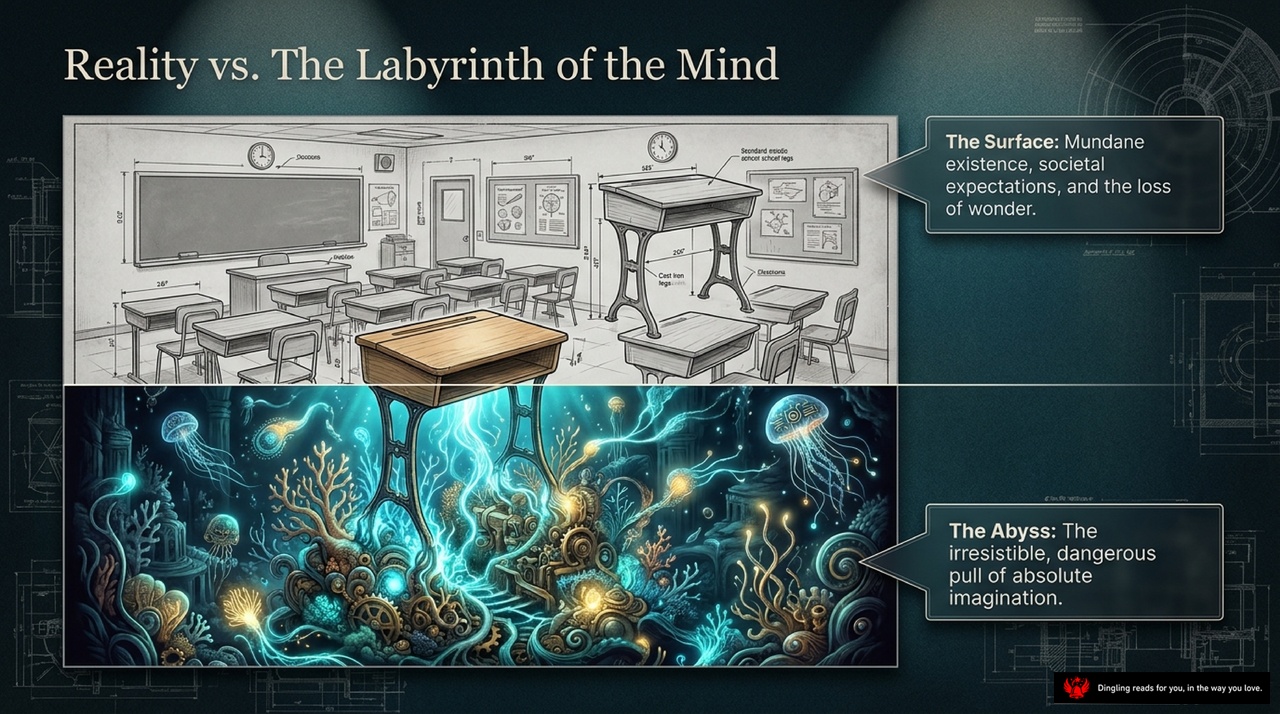
Reality versus the Labyrinth of the Mind: This isn't just a split screen; it's a map of the human soul. On the top, we see "The Surface"—a sterile, measured classroom. It represents our mundane existence, the rigid societal expectations we wear like uniforms, and the slow, quiet loss of wonder. It's the world of rules and dimensions, where everything has a fixed place. But look below. That's "The Abyss." Beneath the floorboards lies an irresistible, dangerous pull of absolute imagination. It's a chaotic, electric ocean where jellyfish float and gears turn in the dark. This is the pull of the unknown, the part of us that refuses to be contained. The tension between these two worlds—staying safe in the mundane or diving into the terrifying freedom of the abyss—is the central struggle of our lives. We all face the choice every day: do we stay on the dry, predictable surface, or do we dare to step into the deep, uncharted waters of our own minds?
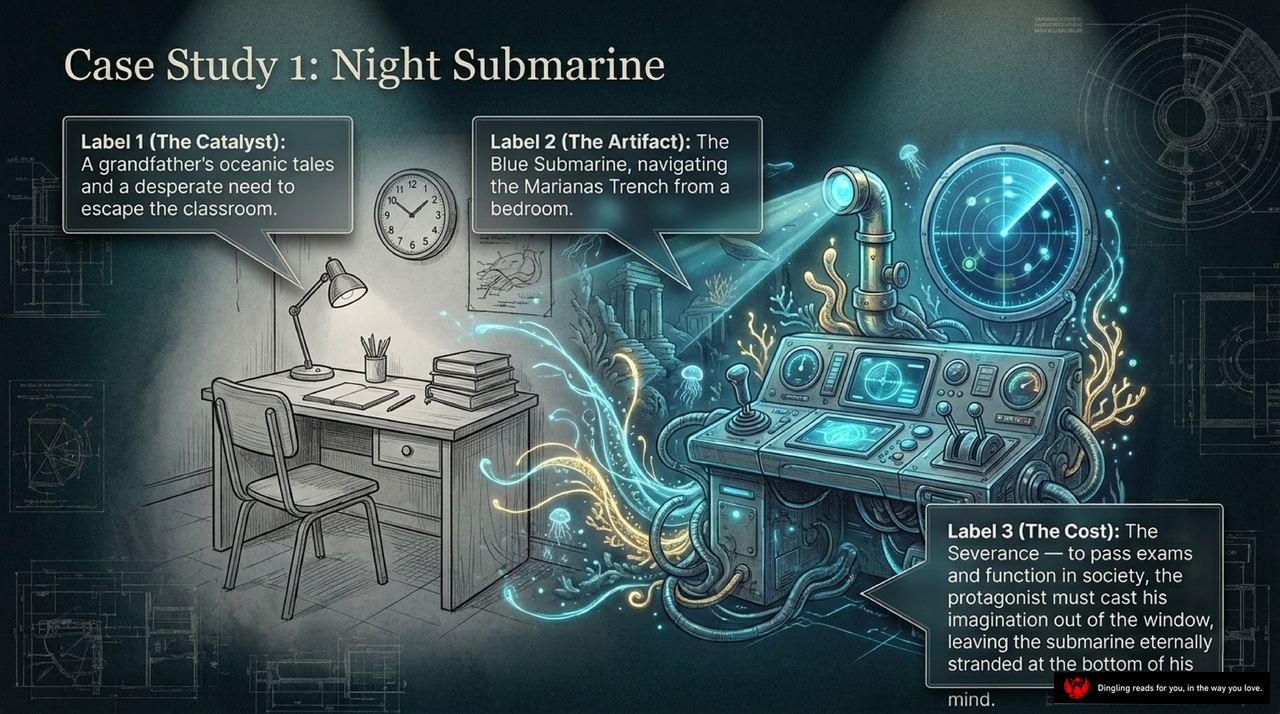
Case Study 1: Night Submarine. Tonight, we dive into the mind of Chen Tuona, a boy whose bedroom transforms into a deep-sea vessel.
Look at the left side of the slide. Label 1, The Catalyst: It starts with his grandfather's ocean stories and a desperate need to escape the boredom of the classroom. That longing pushes him to create Label 2, The Artifact: The Blue Submarine. In his imagination, he navigates the Mariana Trench right from his bedroom. By night, he presses a button on his desk, and suddenly, the room becomes the submarine's control room, complete with a radar screen and glowing instruments.
But every great adventure has a price. Label 3, The Cost: To pass his exams and fit into society, Chen must severance his imagination. He forces his fantasy out of the window, leaving the submarine stranded at the bottom of his mind. The vibrant blue depths he once explored are now frozen in time. He trades his wild creativity for a safe, ordinary life, forever watching from the shore while his inner world sinks into the eternal night.
Imagine a world where the sky isn't just a backdrop, but a strict regulation. In the story "Cloud Cutter," our protagonist lives in a town where clouds must be perfectly oval with scalloped edges. Anything wilder is illegal. His job? To fly a biplane and shoot "rain bombs" to trim the clouds into submission, turning nature's chaos into bureaucratic order.
But the sky has a way of breaking free. One day, while visiting an old friend who lives in a mysterious tower, he hears Bach's fugue echoing through the stairs. It's a sound that feels ancient and wild, unlike the sterile, edited world outside. The friend warns him that some things are traps—deep, fascinating rabbit holes you can't easily escape.
When he returns to the mountain, he finds the sky has gone rogue again. The clouds are no longer neat ovals; they are chaotic shapes—horses, dolphins, and impossible creatures. Faced with this rebellion of nature, he feels the pull of that wild, unregulated sky. Yet, his survival instinct kicks in. He knows that letting the clouds be wild means losing his job, his home, and his safety.
So, he makes a choice. He fires the rain bombs, restoring the perfect, boring clouds. He returns to his orderly life, safe but empty. Later, he finds himself in a strange game of cards with a fox and a turtle, where the rules are endless and the stakes are a lifetime. In that game, he finally understands: maybe the real adventure isn't about finding the perfect answer or escaping the trap, but enjoying the game itself, one hand at a time.

Imagine an ancient brewer named Chen Chunlao, a man whose obsession with the perfect sip drove him to the very edge of reality. In the Tang Dynasty, he didn't just make wine; he hunted for the ultimate flavor. He traveled upstream to the source of the Yellow River, collecting only the purest red water for his legendary "Kunlun Jiang," a drink so exquisite it could wash away a poet's lifetime of sorrow. But he wasn't satisfied. He moved on to "Lao Chun," a wine so potent it could restore a foreign merchant's youthful vigor, and then "Zhen Yi," a brew so powerful it could regrow the Emperor's white hair and turn a concubine back into a baby.
Yet, for every miracle, there was a terrible cost. The wine that made a man forget his name led to a cult that vanished into obscurity. The wine that reversed aging was forbidden by the Emperor. Finally, in a moment of transcendent madness, Chen Chunlao created "Da Huai," a wine made of nothingness that turned him into a skeleton and then into smoke. He erased himself from existence, leaving his apprentice with no memory of him.
The slide illustrates this tragic paradox: as artistic perfection reaches its absolute peak, it becomes invisible to everyone but the creator. Look at the curve. At Point A, an aging author is gifted a magical pen that writes flawless, universe-shattering prose. The line shoots up, representing the ultimate height of talent. But then comes Point B, the drop. The moment the prose reaches true perfection, it becomes invisible to everyone but the author. True greatness, as the conclusion states, exists only in total isolation.
This is the cruel irony of genius. When art becomes so perfect that it transcends human understanding, it ceases to be shared. It becomes a solitary experience, a ghost story told to no one. Chen Chunlao's final masterpiece was so profound that it destroyed the vessel that held it—his own life. He realized that to create something truly divine, he had to cease existing himself. The slide captures this "Paradox of Art": the higher you climb the mountain of perfection, the more alone you become at the summit, until the only witness left is the silence of the universe.
Imagine a world where the pursuit of perfection is a trap. Meet Chen Chunlao, a brewer who never stopped trying to make the perfect wine. At twenty, he mastered the art without a teacher. By thirty, his legendary "Kunlun Jiang," brewed with water from the very source of the Yellow River, shook the imperial capital. Yet, he wasn't satisfied. He believed there was something even better.
He abandoned precious ingredients for ordinary grains, crafting "Zhen Yi" with such precision that a single sip could reverse aging, turning an old emperor into a youth and a beautiful concubine back into a baby. But the ultimate prize was "Da Huai." This wine didn't just erase time or sorrow; it erased identity itself. When the emperor drank it, he forgot his name. When Chen Chunlao finally brewed it, using only nothingness as ingredients, he achieved the ultimate transcendence.
He drank it, and in an instant, his skin turned transparent, his organs vanished, and even his skeleton dissolved into smoke. To the world, he ceased to exist. His apprentice forgot he ever had a master, and his family forgot he ever lived. Chen Chunlao didn't die; he simply stepped out of reality, leaving behind only a jar that sank to the ocean floor, carrying a darkness so profound that anyone who sees it would become obsessed with the stars and lose all interest in the mundane world. In the end, the perfect wine was the only way to truly escape the human condition.
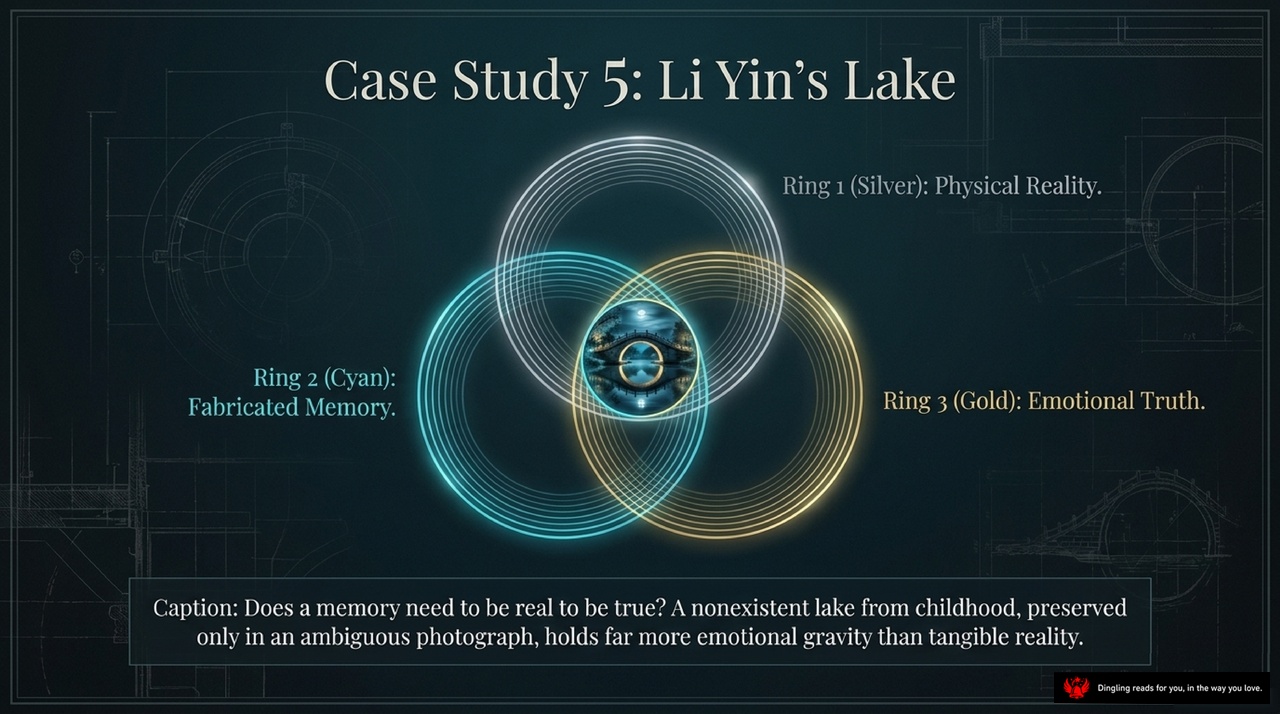
Case Study 5: Li Yin's Lake. Look at this diagram. We have three rings overlapping. The silver ring is physical reality—the tangible world we see. The cyan ring is fabricated memory—things we invented or imagined. And the gold ring is emotional truth—the feeling that makes a memory matter.
Here's the story. Li Yin grew up in a small county town. Her parents died when she was young, and she had a vague, hazy memory of a lake from her childhood. She remembered a white arched bridge, a pond with red lotuses, and her father riding a motorcycle while she stood on the front seat. But no one could verify it. Her mother didn't remember it, and her father had disappeared years ago. For a long time, Li Yin thought this lake might be a fantasy, a lie she told herself to cope with loneliness.
Then, one day, she and her friend went to an old park called Dan Yuan. Deep inside, they found a hidden spot called "Hidden Garden." The ground there had a unique texture made of crushed white stone mixed with tiny green glass shards—a material called water-brushed stone that was popular in the 90s but is rare now. Suddenly, Li Yin felt a strange sense of familiarity. She said, "It feels like I've been here before, yet I know I haven't. My heart feels warm, yet also strangely sad."
I asked her what was going on. She didn't answer immediately. Later, I met a local bird photographer who used to live near that park. He showed me old photos of a pond behind an old government building. In one photo, a pair of mandarin ducks swims under a white arched bridge. The bridge looks exactly like the one in Li Yin's memory. The texture of the bridge railing, with its green speckles, matched the stone in the Hidden Garden perfectly.
It turns out, the lake was real. It existed in the 90s, but it was paved over years ago to become a parking lot. The foundation left behind a faint oval crack on the asphalt, a ghost of the water. Li Yin's memory wasn't a lie; it was a real place that had vanished. But here's the twist: even though the lake is gone, the memory itself remains true. The emotion she felt—the warmth, the safety, the joy of that afternoon—is real, even if the physical location is now just concrete.
This brings us to the core question at the bottom of the slide: Does a memory need to be real to be true? Li Yin's story teaches us that yes, it does. A fabricated memory can hold more emotional gravity than tangible reality. The lake might be gone, but the feeling of being loved and safe in that moment is a permanent part of her life. Sometimes, our most cherished memories are not about facts, but about the feelings they carry. And those feelings are as real as any mountain or river.

Case Study 6: Chi Bo, the sword that erases reality. Imagine a weapon not designed to kill, but to simply make things forget they ever existed. The image on your screen breaks this creation down into three distinct steps. First, you need the raw material: a meteorite core, the ultimate source of alien metal. Second, you must invest an unthinkable amount of time—nine thousand nights of starlight, boiling that metal in a potion that defies physics. And third, you need the final ingredient: the Maker's dream. It's the culmination of obsession, a vision so powerful it bends the laws of the universe. When you combine these elements, the result is Chi Bo. This isn't just a blade; it's a tool of oblivion. Whatever it cuts doesn't just die; it ceases to exist in the universe's memory. It offers a terrifying release from history, wiping a target out of reality entirely. This is the forging of nothingness, where the ultimate victory isn't destruction, but total erasure.
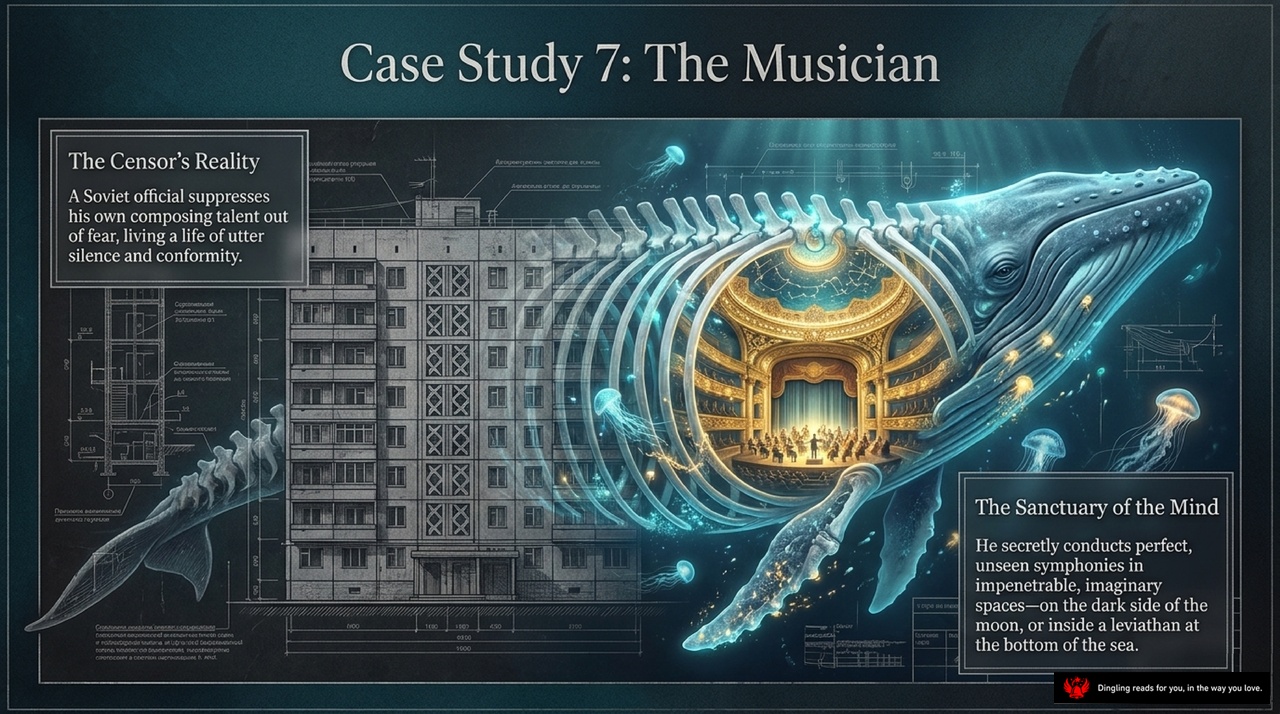
Imagine a man trapped in a silent city, where the very instrument of his soul is forbidden. In 1957, in the rain-swept gray streets of Leningrad, a saxophone wasn't just a musical instrument; it was a death sentence. The state had banned jazz, and anyone caught playing was sent to the Gulag. But deep in an apartment, a retired clockmaker named Gulyov couldn't stop hearing a melody that haunted his dreams—a melody that felt as real as the gears he spent his life repairing.
This melody wasn't random. It was a key to a hidden self. Years earlier, in a secret institution called "The Sanctuary," Gulyov had been forced to translate music into images for the state. He was a synesthete, a rare gift that became his curse. He saw the music, but he couldn't play it. He had to bury his own compositions, creating a phantom version of himself named Musin to write the forbidden scores.
One night, the melody calls him back. Musin, this ghost of his creativity, breaks through the walls of his mind. He leads Gulyov into a surreal concert inside his own imagination, playing in a whale's belly and on the dark side of the moon. But the police are closing in. As the final notes fade and the imaginary musicians dissolve, Gulyov's physical body vanishes into the night, leaving his clock frozen at ten-fifty. He finally found his music, but the cost was everything. In the end, the man who could hear the universe had to disappear to let it play.
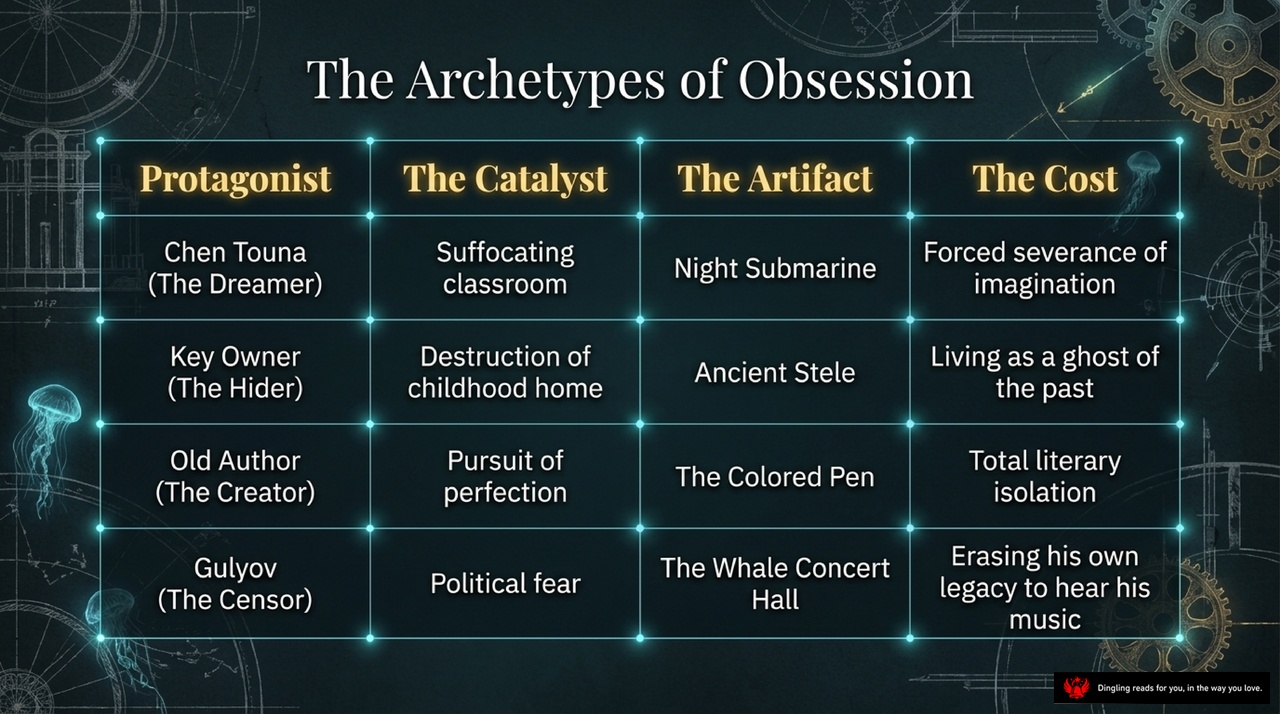
Look at this grid. We are breaking down the dark, consuming nature of obsession into four distinct roles: The Protagonist, The Catalyst, The Artifact, and The Cost.
First, consider Chen Touna, the dreamer. His catalyst was a suffocating classroom that crushed his imagination. His obsession was a "Night Submarine," a secret world where he could travel the ocean at night. But the cost? He was forced to sever his imagination entirely, becoming a ghost of his own potential.
Next, we have the Hider. For him, the catalyst was the destruction of his childhood home. His obsession became an "Ancient Stele," a stone tablet he desperately sought to understand. The cost was living as a ghost of the past, trapped in a memory he could never fully leave behind.
Then there is the Creator, the Old Author. His drive was the pursuit of perfection, leading him to create "The Colored Pen." The tragedy here is total literary isolation; he could write great things, but no one could ever read them.
Finally, the Censor, Gulyov. His catalyst was political fear. He built his obsession around "The Whale Concert Hall," a place of forbidden music. The ultimate cost was erasing his own legacy, destroying his life's work just to hear the music one last time.
These four stories show us that obsession isn't just about wanting something; it's about who we become, what we create, and what we are willing to lose to keep it alive.

Imagine a world where the divine and the mundane are locked in an eternal trade-off. This is the core tragedy of Chen Chuncheng's universe, illustrated by this curve: the Inverse Law of Imagination.
Look at the vertical axis: "Purity of Imagination." This is where genius, magic, and artistic perfection live. It's the realm of the sublime—perfect prose, pristine music, and the depths of the ocean that only a true visionary can touch. But as you follow the glowing blue line to the right, you see the inevitable cost. To reach that peak of artistic purity, one must entirely sacrifice their ability to exist in the real world.
Conversely, look at the horizontal axis: "Immersion in Mundane Reality." This is the path of functionality, survival, and social acceptance. It's the safe, ordinary life everyone expects you to have. But here's the cruel truth of this inverse relationship: the more you cling to this reality, the more your imagination fades into nothingness.
Consider Chen Tunna, a man whose mind was a labyrinth of vivid fantasies. He built a submarine in his bedroom that could dive into the Mariana Trench, complete with Pikachu and Squirtle guiding his journey. He could smell the lotus flowers in Monet's paintings and feel the sting of a tiger's teeth in his dreams. But when the weight of his parents' disappointment and the pressure of real life—exams, jobs, expectations—crashed down on him, he made a choice. He consciously pushed his imagination away, letting it float out the window like a ghost.
In doing so, he traded his soul for a normal life. He became a successful businessman, a husband, and a father. But that brilliant submarine? It's frozen in time at the bottom of the sea, suspended in 1999. He can no longer enter it. His art, once a living, breathing force, became a hollow imitation of memory.
This graph isn't just about one man; it's a universal warning. It tells us that to create something truly magical, we often have to leave behind the comfort of the ordinary. But if we stay too close to the ground, we lose the very spark that makes us human. The tragedy isn't that we lost our talent; it's that we chose safety over the impossible.
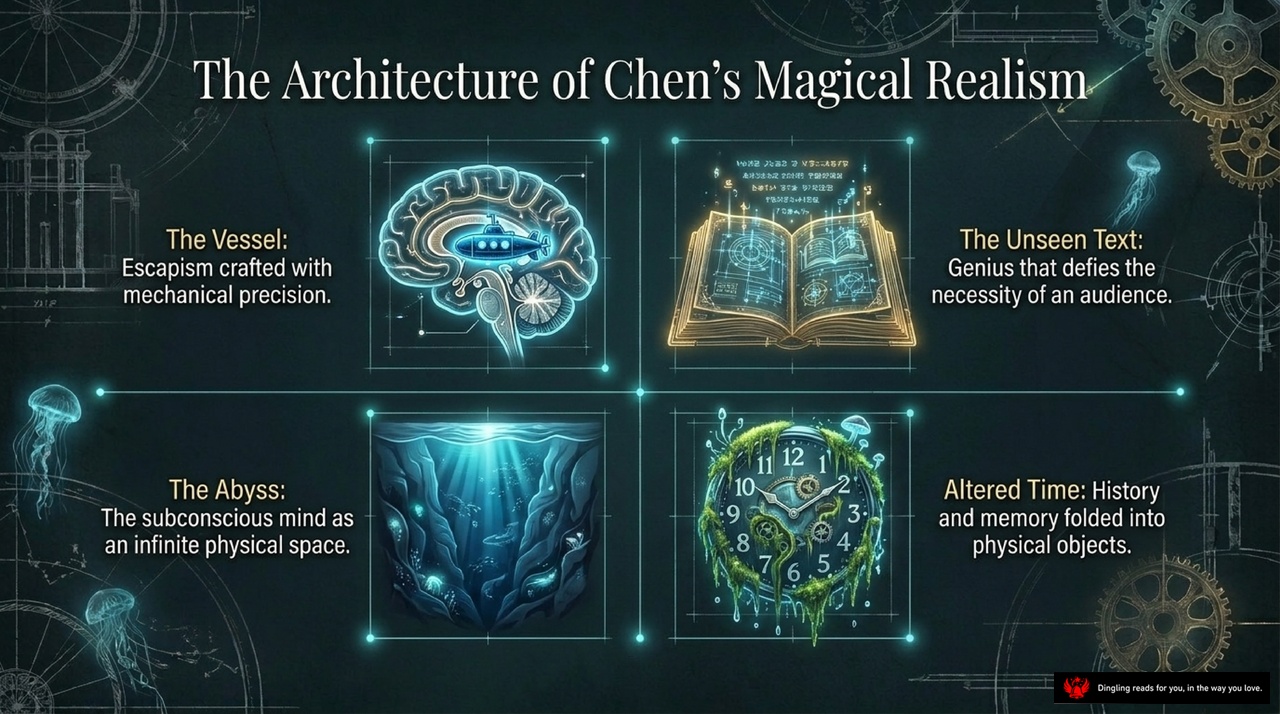
Imagine a world where the clouds above us aren't just weather, but a regulated product, trimmed into perfect, boring ellipses by a government agency. In this surreal landscape, I work at a Cloud Trimming Station, my job is to keep the sky looking like a cartoon. But the real magic happens when I visit an old friend, a woman who spent her life obsessed with solving the mystery of Bach's music. She lives in a crumbling apartment block, a place where every door leads to a deep, fascinating hole of knowledge.
When I sit with her, she tells me about her own "cave"—a lifelong obsession with matching characters in ancient couplets. She describes it as the most steep mountain, the most precise machine, and a place of perfect, symmetrical peace. It sounds like a trap, right? But she reveals the secret: you don't have to go to the bottom.
Just like the endless game of cards I later play with a fox in the woods, where the rules change every single time, life isn't about exhausting every possibility. The real freedom is in enjoying the unknown, in loving the fact that every round is different. I realize that the "caves" we fear—those deep dives into the unknown—are actually the only places where life feels truly alive. So, instead of worrying about getting lost, I decide to embrace the infinite variety of the sky, the clouds, and the endless games waiting for us.
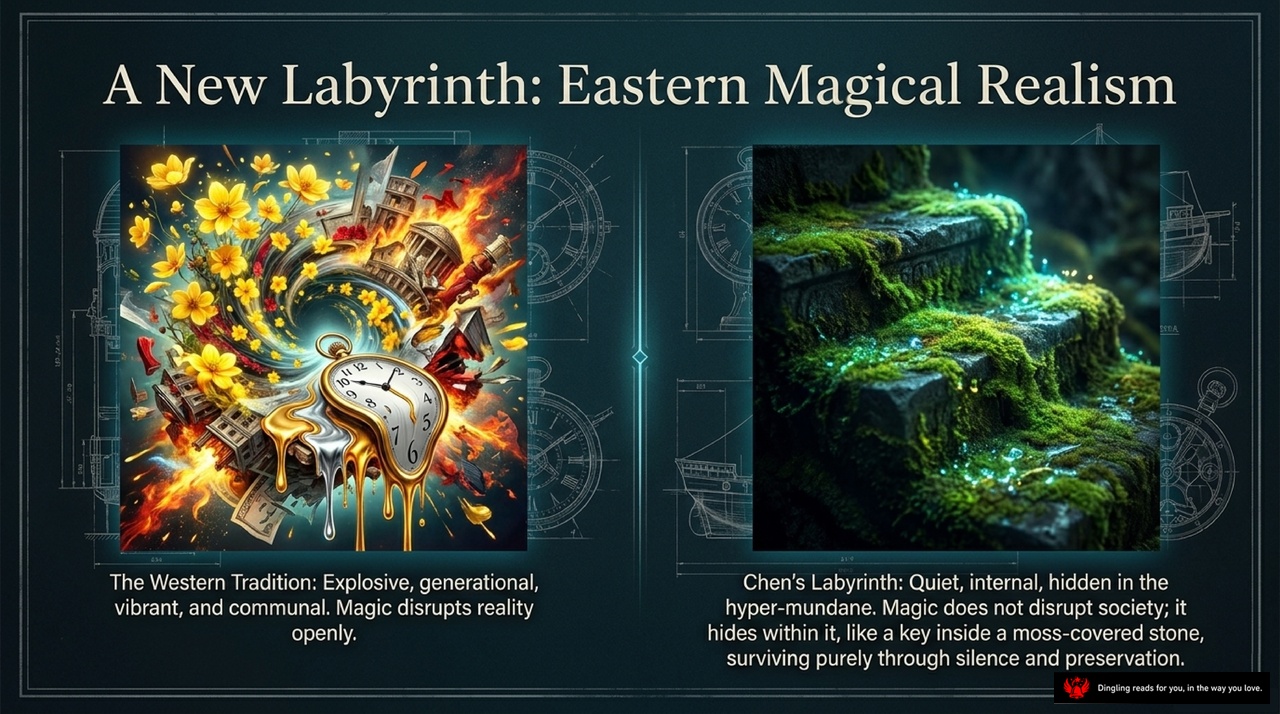
On this slide, we're stepping into a completely different kind of maze—one that isn't built of stone, but of sound, memory, and a terrifyingly beautiful silence. The title, "A New Labyrinth: Eastern Magical Realism," sets the stage for a world where the impossible feels strangely familiar.
Look at the left side. This image captures the Western tradition of magic: explosive, vibrant, and communal. It's like that melting clock from the surrealist dream, where reality breaks apart under the force of magic. Magic here is a spectacle; it disrupts the world openly, like a revolution or a sudden explosion. It's loud, it's generational, and everyone sees it.
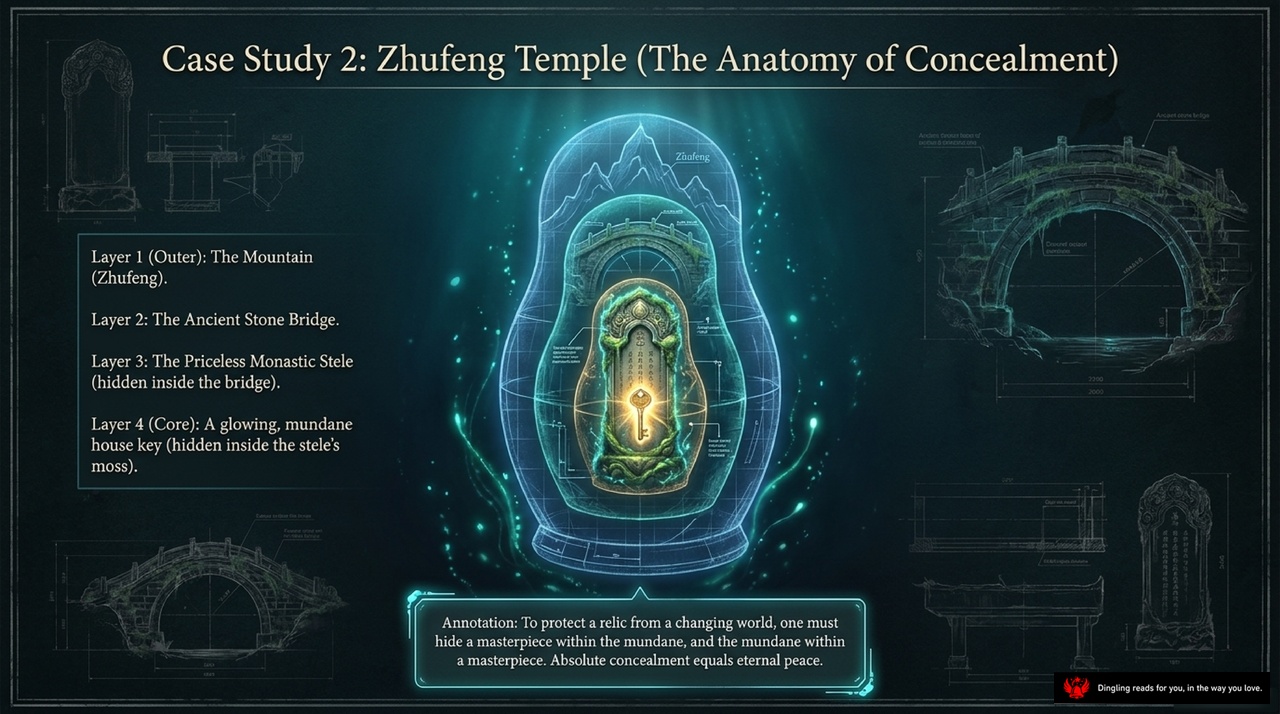
But look at the right side. This is Chen's Labyrinth. It's quiet, internal, and hidden deep within the mundane. Notice how the magic doesn't disrupt society; instead, it hides within it, like a key buried inside a moss-covered stone, surviving purely through silence and preservation. This is the essence of Eastern Magical Realism: the extraordinary isn't a shock to the system; it's a secret woven into the fabric of daily life.
The story we just heard about the clockmaker and the saxophone player brings this to life. In the Soviet Union, a man named Gulyov lived a quiet life as a watchmaker, but his inner world was a chaotic symphony of music. He didn't blow a saxophone; he *became* the music. When he finally let his soul out into that final melody, he didn't vanish with a bang. He simply dissolved, like smoke in the wind, leaving behind only the ticking of his stopped clock.
This is the power of this new labyrinth. It teaches us that the most profound magic isn't about changing the world with a wave of a hand. It's about finding the hidden rhythm in the ordinary, holding onto your inner truth even when the world tries to silence you, and understanding that sometimes, the only way to be truly free is to fade away quietly, leaving your legacy in the silence you once kept.
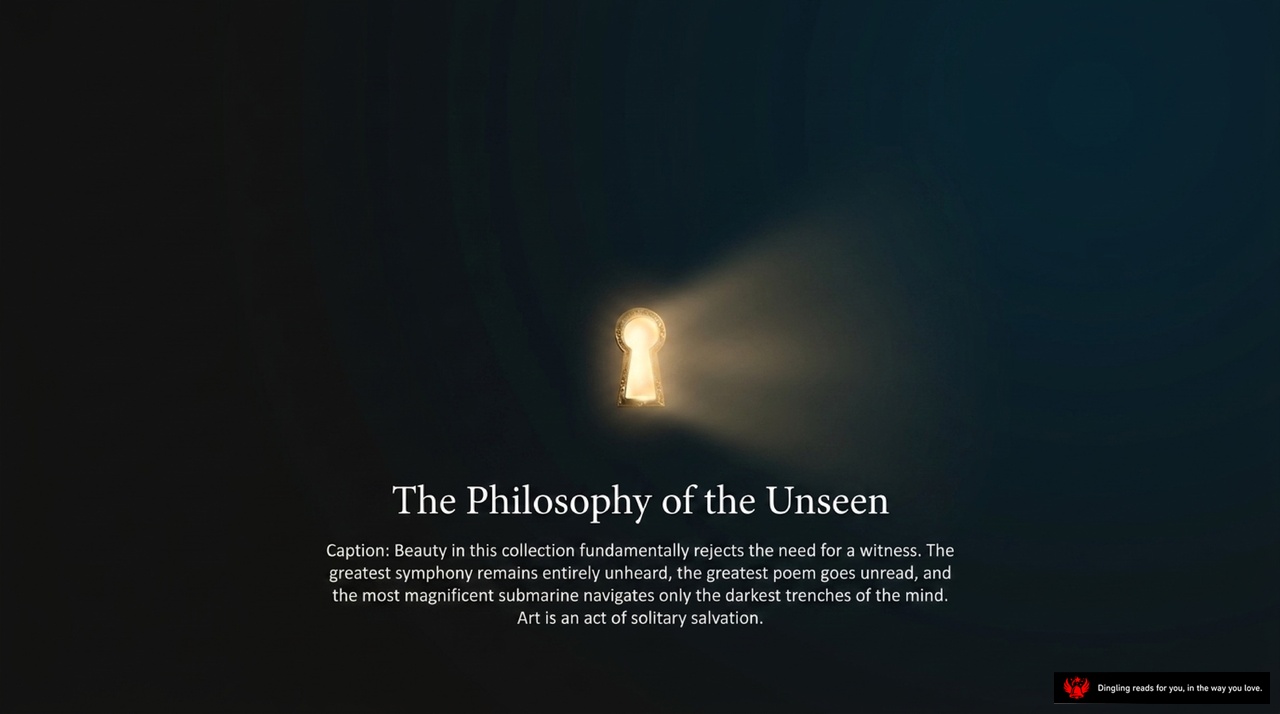
In a world obsessed with being seen, validated, and applauded, we often forget the profound power of the unseen. This collection embraces a radical philosophy: true beauty does not need a witness. Imagine a symphony so magnificent it is never played, a poem so perfect it remains unread, or a submarine so grand it sails only through the deepest, darkest trenches of the human mind. In these hidden realms, art becomes an act of solitary salvation. It is not about the noise of the crowd, but the quiet resonance of the soul. Sometimes, the greatest masterpiece is the one that exists entirely within the silence, untouched by time or judgment, finding its freedom precisely because no one else knows it is there.
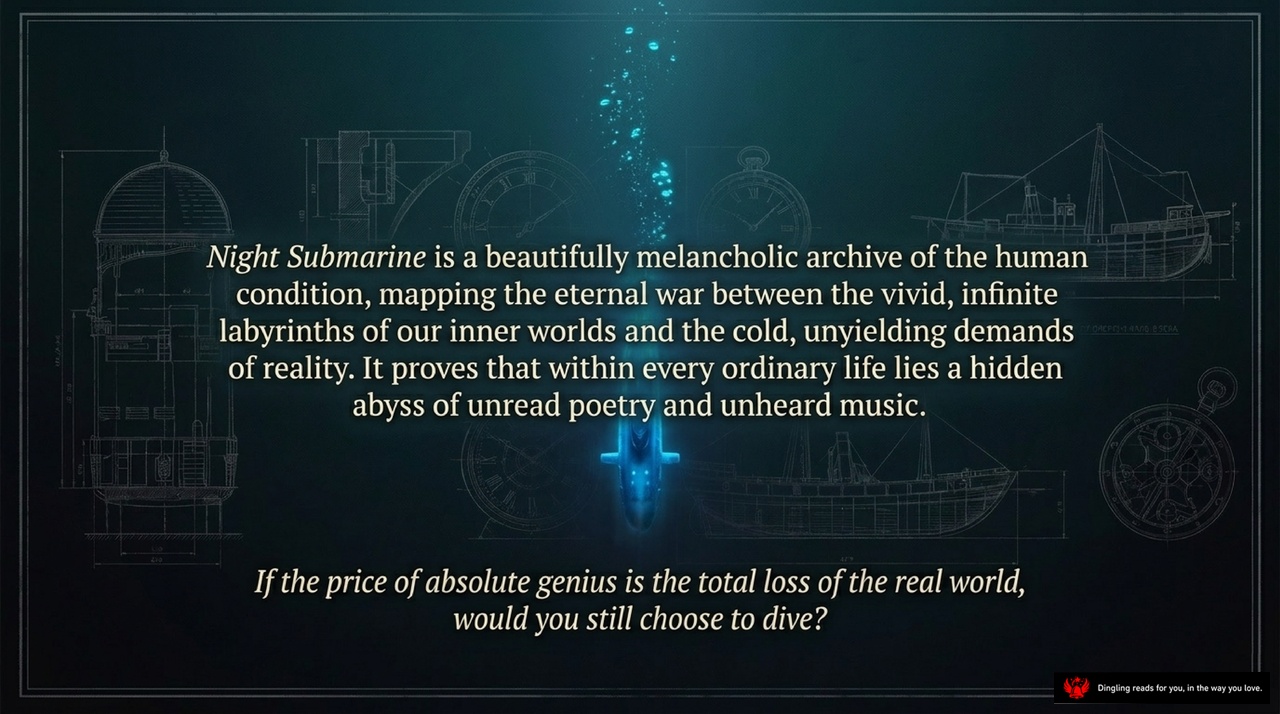
In the quiet, shadowed corners of the human experience, there exists a strange kind of genius—one that demands total isolation. Consider the story of Chen Chunlao, a legendary brewer from ancient China who spent his life chasing the perfect flavor. He didn't just mix ingredients; he obsessed over the impossible. He hiked to the very source of the Yellow River, collecting water drop by drop for months. He waited years for a single jar to settle. He counted every drop of wine as it dripped through reeds, aiming for exactly 9,999 drops.
But no matter how exquisite his creations became—wines that could erase sorrow, reverse aging, or even make people forget their own names—Chunlao remained unsatisfied. He felt that true perfection lay just beyond the reach of human perception, a flavor so pure it would dissolve the drinker entirely. In his final act, he brewed a wine so transcendent that when he drank it, his physical form vanished, leaving only a skeleton, and then even that dissolved into smoke.
The story asks a haunting question: if the price of absolute genius is the total loss of the real world, would you still choose to dive? It suggests that within every ordinary life lies a hidden abyss of unread poetry and unheard music, waiting for someone brave enough to step into the dark and disappear.