


Skins: Reader Reviews & Ratings

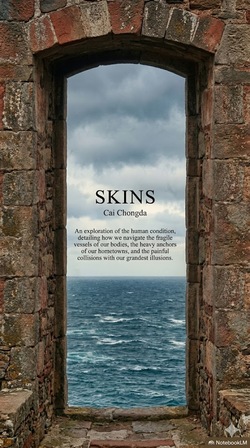
Skins
Loading…

Skins

Cai Chongda

Write a Review

Your Review

0/500

Other reviews

28 total
Blue

The metaphor of skins as invisible cages felt very real to me. Cai shows how our town, our bodies, and our roles trap us in ways we often ignore until tragedy strikes. His story about his father losing his strength and becoming the 'big kid' again was heartbreaking yet strangely comforting. It made me realize that letting go of the tough image we wear is actually the bravest thing we can do to connect with our loved ones. Even though breaking free from these expectations is hard, Cai teaches us that true freedom comes from accepting our vulnerability instead of fighting it every day.

Uriah

Cai's father became a scared child after his stroke.

Paris77

Cai Chongda's memoir feels incredibly raw and honest about growing up in a tight-knit coastal town where everyone knows your business. The way he describes his father's decline after the stroke and his mother's desperate fight to finish their unfinished house really hits hard. I especially connected with the character A Tai, whose stoic refusal to let physical pain define her spirit offered a powerful lesson on resilience. While the book tackles heavy themes of duty versus desire, it never feels preachy, instead showing how we all wear invisible skins that trap us until we learn to breathe again.

Ricky18

The story of Zhang Meili, the woman everyone called a fox spirit, was sad because she paid such a high price for trying to live on her own terms, and seeing how the town shunned her even after she begged for forgiveness reminded me of how hard it is to break free from the expectations others have for us.

Anastasia

A Tai's lesson on using the body hit me hard.

Pamela8

Cai Chongda beautifully captures how our physical bodies and social roles act as invisible cages. The story of his mother finishing her husband's unfinished house while facing demolition shows the deep pain of holding onto a legacy that no longer fits, reminding us that sometimes we must let go to truly move forward in life.

Adelaide3

This memoir felt heavy but real. Cai shows how small towns trap us in invisible skins we can't escape.

Will

The story of A Tai breaking the chicken felt shocking yet powerful.

Willard

This memoir perfectly captures the invisible cages we all wear in small towns.

Trace

The section about the father pretending to recover after the stroke while secretly being scared broke my heart because it shows how pride traps us all.

Andrew

I felt it.

Kevin

The comparison between the Chinese town and American small towns helps me see how universal these invisible skins are even though the specific struggles look different.

Willow

The story of A Tai refusing to cry at her daughter's funeral hit me hard. It shows how some women learn to treat their bodies as tools rather than things to protect, which is a powerful lesson on resilience that stayed with me long after I finished reading this memoir.

Patience86

A Tai's lesson on using the body instead of coddling it hit me hard.

Debra3

Cai Chongda's *Skins* beautifully explores how social roles and physical limitations act as invisible cages for individuals in a small Chinese coastal town. The author vividly describes his return to bury his father, noticing the familiar yet haunting sights of the fish market and the unfinished family house that stands like an open wound. Through characters like the stoic great-grandmother A Tai, who teaches that 'the body is for use, not coddling,' and his mother who fights to complete her husband's half-built home against demolition, Cai illustrates the universal struggle to break free from these confining skins. The narrative also touches on the town's outcasts, such as Zhang Meili, a woman shunned for living on her own terms, and Wen Zhan, an ambitious boy crushed by discrimination in the city. These stories highlight the tension between duty and desire, showing how we all wear unwritten rules that suffocate us. Ultimately, the book offers a quiet courage to be true to oneself, reminding readers that while we may be trapped in our cages, we can learn to breathe a little easier by embracing our vulnerabilities rather than fighting them.

Darrell

A Tai's lesson about using the body instead of coddling it changed my view on fear and pain forever, showing how resilience comes from accepting our limits rather than pretending we can control everything. Her story with the chicken and her grandson teaches us that true strength means letting go of the illusion of control and learning to adapt when life throws us into the rough waves, just like she did, instead of fighting the current until we drown or break under the pressure of trying to stay safe in a world that demands we be tough and unfeeling no matter what happens to us.

Flo

This memoir feels incredibly raw and honest, making me cry while reading about the father's stroke and the family's quiet struggle.

Chad

Cai's mother finishing that half-built house shows how tradition can become a heavy burden that stops us from pursuing our own dreams and happiness.

Christophe8

Reading about the town's outcasts made me realize how hard it is to escape the invisible cages we all wear without facing severe consequences or total rejection from our community.

Matt

The way the author describes his own childhood fears by the sea makes the connection between physical danger and emotional constraints feel very real.