
Station Eleven: Complete Chapter-by-Chapter Summary
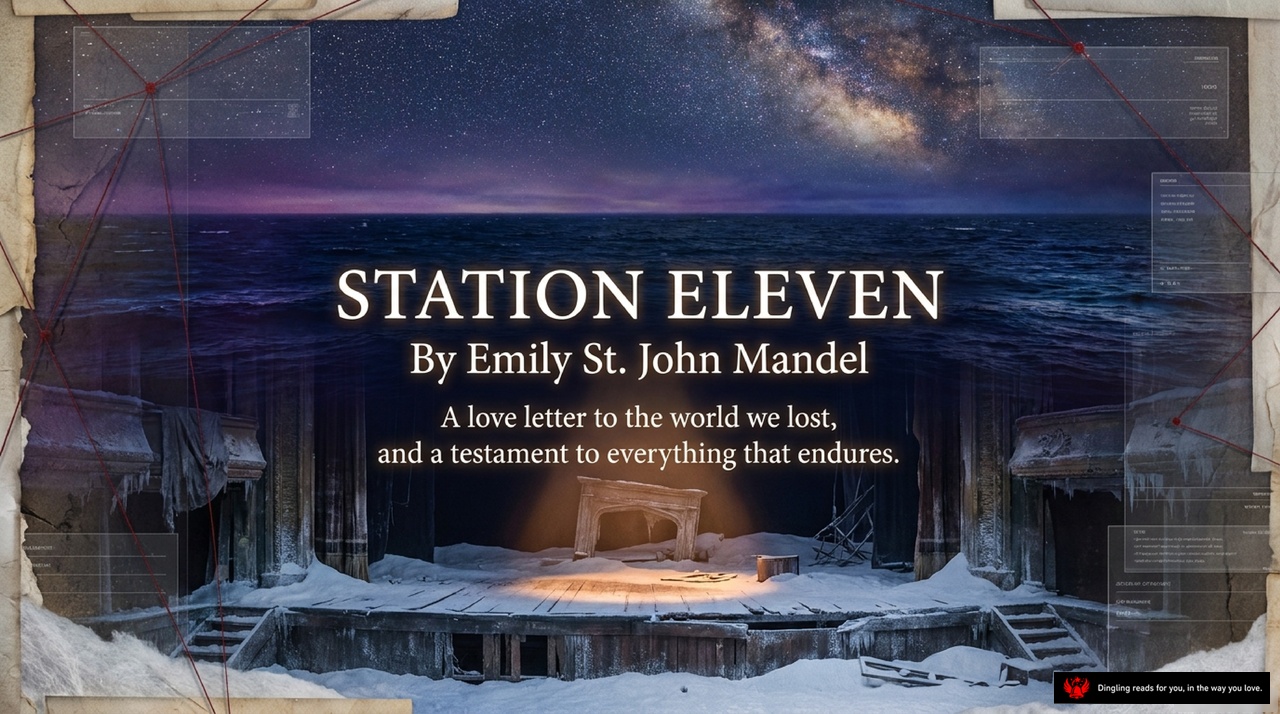
Welcome to Station Eleven. This isn't just a story about the end of the world; it's a love letter to everything we lost, and a testament to everything that endures.
Imagine a frozen theater under a starry sky, where the past and future collide. In this book, we follow the lives of people before, during, and after a catastrophic flu that wipes out civilization. We see the tragic night an actor named Arthur dies on stage, the quiet struggle of survivors like Jeevan in an abandoned city, and the nomadic journey of a traveling circus that keeps Shakespeare alive in the ruins.
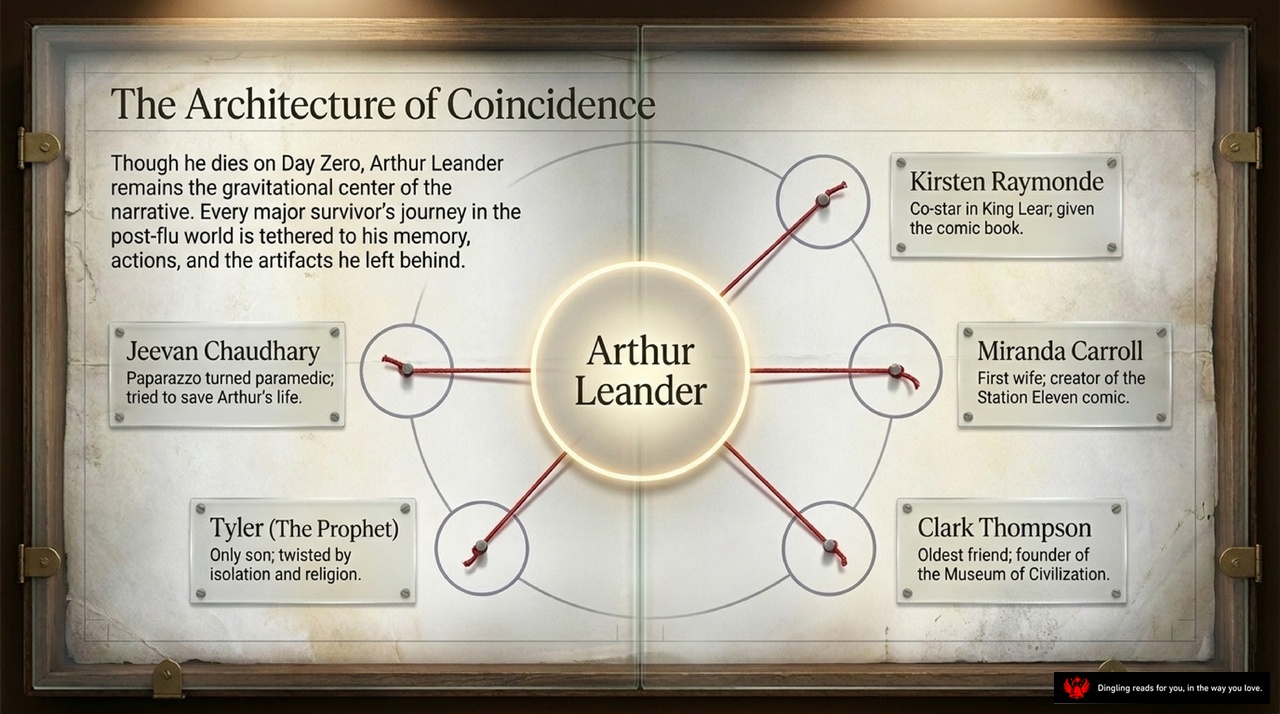
But at the heart of it all is a single, powerful idea: that we are only as immortal as the people who remember us. Through the eyes of a young girl named Kirsten, we learn that while cities fall and governments crumble, the stories we tell, the art we create, and the connections we forge are the only things that truly survive. This is a story about finding meaning in the ashes, and about the enduring power of human kindness in a broken world.
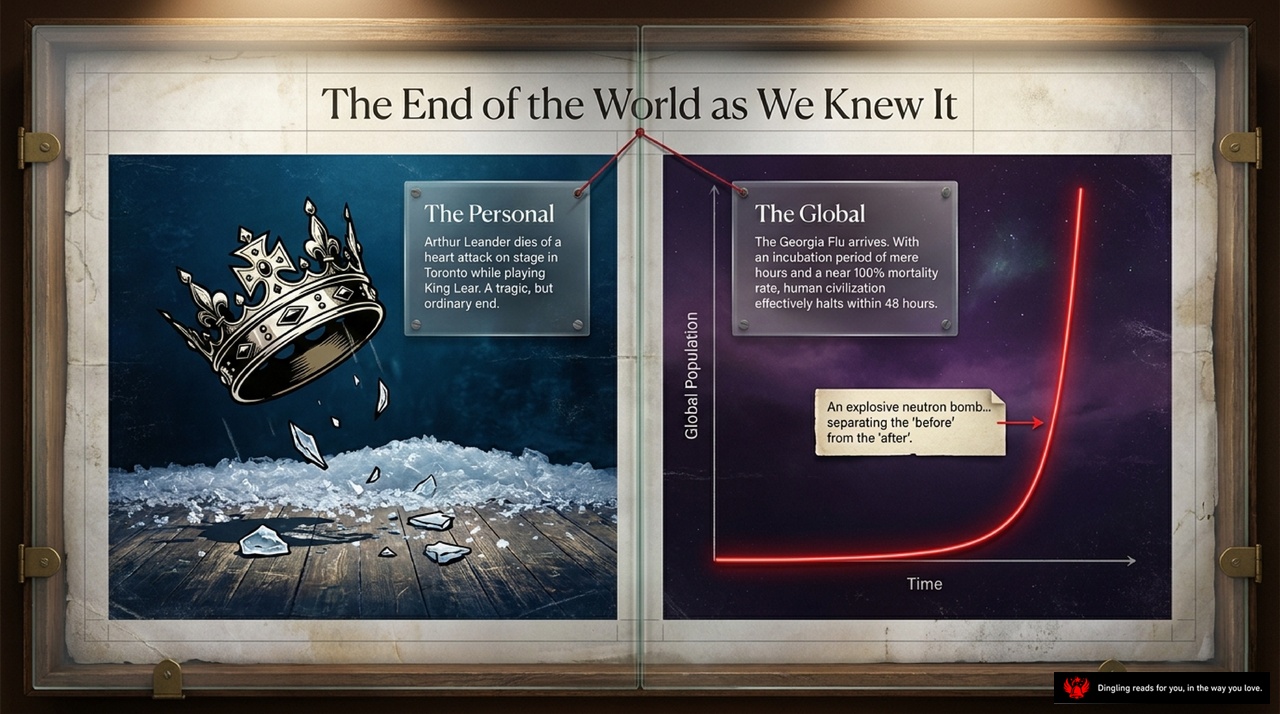
The End of the World as We Knew It.
On the left, we see the personal cost. Arthur Leander, a beloved actor playing King Lear in Toronto, suffers a sudden heart attack on stage. It's a tragic, ordinary end for a man who loved his craft, yet it marks the beginning of the end for everyone he knew.
On the right, we see the global consequence. The Georgia Flu arrives with terrifying speed. With an incubation period of mere hours and a near 100% mortality rate, human civilization effectively halts within just 48 hours. An explosive neutron bomb separates the 'before' from the 'after,' creating a sharp, irreversible break in history.
This slide captures the dual reality of the collapse: the quiet, heartbreaking loss of individual lives, and the sudden, catastrophic silence of the entire world.

In this slide, we see a haunting list titled "An Incomplete List of Things Lost." It's not just a checklist; it's a eulogy for the world we knew. The image is split into three pillars: Infrastructure, Security, and Connection.
Under **Infrastructure**, we see icons for power, travel, and digital life. The text reminds us of the loss of power grids, the internet, and commercial flights. It captures that sudden silence when the lights go out and the planes stop flying.
Under **Security**, the icons show the absence of police, firefighters, and the comforting illusion that a small scratch won't kill you. It speaks to the terrifying vulnerability of a world without its invisible protectors.
Finally, under **Connection**, we see the end of social media, the global community, and the digital intimacy that once connected us all.
But the most powerful part is the bottom line: "The modern world was a delicate infrastructure of strangers working invisibly. When they stopped, the machine stopped." This is the core truth of the collapse. It wasn't just about viruses or disasters; it was about the realization that our safety, our convenience, and even our lives depended on a vast, fragile network of people we never met, who were doing jobs we barely noticed. When that network fractured, everything we thought was permanent just vanished in an instant.
After fifteen years of wandering, the Traveling Symphony finally finds a glimmer of hope. They've been running from a cult leader known as the Prophet, who controls towns with fear and demands human sacrifices. But their luck turns when a young girl named Eleanor, who had secretly stowed away on their wagon, reveals a crucial piece of intelligence: the Prophet's target is the Civilization Museum, located near the airport in Seville City.
This news gives them direction. They decide to push south, aiming for that legendary museum where their missing friends, Charlie and Jeremy, might have found safety. As they travel, the harsh reality of their world sets in. They stop at a burnt resort town where time seems frozen, and the clock on the tower is stuck at 8:15. In the ruins of an old school, they discover a disturbing skeleton with a bullet hole in its skull, a grim reminder that death here is sudden and violent.
But the real danger lies ahead. The Prophet's men are relentless. During a patrol, Said and Dieter are ambushed. Dieter is killed, and Said is captured, only to be rescued later by Kirsten and August after a tense confrontation. In the end, they face the Prophet himself. In a shocking twist, the Prophet's own son turns the gun on him, ending the tyrant's reign. With the threat neutralized and the museum in sight, Kirsten, August, and Said finally make it to the quarantine checkpoint at the airport. They are greeted by the survivors of Seville City, including the reunited Charlie, and Kirsten is reunited with her own daughter, Anna Belle. The journey of survival has brought them to a sanctuary, a place where the music of Shakespeare can once again be heard without fear.
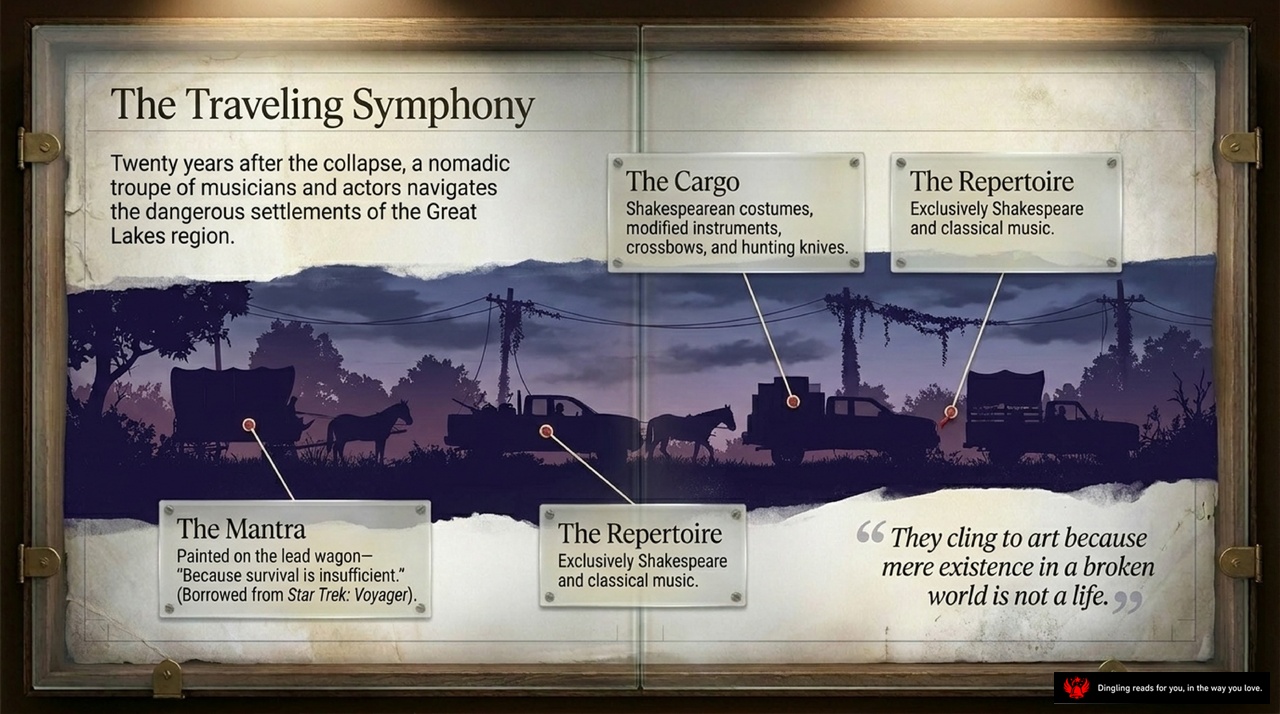
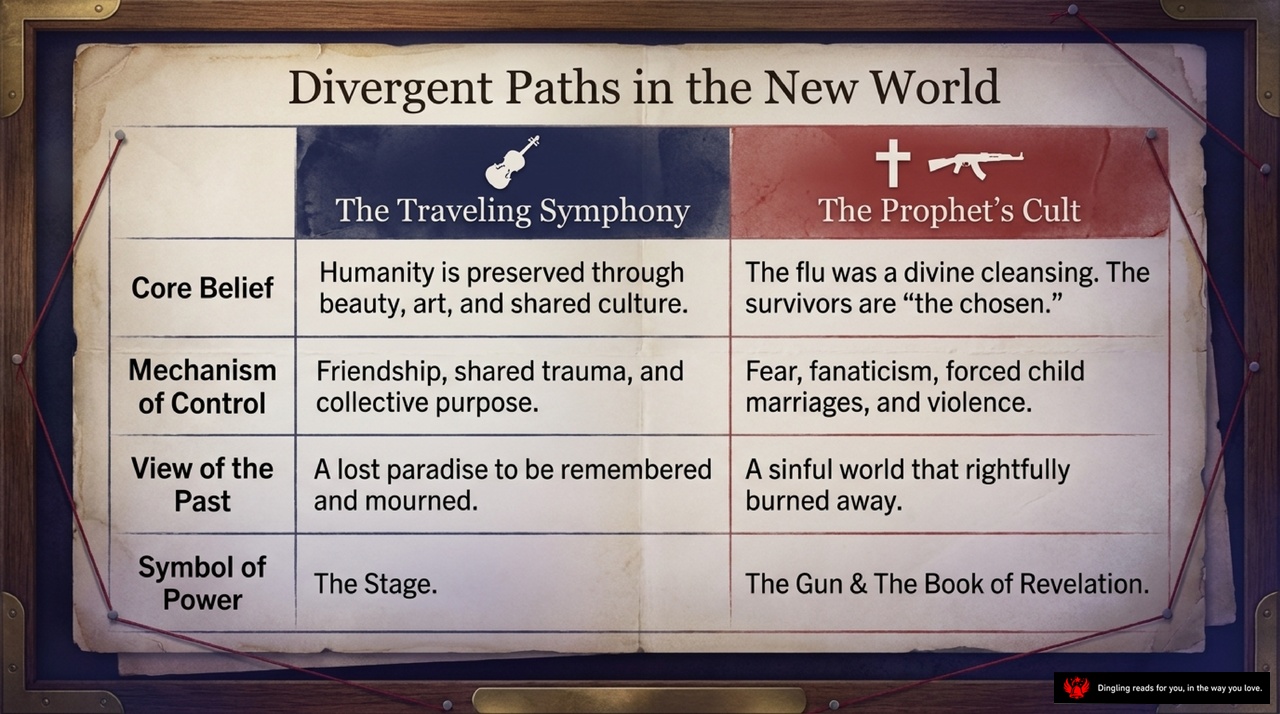
Twenty years after the collapse, the Traveling Symphony keeps moving, a nomadic troupe navigating the dangerous settlements of the Great Lakes. They travel in three iron-gray wagons, carrying Shakespearean costumes, modified instruments, and weapons like crossbows and hunting knives. Their repertoire is exclusively Shakespeare and classical music, a deliberate choice to offer the world's finest art to a starving audience.
But life is brutal. Just twelve hours after leaving St. Deborah, they find a twelve-year-old refugee named Elaine hiding in their wagon. She was chosen by the Prophet to be his bride and fled in terror. Seeing her fear, the troupe refuses to send her back.
They push on, eventually stopping at a burned-down resort town where time seems frozen at 8:15. In the ruins of an abandoned school, they discover a skeleton with a bullet hole in its skull—a grim reminder of the world's cruelty. Yet, amidst the decay, there is still hope. They hunt deer for food and find a flute mouthpiece, a small piece of the old world that brings them joy.
For Cora, a former child actor who now leads this group, the mantra painted on their lead wagon is everything: "Because survival is insufficient." It's a quote borrowed from *Star Trek: Voyager*. In this broken world, mere existence isn't enough. They cling to art because it is the only thing that proves they are truly alive, not just surviving.
Fifteen years after the Great Collapse, the world is a quiet, frozen place. In New Petoski, a librarian named François Diallo interviews Cora Raymon, the former child star from the Traveling Symphony. She remembers the very last night of the old world: Arthur Leander collapsing on stage during *King Lear*, and a stranger rushing forward to perform CPR. But here's the chilling part—no obituary was ever published. That rescuer's name was never recorded. It was as if the act of saving him was too small, too invisible, to matter in the history of the world.
Meanwhile, thousands of miles away in Toronto, Jevon and his brother Frank are trapped in a high-rise, starving and alone. Frank, paralyzed by fear and his own disability, convinces Jevon to stay. But Jevon sees the truth: they are running out of time. He decides to leave, carrying his brother's final manuscript on "immortality" in his backpack. He walks into the dead city, stepping over abandoned cars and frozen lakes, realizing that survival now means becoming a ghost in a silent world.
And in a completely different corner of the globe, on a beach in Malaysia, Miranda is waiting for news from her husband, Arthur. She's drawn to the sea, feeling a strange pull toward the cargo ships anchored in the harbor. She doesn't know the flu is already raging, or that the world is ending. She just knows she loves him, and she's terrified of what's coming.
The story splits into these three threads: the invisible hero who saved an actor but was forgotten; the brother who chose to walk away from a dying city; and the wife who waited for a man she might never see again. All of them are connected by the same thread: the end of everything they knew. And in that silence, the old world begins to fade, leaving only the echoes of what once was.
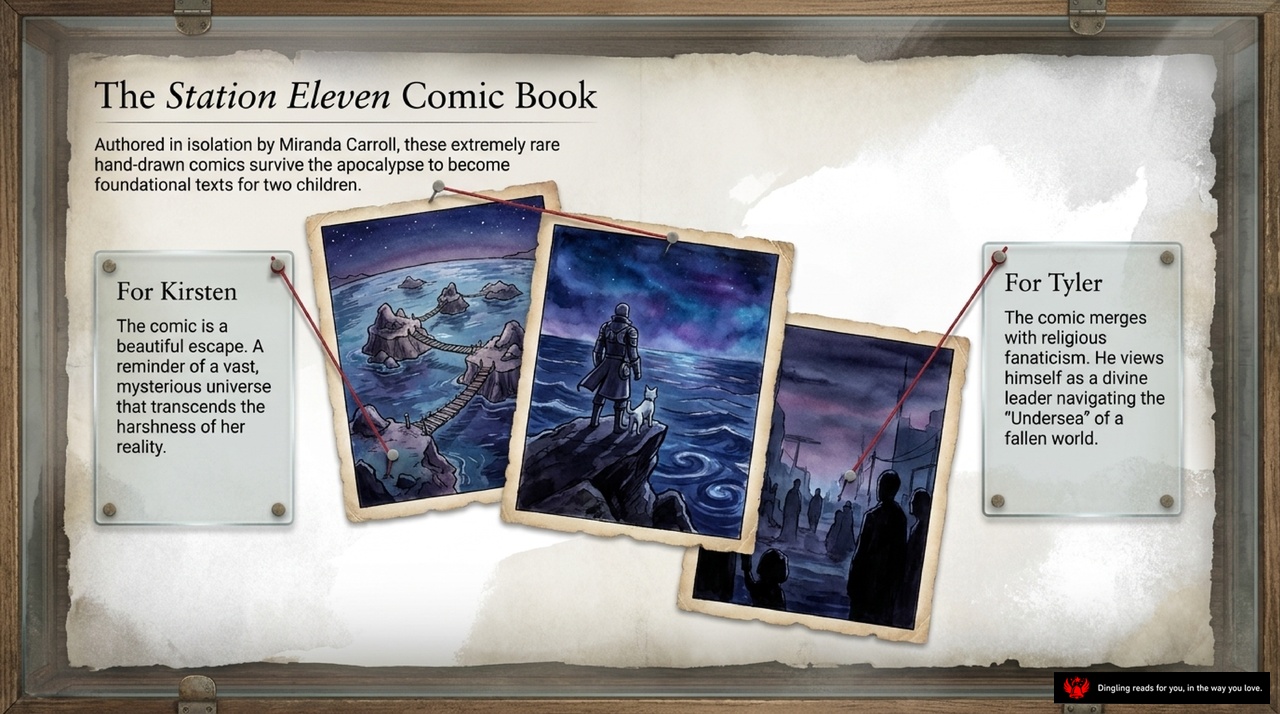
The Station Eleven comic book, drawn by Miranda Carroll in isolation, serves as a lifeline for two children surviving the apocalypse. But these comics aren't just drawings; they are mirrors reflecting how the world's end reshaped the survivors. For Kirsten, the comic offers a beautiful escape—a portal to a vast, mysterious universe that transcends the harshness of her reality. It reminds her that there is more to life than the ruins she walks through daily.
For Tyler, the story takes a darker turn. The comic merges with religious fanaticism, fueling his belief that he is a divine leader navigating the "Undersea" of a fallen world. While Kirsten finds solace in the fantasy, Tyler finds a dangerous justification for his power. These rare, hand-drawn pages survive the collapse not just as art, but as foundational texts, proving that even in the darkest times, stories can define who we are and where we believe we belong.
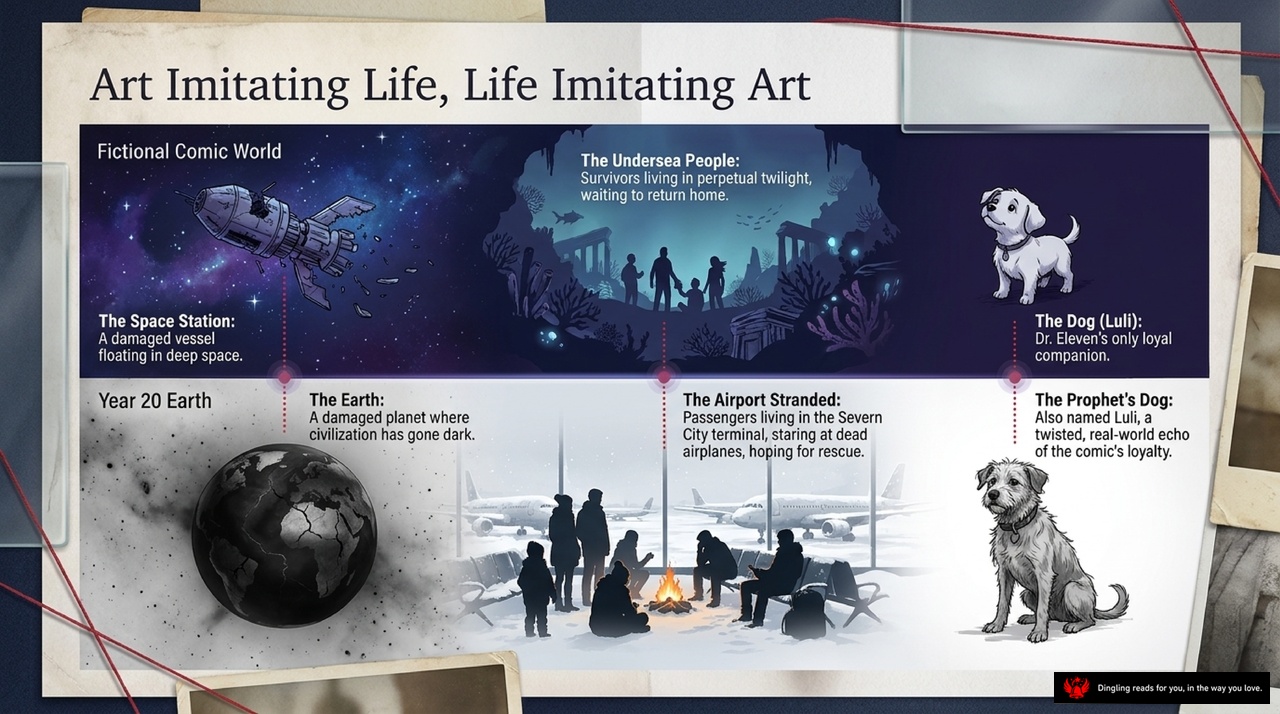
Art imitating life, life imitating art. This slide maps the haunting connection between a fictional comic world and the brutal reality of our own.
Look at the top row: the Fictional Comic World. We see the Space Station, a damaged vessel drifting in deep space, mirroring the real-world Airport Stranded below. In the comic, passengers live in a terminal staring at dead planes, hoping for rescue. In reality, that airport became a settlement where people waited out the end of days, trapped behind fences and broken gates.
Then, look at the people hiding underground. In the comic, the Undersea People survive in perpetual twilight, waiting to return home. This is a twisted reflection of the real world, where humanity was forced into the shadows, losing the sun and the future.
And finally, the bond of loyalty. In the comic, Dr. Eleven's only companion is Luli, a small, devoted dog. In our world, that loyalty found its echo in the Prophet's dog. A twisted, real-world version of that comic loyalty, guarding the survivors in a landscape that had forgotten kindness.
The image shows how art doesn't just copy life; sometimes, life forces us to rewrite the stories we read, turning a hopeful space opera into a desperate survival guide.

The final chapter of this story brings us to the ultimate quarantine: Severn City Airport. As the slide illustrates, a diverted flight lands on Day Zero, and its passengers never leave. What was once a temporary waiting room transforms into a permanent post-apocalyptic settlement.
Look at the layout here. On the tarmac, we have the "Ghost Fleet"—a fleet of grounded planes sitting under snow, serving as tombs, storage, and a constant reminder of the lost momentum of the world we knew. Inside the terminal, life has found a new rhythm. The Skymiles Lounge has been repurposed as the central hub of memory, now known as the Museum of Civilization. It's where artifacts like old cell phones, high heels, and car engines are preserved, a fragile archive of a time when the world was still spinning.
But the most profound change happens in the people. Over twenty years, these passengers unlearn their modern lives. They build hunter-gatherer routines, turning from corporate travelers into a new society inside these glass walls. They find purpose in survival, in community, and in the stories they tell.
This slide captures the essence of the ending: the transition from panic to peace. The airport, once a symbol of escape and connection, becomes a sanctuary. It proves that even in the darkest collapse, humanity has the resilience to not just survive, but to rebuild a home. This is the ultimate quarantine, and within it, a new world is born.

Clark Thompson has done something extraordinary. He took the Skymiles lounge—a place usually reserved for business travelers—and transformed it into a Museum of Civilization. Look at these items on display: a credit card, a stiletto heel, an old MacBook, a jet engine, and a paperweight with a storm cloud inside. To most people, these are just junk. But to Clark, they are magical relics. He collects them not for their utility, but to remember the sheer miracle of their existence.
Think about it. In this new world, you can't fly anymore. You can't communicate across oceans instantly. You can't even control light with a simple switch. Clark reframes these mundane items as artifacts from an impossible era. That paperweight isn't just a desk toy; it's a frozen moment of a storm, something that used to be terrifying but is now just a pretty decoration. That laptop isn't just a broken computer; it's proof that we once had infinite knowledge in our pockets.
Clark's museum is a testament to what we lost. It forces us to confront the reality that the world we knew is gone. By curating these lost objects, he isn't just preserving things; he is preserving the memory of a time when humanity could do the impossible. It's a quiet, powerful reminder that while the world has ended, the wonder of what we once had still lives on, right here on this shelf.

Have you ever felt that holding onto the past is heavier than letting it go? Today's slide, "The Weight of Remembering," explores this painful truth with a simple but devastating quote: "The more you remember, the more you've lost." It sets up a spectrum between total forgetting and total remembrance, showing how different characters in our story navigate this divide.
On the far left, we see Kirsten. She represents repressed trauma. She cannot remember the first year on the road, viewing the old world as a hazy, beautiful dream. By blocking out the pain, she finds a strange kind of peace, though she's essentially living in a lie.
In the middle stands Jeevan. He finds peace in a quiet settlement, choosing to embrace his new role as a healer while gently holding onto the past. He doesn't try to erase his memories, but he doesn't let them consume him either. He strikes a balance, using his past experiences to help others without being trapped by them.
On the far right, we have Clark and Dieter. They are burdened by vivid memories. Dieter dreams of airplanes, while Clark weeps over old newspapers, acutely aware of the magnitude of human loss. Their total remembrance has become a prison; they are unable to move forward because they are too heavy with the past.
This visual perfectly captures the central theme of our journey: survival isn't just about staying alive physically; it's about managing the weight of our history. Sometimes, to move forward, we have to decide how much of the old world we are willing to carry.
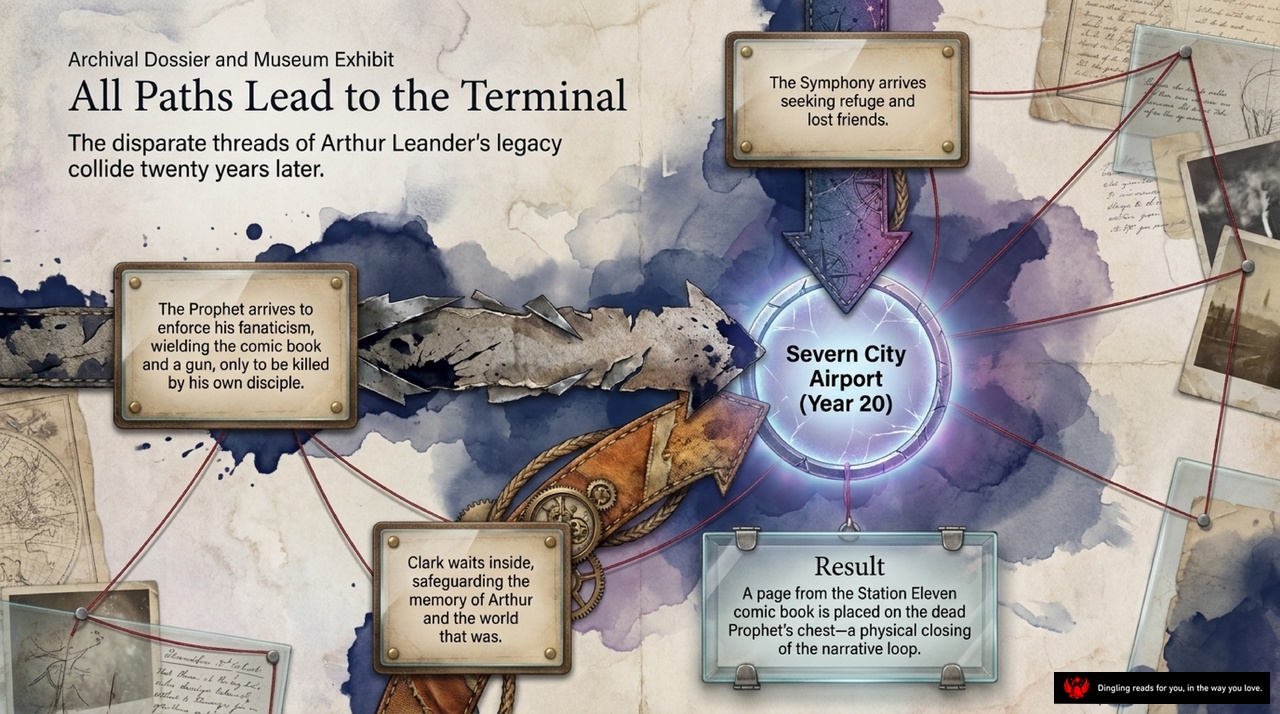
All paths lead to the terminal. Twenty years after the collapse, the disparate threads of Arthur Leander's legacy finally collide at Severn City Airport.
Look at the convergence here. On one side, the Prophet arrives, wielding his fanaticism and that iconic comic book, only to be killed by his own disciple. On the other, Clark waits inside, safeguarding the memory of Arthur and the world that was. Meanwhile, the Symphony arrives seeking refuge and lost friends.
The result is a physical closing of the narrative loop. A single page from the Station Eleven comic book is placed in the Prophet's chest, connecting the past to the present. And just as the disparate threads meet, Clark and Clark's daughter Charlie reunite with Kirsten and August, the surviving members of the traveling symphony. It's a quiet, profound moment where the story of Arthur Leander, the art of storytelling, and the resilience of humanity all come together in one place. All paths truly lead to the terminal.

Look through this old, brass-rimmed lens and see what it reveals: a town waking up in the distance. The lights are forming a visible network across the horizon, a staggering sign that the darkness isn't permanent.
This is the re-ignition of light. From the control tower, Clark leads Kirsten to a telescope, and what they see changes everything. In the far distance, a town has managed to restore an electrical grid. Those flickering lights prove that civilization is slowly, miraculously waking back up. It's a powerful reminder that the human drive to rebuild and reconnect cannot be extinguished. Even after the collapse, even after the fear, the instinct to create community and bring light back to the world remains alive. This single image tells us that hope isn't just a feeling; it's a force that will always find a way to shine again.

Imagine a world where the internet, our cities, and even the concept of a nation simply vanish overnight. In this new reality, what holds us together isn't technology or borders, but something far more fragile and essential. As we see in this diagram, the anatomy of endurance rests on three pillars: Art, Memory, and Connection.
First, look at Art. When the modern world falls away, stories like Shakespeare's plays or even simple comic books become our lifeline. They aren't just entertainment; they provide a framework for psychological survival, reminding us that we are more than just survivors.
Next is Memory. Museums, artifacts, and the stories we tell ourselves tether us to our history. Without them, we risk slipping into barbarism, forgetting who we were and losing our humanity.
Finally, there is Connection. In a chaotic world, the invisible web of strangers we once relied on is replaced by intentional, profound community. As the slide reminds us, hell isn't other people; other people are all we have.
Together, these three elements—Art, Memory, and Connection—intersect to form our shared humanity. They are the only things that remain when everything else is gone, ensuring that we don't just survive, but truly live.

What would you carry into the dark? That's the haunting question we're left with as we close out this story. The image before us captures the very essence of our journey: the invisible web of strangers, the humming electrical grids, and the quiet miracles of modern life that we often take for granted. But as Station Eleven reminds us, when all of this is stripped away, it is our stories, our art, and our devotion to one another that ultimately define our survival.
Think about it. If the world as we know it ended tomorrow, what artifacts of your life would be worth carrying into the dark? For the characters in this story, it wasn't about gold or power. It was about a glass paperweight with a storm cloud inside, a worn comic book about a doctor on a broken space station, and the memory of a performance that mattered. These small things became the anchors that kept them from drifting into nothingness.
In a world where the lights go out and the cities fall silent, these artifacts become more than objects; they become proof that we were here, that we loved, and that we created something beautiful. They are the legacy we leave behind, the way we say "I was here" to a future we might never see. So, as we reflect on this journey, ask yourself: what is your artifact? What story, what piece of art, or what connection to another person is the one thing you would never let go of, no matter how dark the night gets?