



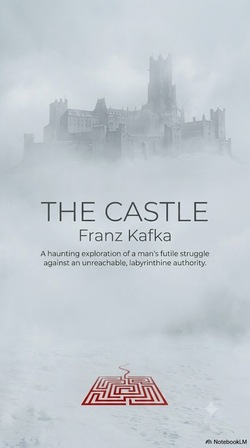
This book feels exactly like my life right now.
Your Review
This book feels exactly like my life right now.

K's struggle to prove his job mirrors how we feel when systems deny us basic recognition despite our efforts to comply with their confusing demands and ignore our human needs while prioritizing their own survival over our actual lives in a way that leaves us feeling trapped by a maze of contradictions that no one seems willing to fix because admitting mistakes would threaten the illusion of their perfect control over everything we try to do.

K. 's endless fight to prove his job exists mirrors my own frustration with confusing bureaucracy where rules change without warning, making me feel small and trapped by a system that prioritizes its own survival over human needs, leaving me exhausted just trying to get basic answers or clarity instead of fighting against an unyielding maze that refuses to admit mistakes.
Kafka shows how bureaucracy traps people like a maze where no one listens to your struggles or admits mistakes.

Kafka shows how bureaucracy traps us like a maze with no exit. When K arrives in the village, he has a letter proving his job as a land surveyor. However, the mayor claims it is fake, and no one believes him. K tries to meet officials, but they are always busy or unavailable. He even works as a janitor, scrubbing floors, just to survive. The system refuses to admit mistakes, so K is stuck fighting rules that contradict each other. His letter becomes worthless paper, and his dignity fades. Even when he finds Barnabas, a messenger, Barnabas is just another pawn who cannot help. The Castle represents any rigid structure that ignores human needs. It prioritizes its own survival over people. K's struggle mirrors our daily battles with healthcare or corporate rules. We feel powerless when systems deny us truth. Kafka does not offer easy solutions, but he exposes the cruelty of indifference. The villagers avoid K, treating him like a nuisance. His friends leave him, and his job vanishes. This story is not about evil villains, but about a machine that grinds people down. We all face invisible walls that block our progress. The Castle looms above us, unapproachable and cold. Even hope feels futile when the system never listens. Yet, K keeps trying, proving we resist even in despair. His fight reminds us to stay human despite the chaos.

K. fighting a job that never existed reminds me of my own life.

The comparison between K.'s impossible job hunt and my own healthcare billing nightmares hit hard. Kafka shows how systems ignore human pain to protect their own illusions, leaving us feeling small and trapped by rules we never asked for.

K. realizing his job was a mistake just like my denied insurance claim feels incredibly real and exhausting to read about.

The idea that the Castle refuses to admit any mistakes feels exactly like my experience with healthcare insurance claims that get denied for tiny errors I never made.

This book perfectly captures the feeling of being stuck in a confusing system where no one cares about your problems, making Kafka's 1922 story feel shockingly relevant to modern life today.
The metaphor of the Castle looking grand from afar but falling apart up close perfectly explains why powerful institutions often fail to help the people they claim to serve.

Kafka's vision of an unreachable authority mirrors my own struggle with modern bureaucracy, where systems prioritize their survival over human needs, leaving me feeling small and trapped in a maze of contradictions that never seem to resolve.

This book made me feel small like the healthcare system does.

The way Kafka shows the Castle falling apart while staying powerful mirrors our broken modern systems perfectly. K's journey from confident land surveyor to exhausted janitor captures that slow erosion of purpose we all feel when bureaucracy denies us our agency, turning a simple job search into a lifelong trap where every rule is designed to keep us stuck instead of helping us move forward. Even the Barnabas family tragedy warns us that small acts of defiance against rigid structures can lead to total isolation, making Kafka's story about feeling small and invisible in a maze of unaccountable rules deeply relevant today.
The idea that the Castle traps people in a cycle of degradation where every attempt to break free only makes things worse is a haunting and unforgettable theme.

Unsettling and brilliant portrayal of how systems crush human agency without ever admitting fault.

This book is a mirror reflecting our own struggles against invisible forces that make us feel small and powerless.

The way Kafka shows how bureaucracy slowly strips away your dignity while pretending to be fair is a powerful reminder of how easily systems can trap ordinary people.

This story perfectly captures my frustration with modern bureaucracy.

I found the part about the Barnabas family terrifying because it shows how quickly a small act of defiance can destroy a whole family when the system demands total obedience.