


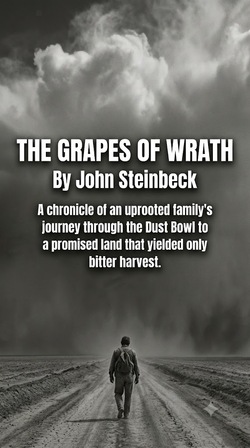
Steinbeck connects the Joads' 1930s struggle with our 2024 housing crisis, showing how banks treat people as disposable cogs in a profit machine.
Your Review
Steinbeck connects the Joads' 1930s struggle with our 2024 housing crisis, showing how banks treat people as disposable cogs in a profit machine.

Steinbeck shows how banks and corporations treat families as replaceable parts, making their struggle feel urgent and real.


The idea that the bank has no heart really hits hard when thinking about rent prices today.

Ma Joad keeps the family united when everything else tries to break them apart.

The idea that solidarity is our only defense against a system designed to discard us hits hard.

Steinbeck shows how banks using tractors to evict families destroys lives. The tortoise metaphor helps me understand why the Joads keep moving forward despite losing everything, proving that collective survival matters more than individual land ownership when the system treats people as disposable costs.

The story of the Joad family makes me feel their pain deeply.

This book reminds me that when people stand together, they can fight back against systems that try to break them.

Reading about the Joads losing their farm to a bank felt like a heavy mirror held up to our current housing crisis.

Steinbeck perfectly captures the terrifying reality of the Dust Bowl and corporate greed. The Joads' desperate journey west feels incredibly authentic and heartbreaking, making the systemic injustice feel very personal and urgent for anyone struggling today.

Ma Joad refusing to let the family split up feels like the strongest part of the story, showing that sticking together is the only way to survive when the world tries to break you apart.
Steinbeck shows how corporate greed treats families like disposable parts, making the Joads' loss feel terrifyingly real today.

Reading this made me realize how easily ordinary families can be pushed out of their homes.

Steinbeck shows how hard it is to keep your home.

The image of the tortoise refusing to stop after being hit really captures how the Joads keep moving despite losing everything.

The idea that California promised work but only gave cheap labor feels very relevant today.

Steinbeck shows how banks treated families like numbers, making the Joads lose their farm while corporations sent tractors to destroy their lives.

Hard story about families losing homes to banks.

The story of the Joad family moving west feels incredibly real and urgent, showing how systemic forces can destroy a family's life.

The idea that banks have no heart makes me realize how easily families get pushed out when profit matters more than people.