


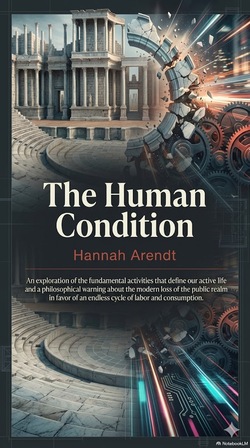
The interpretation explains how modern society turned labor into the highest value, making us feel empty despite being productive all day.
Your Review
The interpretation explains how modern society turned labor into the highest value, making us feel empty despite being productive all day.


Hard work feels empty without real action.

Arendt brilliantly shows how modern life traps us in endless labor instead of meaningful action.

This book made me question my daily grind and how I truly live.

Finally a book that explains why my busy life feels so empty.

The explanation of how the scientific revolution shifted focus from contemplation to doing really changed my perspective on why I feel so disconnected from my daily life.
Arendt brilliantly explains how modern life traps us in endless labor, stripping away the meaningful work and action that define our humanity.

This book helps me distinguish between necessary survival tasks and meaningful actions that reveal who I am, showing why modern life often feels empty despite constant productivity.

I finally understand why my daily grind feels empty and meaningless.

Too much theory.

Arendt distinguishes labor from work and action, showing how our society wrongly values survival tasks over creating lasting things or revealing our true identities through public speech. By explaining that labor is just a biological cycle tied to eating and sleeping, while work builds a shared world that outlasts us, she clarifies why doing repetitive tasks leaves us feeling unfulfilled. The section on action being the only way to show our unique 'who' instead of just our job title really resonates, as it challenges us to stop defining ourselves by what we do for money and start speaking up in communities. I found the historical shift from the Greek polis to modern consumer society heartbreaking because we traded a space for freedom and debate for one focused on managing the economy and buying things. The idea that science and industrialization turned humans into 'animal laborans' who just repeat cycles of production and consumption explains why so many feel trapped in a meaningless grind. Ultimately, this book offers a path back to humanity by encouraging us to rebuild public spaces where we can engage in unpredictable, meaningful actions rather than just consuming content or working for a paycheck.

This interpretation clarifies how modern life traps us in endless labor cycles.

This book explains why my busy life feels so empty and meaningless today.

My morning routine was just labor, not living, according to this insightful book.

Reading this made me realize my busy morning was just labor, not living.

The distinction between labor and action really clarified why my daily routine feels so empty.

Finally found a book that explains why my endless to-do list doesn't make me feel fulfilled or truly human.

While Arendt's ideas about labor and action are fascinating, I found the historical analysis of the Greek polis a bit difficult to connect to my modern daily struggles.

Reading this made me feel less guilty about just surviving instead of truly living my life.

I appreciate how Arendt shows that reducing life to mere labor strips us of our unique identity and connection to others.