


Truth
Your Review
Truth


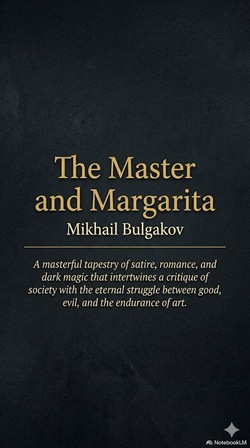
This book feels like it was written yesterday.

The satire on Soviet hypocrisy is sharp, yet the pacing drags in the middle sections.
Woland's chaos exposes lies perfectly.

Disappointed by the slow pacing and complex plot twists.

Woland feels real, exposing hypocrisy with chaotic magic and dark humor that hits hard.

Bulgakov hides his critique of Soviet censorship inside a wild devil story, making forbidden truth safe to read under a dictator's nose, which explains why the book survived bans for decades while the author faced exile or death, showing how fiction can outlive the regimes that try to erase it, proving that even when manuscripts are burned or authors silenced, the stories themselves persist underground until the world finally listens to them again.

Reading about Woland unmasking Moscow's hypocrites made me realize how often I ignore uncomfortable truths in my own life, preferring comfort over honesty instead. The way Bulgakov shows the Writers' Club switching from fake grief to dancing immediately after Berlioz's death perfectly captures how society prioritizes perks and status over real values, making the hypocrisy feel terrifyingly familiar in modern workplaces where we perform unity while cutting benefits or blocking necessary changes just to protect our bonuses and positions, proving that systems rely on collective denial to survive unless something forces us to see the rot beneath the orderly surface. While the story is set in Stalin's Russia, the critique of institutional corruption and the fear of being silenced for unpopular opinions resonates deeply with current debates about cancel culture and corporate ethics, reminding us that truth often requires a bit of chaos to break through the polished facades we all wear to fit in and avoid the discomfort of admitting our own complicity in the lies that keep us oppressed and silent.

The book feels urgent and vital today.

Bulgakov hides a critique of Soviet censorship inside a wild fantasy about Woland, where chaos exposes the lies of hypocritical bureaucrats and intellectuals, making the story feel urgently relevant today as we face similar struggles with conforming to systems that punish authenticity while pretending to offer equality, reminding us that truth often requires a chaotic force to break through the polished facades of power that silence anyone daring to write forbidden stories or question official narratives.

Truth always wins against all forms of fear.

The writers club pretending to mourn while partying is fake.
The satanic ball scene is wild and unforgettable.

Woland feels like a chaotic truth-teller rather than a villain, perfectly exposing how Soviet hypocrisy hides behind polite lies and empty promises of equality.

Bulgakov exposes how hypocrisy hides under Moscow's surface. Woland's chaos forces people to face their lies instead of pretending everything is fine.

Margarita choosing rebellion over comfort was truly inspiring.

Woland unmasking hypocrisy feels very real today.

The comparison between Pilate and Soviet officials feels too direct.

Using chaos to expose lies works better than direct arguments. Woland forces people to see their own hypocrisy instead of just preaching to them. This approach makes the critique of Soviet bureaucracy feel sharp and necessary, showing that sometimes truth needs a wild delivery to break through the noise of official lies.

The Master burning his manuscript shows how hard censorship is. His later restoration by Woland feels like a powerful message that truth cannot be destroyed forever, even when the state tries to erase it completely. This parallel between ancient Rome and Soviet Moscow highlights how systems crush creativity, but art finds a way to survive. Bulgakov uses this tragic arc to argue that writing forbidden stories is an act of courage. It resonates with modern creators facing backlash, proving that silence is never the only option.