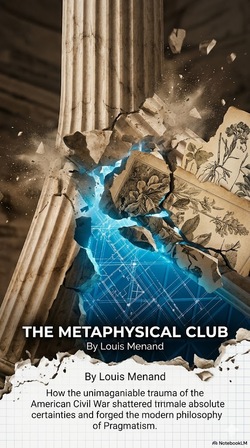



The book brilliantly connects the Civil War trauma of Holmes and James to their later rejection of absolute moral truths, showing how their personal pain forged a philosophy that prioritizes practical solutions over abstract ideals. Menand does an excellent job contrasting Holmes' frontline experience with James' internal guilt, demonstrating that their different paths led to the same pragmatic conclusion: truth is what works in a messy world. The section on Charles Peirce using statistics to challenge old legal certainties is particularly compelling, illustrating how diverse thinkers united against dogma. While the narrative covers a lot of ground from 19th-century philosophy to modern education reform, the core message remains clear: we need adaptable ideas to solve current problems like political division and climate change. I appreciate how the author avoids making these historical figures sound like perfect heroes, instead showing them as flawed humans who struggled to find meaning after losing faith in traditional systems. This makes the philosophy feel more accessible and relevant to anyone facing uncertainty today.