


Bachelard turns ordinary objects like drawers and cabinets into portals for our deepest memories, showing how space truly mirrors our inner lives.
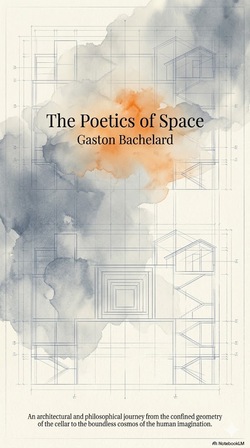
Your Review
Bachelard turns ordinary objects like drawers and cabinets into portals for our deepest memories, showing how space truly mirrors our inner lives.


Bachelard transforms ordinary corners into deep emotional sanctuaries where our hidden selves finally feel safe enough to breathe.

This book made me realize my old closet is a memory vault, not just storage. It changed how I see my home forever.
This book made me see my old kitchen as a memory.

I felt instantly warm reading about childhood spaces and how they hold our true selves.

Bachelard turns ordinary corners into portals for our deepest memories and dreams, proving that space is never just a physical backdrop but a living mirror of our inner lives where reason and emotion balance perfectly, reminding us that even the smallest nook or a simple drawer holds the weight of our soul and connects us to the past, allowing us to reclaim the warmth and magic stripped by modern efficiency while showing how nests and shells teach us that true shelter aligns our body and soul like a second skin, making every room we inhabit an extension of who we truly are.

Bachelard shows how poetic space lets us carry our sense of home even when we constantly move to new cities.

This book made me see my old kitchen as more than just a room. It feels like a warm reset button now.
This book changed how I see my old home.

Bachelard explains how small spaces like drawers hold our messy memories better than organized files.
Bachelard's argument that imagination creates real space, not just reason, is the most important idea in this book.
Bachelard teaches us that small corners and hidden drawers hold our deepest memories, making ordinary spaces feel like living extensions of our inner souls.
Bachelard transforms ordinary objects like drawers and cabinets into deep mirrors of our inner lives, showing how memory makes even small spaces feel like a living part of our soul.

Bachelard argues space is a mirror of our inner lives, not just a geometric backdrop for efficiency. Instead of measuring rooms by square footage or optimizing layouts for productivity, he invites us to see how ordinary objects like old cabinets or corners hold deep memories and emotions. He suggests that a simple drawer isn't just for storage but a repository for the messy, unspoken parts of our identity, while natural spaces like nests and shells offer a primal blueprint for belonging. By rejecting the cold, rationalist view of architecture that treats homes as machines, he reminds us that true shelter comes from the dreams and stories we infuse into our surroundings, turning functional structures into living extensions of our souls where we can finally be fully ourselves.

Bachelard turns ordinary spaces into mirrors of our inner lives, showing how memories and dreams transform walls into homes rather than just functional structures.

Bachelard transforms ordinary furniture into mirrors of our inner souls, making me see my childhood cabinet as a sacred piece of my own history.

Understanding that boxes help us guard our private self was a very helpful insight for me.

The idea that space is an extension of our soul feels deeply true and comforting.

Reading about how attics and cellars mirror our inner lives changed how I see my own home.

Bachelard turns a simple attic into a map of our rational hopes and dreams. The idea that storing books up high mirrors our desire for order is surprisingly accurate for anyone who has ever organized their life. When he describes the cellar as the dark place where we hide our fears and irrational passions, it felt like he was describing my own childhood basement where I kept the things I was afraid to face. I realized that my home isn't just walls and floors, but a reflection of my inner conflict between wanting control and needing to surrender to chaos. The part about the drawer holding messy memories instead of neat files really changed how I look at my junk drawer now, seeing it as a safe container for emotions rather than just trash. His comparison of the nest to our own body fit perfectly with how I feel when I curl up in my favorite armchair, feeling completely protected and part of the space around me. Even the shell metaphor about growing and transforming while staying safe resonated with my recent life changes. Reading this made me stop treating my apartment as just a place to sleep and start seeing it as a mirror of who I am inside, connecting my physical surroundings to my deepest sense of belonging and identity.