



Reading about Fugui losing his family yet still finding a reason to wake up every day was heartbreaking but also strangely comforting for someone going through hard times.
Your Review
Reading about Fugui losing his family yet still finding a reason to wake up every day was heartbreaking but also strangely comforting for someone going through hard times.

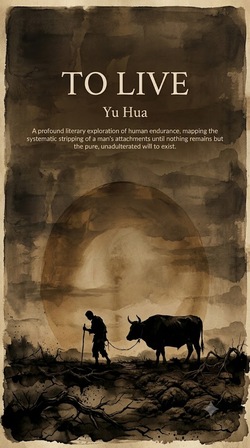
Fugui keeps going even when everything feels too heavy to carry. The story shows that surviving isn't about winning, but about finding small moments of warmth in daily life. When he talks to his old ox using his family names, it proves that grief doesn't disappear; instead, we carry it like a backpack and choose to show up every morning. Yu Hua writes about loss without romanticizing it, making the reader feel the quiet courage required to live on when the world keeps taking more than it gives. This interpretation helps me understand why the book resonates so deeply with anyone who has ever felt unmoored by sudden tragedy. It reminds us that resilience isn't a grand triumph, but the simple, repeated act of getting up and tending to our fields, even when our hearts are broken.

Fugui's journey from a reckless heir to a man who simply keeps going despite losing everyone he loves hits hard. The way Yu Hua shows that resilience isn't about triumph but showing up every day makes this story deeply moving and universally relevant for anyone facing loss.

This book shows that surviving isn't about fixing your life, just about showing up every single day despite everything life takes away from you.

I felt sad reading about Fugui losing his family one by one, but his choice to keep working the land gave me hope even when life felt unfair and cruel.

Reading about Fugui talking to his old ox using his family's names brought me to tears because it shows how we keep love alive.

Fugui's quiet resilience after losing his family truly mirrors our own struggles with grief and uncertainty today. The way he keeps talking to his old ox using his family's names, like calling out Youqing or Fengxia while plowing the fields, shows how he weaves their memories into his daily life instead of trying to forget them. Yu Hua doesn't offer a dramatic fix or a Hollywood-style breakthrough where he suddenly finds peace; instead, the story reminds us that grief is a constant presence we carry like a heavy backpack, and true strength is simply the choice to get up each morning and show up for ourselves and the people we've lost, even when the future feels empty and the pain is still there.
Tears every time Fugui talks to his ox as if his family is still walking beside him in the fields.

Fugui's story really hits home because it shows that survival itself is a quiet act of courage when everything else falls apart.

Fugui's quiet resilience mirrors my own struggle after losing a job, showing that survival itself is a brave act when everything else falls apart.

While the book is sad, it teaches me that finding small joys helps us keep going when life feels too hard.

Fugui keeps going even after losing everyone he loves, showing that survival itself is the bravest act when life feels like nothing matters anymore.

This book made me cry because losing everything feels so real and hard to handle.

Just wow.

The story makes me cry.

I felt sad for Fugui losing his son, but seeing him work hard every day gave me hope that we can heal slowly.

Simple story about a man who just keeps living.

Fugui’s quiet resilience in facing endless loss feels incredibly real and deeply moving.

Reading this made me feel like my own life is full of unexpected turns and quiet strength.
Fugui survives losing everyone he loves, yet keeps working the fields with his old ox every single day.