



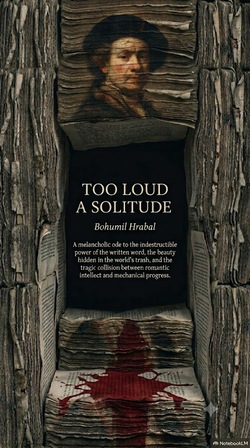
A heavy read about saving books from a crushing machine.
Your Review
A heavy read about saving books from a crushing machine.

Hanja's secret stash of rescued books feels like a quiet, defiant act of love in a world that wants everything crushed and discarded into nothingness.

Hanja's quiet rebellion against destroying books feels incredibly relevant to our current culture wars.

Hanja saves books while destroying them, a quiet rebellion against erasure that feels deeply necessary now.

Hanja's quiet rebellion against a world that crushes culture feels incredibly relevant today as we face our own erasure of meaningful stories.

Hanja absorbs words like candy until they become part of his bones, making the loss of physical books feel less final because the ideas live on inside him and the air, offering a quiet, stubborn hope that meaning cannot be crushed by machines or war, even when his basement sanctuary is eventually taken away and he must face the emptiness of a world that treats culture as disposable trash.
The idea that saving a book is a duty against a world that treats everything as disposable trash.

The idea that ideas survive even when the paper is destroyed offers a strange but necessary comfort.

Hanja's habit of drinking beer before destroying books shows how painful it is to lose culture, making his secret rescue of rare volumes a powerful, quiet act of rebellion that reminds us ideas survive even when paper turns to pulp, urging us to protect the stories we cherish before algorithms or machines decide what deserves to exist forever.

His secret box holds rare books but rats eat them slowly at night.

Amazing.

He hides books in a box lined with religious icons to save them.

Sad but hopeful story about saving books.

Hanja's quiet act of saving books while working to destroy them feels like a powerful metaphor for our current struggle against cultural erasure.

Sad but powerful story.

Hanja drinks beer to activate his mind before feeding books to the press.

Hanja absorbs words like candy and hides treasures in his apron pocket.

Hanja feels like a lonely hero trying to save culture from disappearing forever.

The idea that Hanja absorbs words into his bones like candy makes the theme of preserving ideas even when physical books are destroyed feel strangely personal and deeply moving.

Hanja's quiet rebellion against crushing culture feels incredibly relevant today, reminding us that saving ideas matters more than saving paper. The connection between his basement solitude and our digital age's loss of depth is both haunting and hopeful for anyone worried about cultural erasure.