
What to Expect the First Year: Complete Chapter-by-Chapter Summary

Welcome to today's session. We're diving into a book that is more than just a guide—it's a lifeline for parents. The cover you see here introduces *The Alpha Male Bible* by Tyler Brooks. The tagline promises to "Carve away the excess of fear and bad habits to reveal the refined, strong, and intentional masterpiece underneath." While the title suggests a focus on masculinity, the core message is universal: stripping away anxiety to find your authentic, capable self.
This book isn't about becoming a caricature of strength; it's about the courage to be real. It challenges the modern pressure to perform perfection at all costs. Instead, it invites you to examine your fears, your outdated habits, and the societal scripts that no longer serve you. By doing the hard work of introspection, you uncover a version of yourself that is grounded, purposeful, and truly resilient.
As we move through this book, remember that true strength comes from vulnerability and intentionality, not from suppressing your humanity. Let's begin this journey of self-discovery.

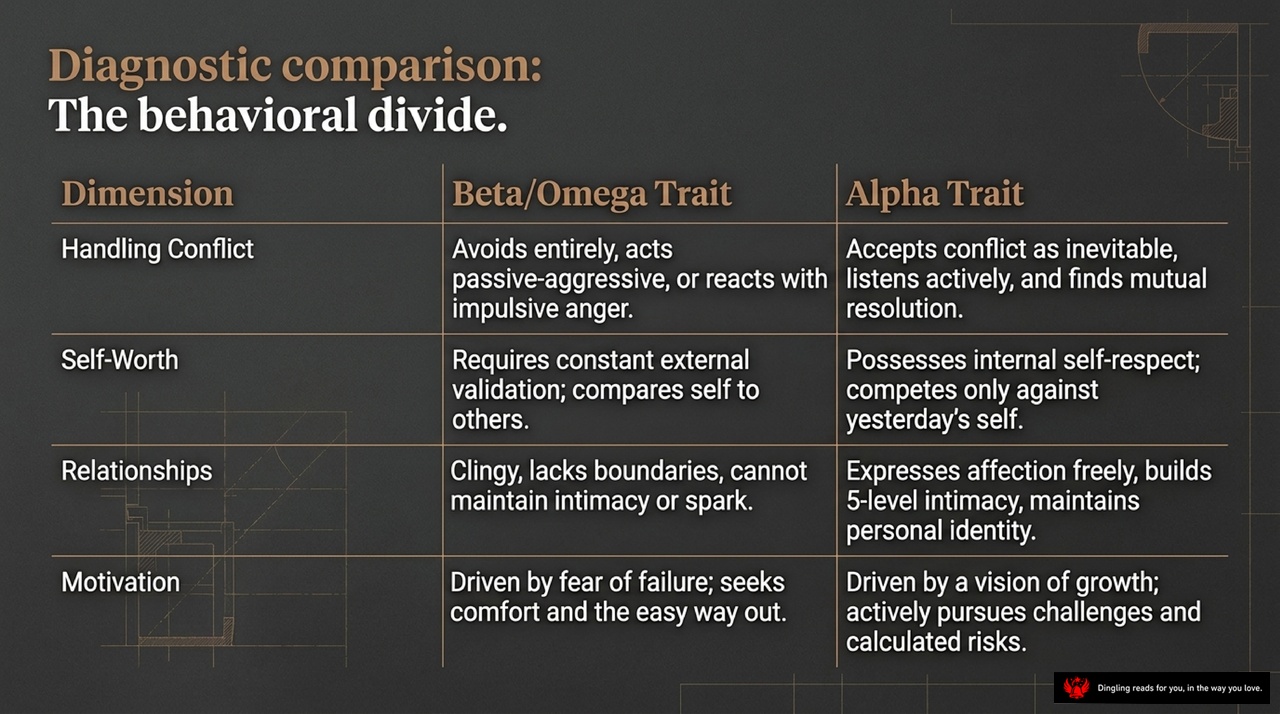
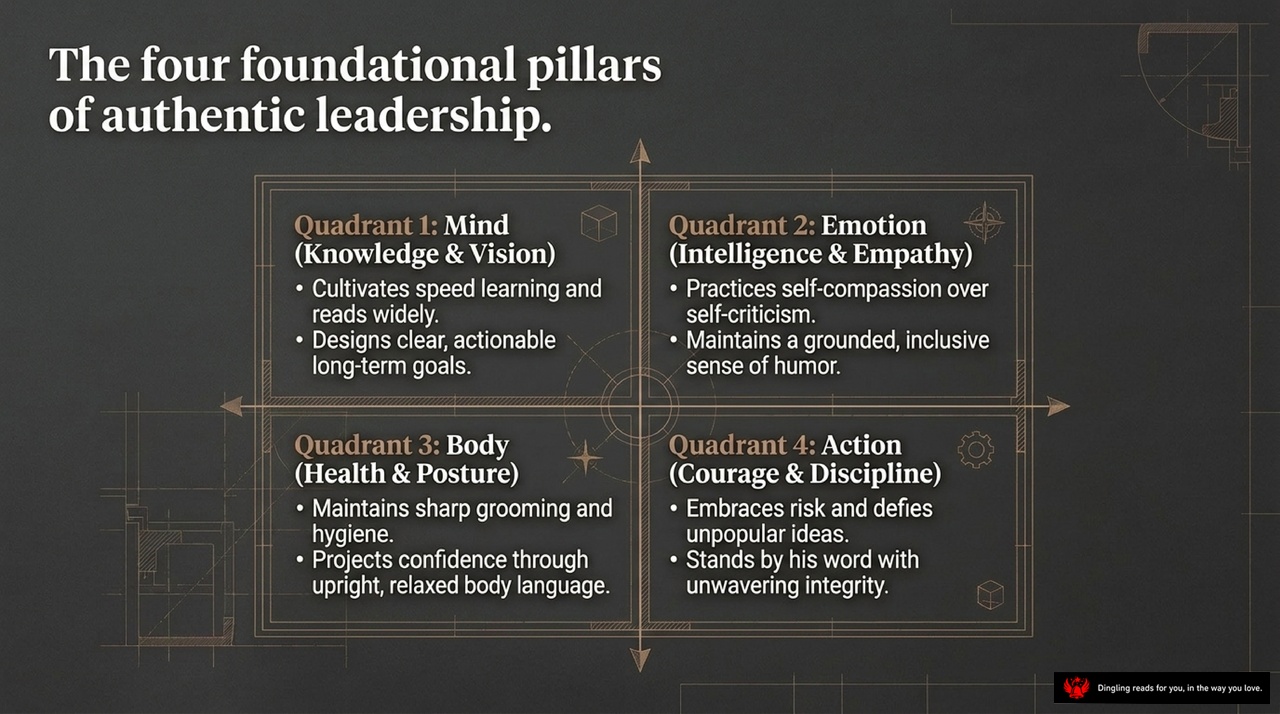
True authority isn't about being the loudest person in the room or asserting dominance; it's about mastering yourself. On this slide, we see a sharp contrast between two ways of being. On the left, we have "Toxic Masculinity"—represented by that rough, jagged rock marked with a big red X. This is the old-school trap of proving your worth through aggression, loudness, and bullying. It's exhausting, fragile, and ultimately repels people.
But look at the right side. That intricate, balanced structure represents the modern standard: True Authority. It's not built on hardness, but on a sophisticated blend of five key pillars. First, there's Empathy and Emotional Intelligence—understanding others and finding harmony within your team. Then, we have The Gentleman's Demeanor, which means treating vulnerable people with gentleness while firmly respecting boundaries. It's about strength with softness.
You also need Humble Knowledge. Being well-read in philosophy, science, or art shouldn't be a weapon for bragging; it should be a quiet confidence that you don't need to shout to be respected. Finally, Resilience and Humor are your safety nets. Using humor to acknowledge shared humanity keeps you mentally stable and connected. When you build your leadership on these five points instead of aggression, you stop trying to dominate the room and start earning the respect of everyone inside it.

When we talk about leaving our potential unsculpted, we're not just talking about career paths; we're talking about the very foundation of who we are and how we connect with the world. Look at this crumbling staircase. It represents the heavy toll of staying invisible. When we lack the charisma and presence to stand out, we become "invisible in the room." We get overlooked at social events, and worse, we get overlooked in the workplace.
This invisibility leads directly to professional stagnation. If bosses and colleagues see a version of us that doubts its own worth, they simply won't entrust us with high-stakes leadership or promotions. We get stuck because we never get the chance to prove our capabilities. But the damage goes deeper than just our careers. A lack of confidence and clear boundaries creates a vulnerability to disrespect. Without that solid, sculpted presence, we invite mean-spirited individuals to take advantage of us, bully us, or even claim credit for our hard work.
Finally, this internal fragility bleeds into our personal lives, leading to relationship failure. An inability to project confidence makes it nearly impossible to satisfy a partner's need for stability or to communicate effectively, causing romance to fade. The image of these cracked, unstable steps is a powerful reminder: we must actively sculpt our potential. We cannot just let ourselves crumble under the weight of uncertainty. We need to build that solid, unshakeable presence that commands respect, secures our future, and strengthens the relationships we cherish.
Let's dive into the physical reality of that first week. You're holding a newborn who looks surprisingly different from the "perfect baby" you might have imagined. Their head is often conical from the birth canal, and those soft spots on top, the fontanelles, are pulsing with life. Their eyes might be swollen or even a deep blue-gray, settling into their final color only by months 3 or 6. You'll see fine, downy hair on their shoulders and back that will naturally shed, and yes, both boys and girls might show breast swelling or even discharge due to mom's hormones—it's all normal and temporary.
But beyond the physical changes, there's a new rhythm. Newborns operate on a simple loop: eat, sleep, repeat. They can sleep for up to 24 hours on day one as they adjust to the outside world. Once awake, they might only stay up for an hour before needing a feed. Every 2 to 3 hours, they wake up hungry, ready to feed, then back to sleep. This is their job right now.
Feeding is the core mission. Whether you're breastfeeding or using formula, the rule is simple: feed on demand. For breastfeeding, aim for that first feed within the first hour to get that "liquid gold" of colostrum, packed with antibodies to help clear meconium and build immunity. Their stomachs are tiny—about the size of a fist—so they need to eat 8 to 12 times a day. Even if they're sleeping, wake them up if it's been more than three hours. For formula-fed babies, start with 1 to 2 ounces per feed in the first week, increasing as they grow. Always watch for hunger cues like rooting or sucking motions, and remember to burp them after every feed to prevent gas.
This first month is about adaptation. You'll notice they can focus on faces about 8 to 12 inches away, hear familiar voices, and show those newborn reflexes like grasping or sucking. You might also see spit-up, which is usually just their immature stomach working through milk, or fussiness that could be colic. The key here is presence and patience. Keep checking their growth curve, respond to their cries, and trust that this chaotic, beautiful phase is just the beginning of their journey.
Let's talk about the first few months of life, where the magic of rapid growth really kicks in.
In the second month, you'll notice your baby's world opening up. They start tracking objects with their eyes and smiling with purpose at your face—this social connection is huge. By month three, they lift their heads strong during tummy time and grab toys with intent. Month four brings a new milestone: reaching for things with both hands and even bringing them to their mouths to explore.
As we move into months five and six, things get even more dynamic. Your baby might start rolling over and eventually crawling, which often leads to a temporary "sleep regression" as they practice these new skills. They also start babbling with sounds like "ba-ba" and "ma-ma," showing the early signs of language.
By month seven, they are definitely a mover! You'll see them crawling with purpose, and by month eight, they'll start pulling themselves up to stand, holding onto furniture for support. This is also when separation anxiety begins to creep in as they realize you are a separate person.
In months nine and ten, their language skills explode. They might say "mama" or "dada" specifically for you and try to feed themselves with fingers, making a bit of a mess. They also start cruising—walking while holding onto things.
Finally, by their first birthday, many babies are taking their first independent steps. They understand more commands, play alongside other kids, and celebrate their big one-year milestone. Remember, every baby has their own unique timeline, so celebrate these moments without comparing them to others.
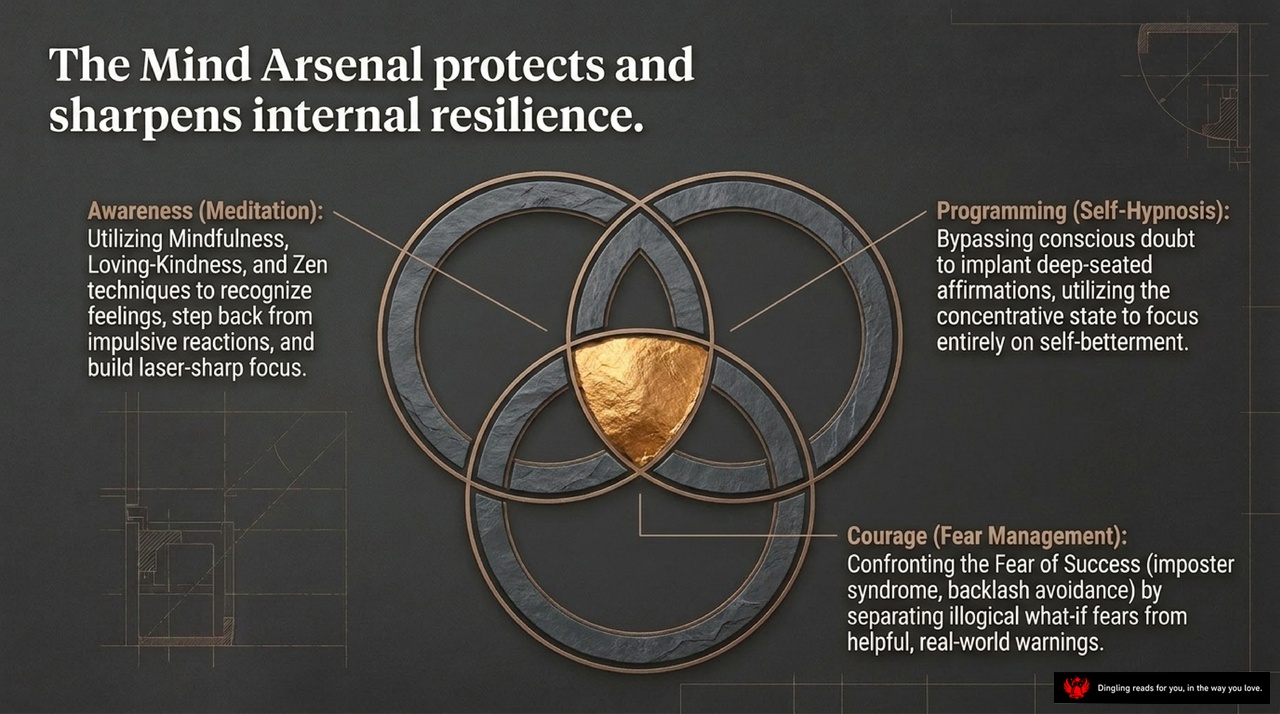
The Mind Arsenal isn't just a metaphor; it's your new operating system for parenting. As we look at this slide, we see three core tools that build your internal resilience: Awareness, Programming, and Courage.
First, let's talk about Awareness, or Meditation. Think of this as hitting the "pause" button on your day. When you feel that surge of stress or panic, instead of reacting impulsively, you use mindfulness and loving-kindness techniques to step back. You recognize the feeling without being swept away by it. This creates that laser-sharp focus needed to navigate the chaos of a new baby's needs.
Next is Programming, which we call Self-Hypnosis. We know that conscious doubt can hold us back. This tool helps you bypass that inner critic by using the concentrated state of focus to implant deep-seated affirmations. When you visualize yourself as a calm, capable parent, you aren't just pretending; you are rewiring your brain to believe in your ability to handle whatever comes next.
Finally, we have Courage, or Fear Management. Every parent battles the fear of success—the imposter syndrome, the worry that we're doing it wrong, or the fear of backlash from others. The key here is to separate those illogical "what-if" fears from real-world warnings. You need the courage to confront these doubts, not by ignoring them, but by managing them so they don't paralyze you.
By combining Awareness, Programming, and Courage, you build a mental fortress. This internal resilience protects you from burnout and sharpens your instincts, allowing you to lead with confidence rather than fear.
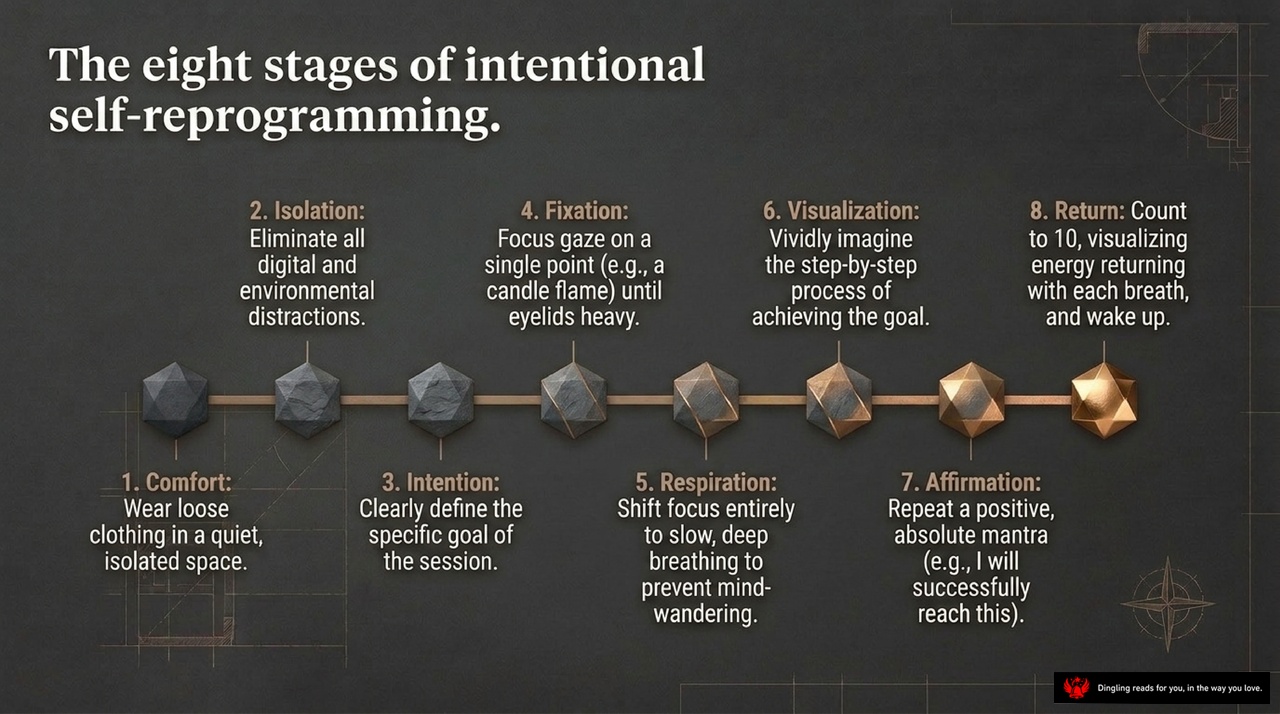
Welcome back. Let's dive into the final, crucial phase of our self-reprogramming journey: Stage 8, **Return**.
Imagine this moment not as an end, but as a powerful reintegration of the new energy you've cultivated. As you wake up, your goal is to count slowly from one to ten. With every number you speak, visualize a fresh wave of energy returning to your body, flowing from your head down to your toes. Feel that vitality settling into your muscles and mind, carrying the clarity and confidence you built during the session.
This counting ritual helps ground your intention into your daily life. You are bringing the "programmed" state of success into your waking reality, ensuring that the insights you gained don't fade away but instead become the foundation for your day. By consciously visualizing this energy returning with each breath, you signal to your subconscious that the work is done and the new self is ready to emerge.
Remember, this isn't just about waking up; it's about carrying the momentum of your intentional self-reprogramming forward. Take a deep breath, count to ten, and step out of your bed knowing you are already aligned with your goals.
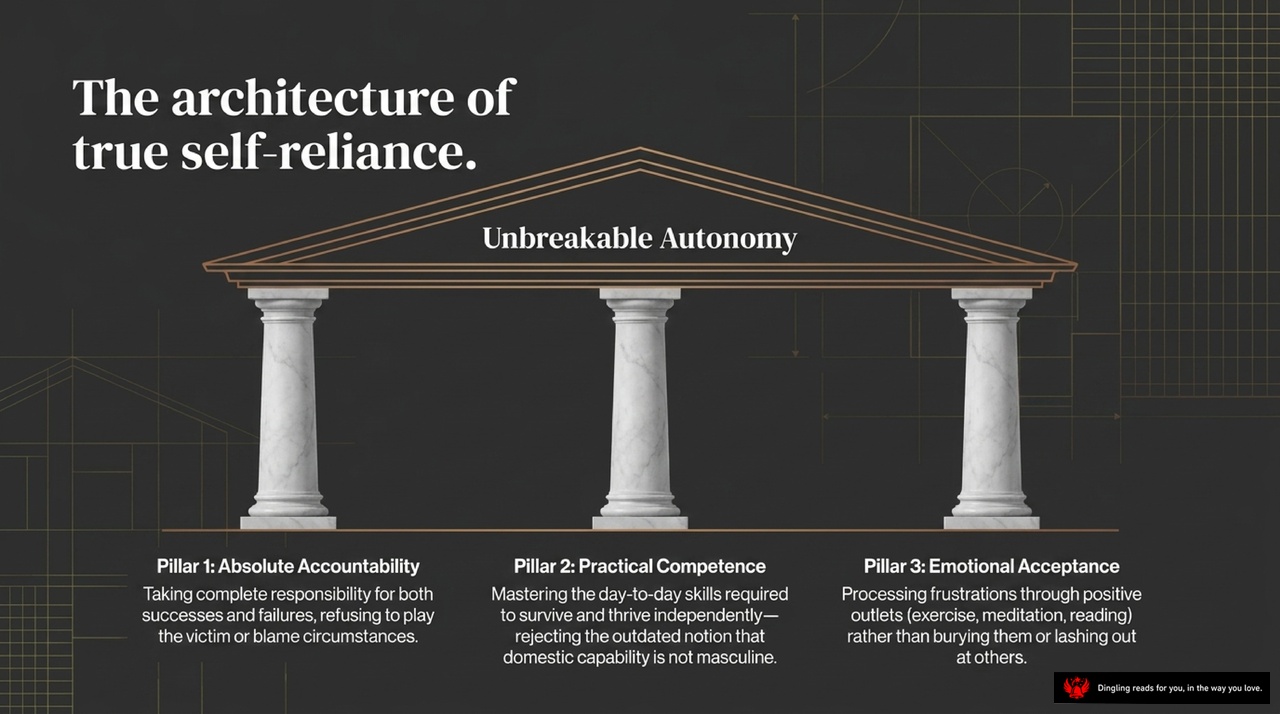
Imagine your baby's first year as a grand architectural project, where every milestone builds a stronger foundation for their future. As we move from the newborn stage into the exciting months of discovery, the "architecture" of their growth shifts dramatically.
By the third month, you'll witness a true revolution in movement. Your little one will master the art of holding their head up, supporting their chest on their elbows, and even reaching out to grab toys with purpose. This is the moment they truly start to explore their world. Sleep patterns also stabilize, with nights stretching to eight or ten hours, though that one or two middle-of-the-night feed might still be needed.
As we approach the fourth and fifth months, the focus turns to fine motor skills and nutrition. Your baby's hands become incredibly dexterous, capable of bringing objects to their mouth and eventually using a thumb and finger to pick up small items. This is also the critical window for introducing solid foods. Look for signs like increased curiosity about your own meals and the disappearance of the tongue-thrust reflex. Start gently with iron-fortified cereals, following the golden rule of "one new food at a time" to watch for any reactions.
By the seventh month, the real adventure begins with the breakthrough of crawling. Whether they are scooting along on their tummies or transitioning to a classic hand-and-knee crawl, this mobility change will captivate you. It also brings a new emotional layer: separation anxiety. Your baby now recognizes you as a separate person, so when you leave, they feel the weight of that absence. This is a normal, healthy sign of their developing self-awareness.
Finally, as we enter the eighth, ninth, and tenth months, the baby becomes a determined explorer. They will pull themselves up to stand, using furniture as a scaffold, and eventually, they will take their first wobbly steps. Language explodes with new sounds, mimicking the rhythm of adult speech, and their independence grows stronger with every new skill they master. Remember, every child builds their own unique structure, so celebrate every step of this incredible journey.
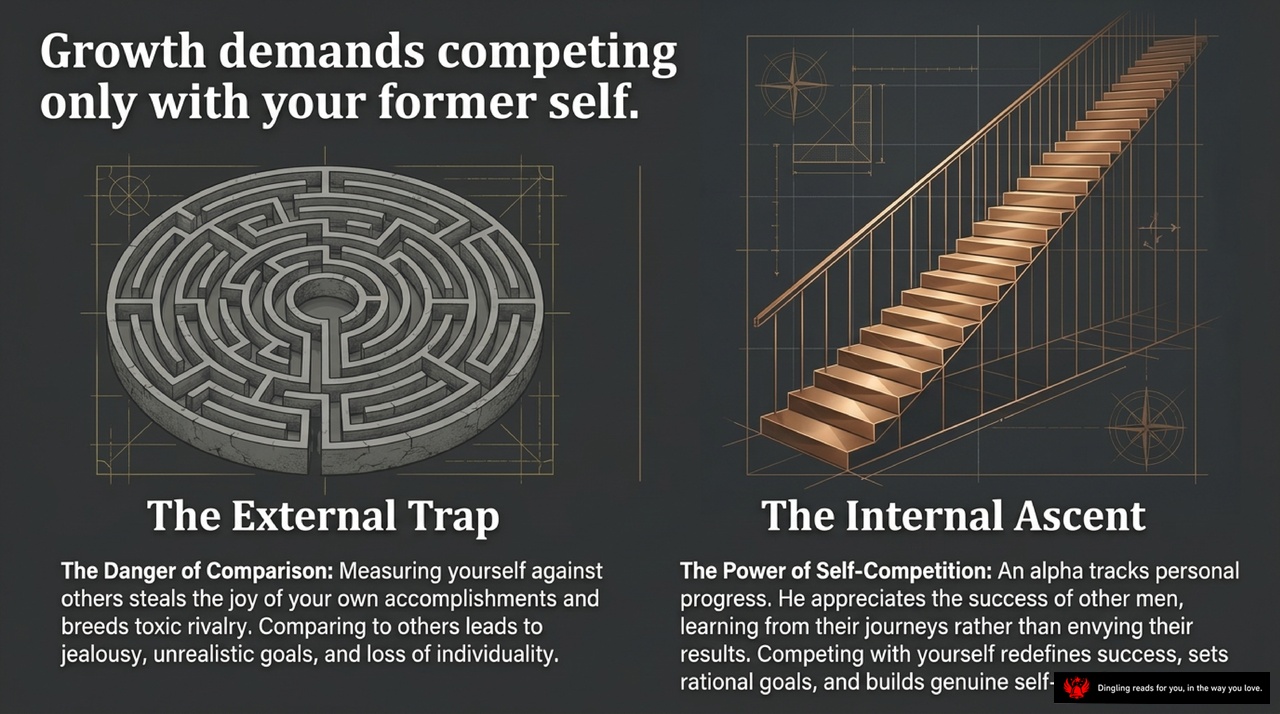
Growth demands competing only with your former self. Look at these two paths: on the left, a complex maze labeled "The External Trap," and on the right, a clear, ascending staircase called "The Internal Ascent." This visual perfectly captures the core lesson for any parent or leader: stop measuring yourself against others and start focusing on your own progress.
When we measure ourselves against other parents, we fall into the external trap. Comparing our baby's milestones to someone else's steals the joy of our own accomplishments and breeds toxic rivalry. It leads to jealousy, unrealistic goals, and a total loss of individuality. You might feel anxious because your toddler isn't walking yet, while a neighbor's is already running. But that comparison is a distraction that kills your peace.
Instead, choose the internal ascent. This is the power of self-competition. An alpha doesn't envy others; they track their personal progress. You should appreciate the success of other parents and learn from their journeys, but never let their results define your success. Competing with yourself redefines what success looks like for your family. It helps you set rational goals based on your unique situation and builds genuine self-confidence.
Remember, every child grows at their own pace. Your journey is yours alone. Climb your own stairs, ignore the maze, and celebrate every small victory along the way.

Forging a resilient and highly capable physical vessel isn't just about working out; it's about engineering your body for long-term performance and recovery. Think of your body as a high-performance machine that needs the right fuel and downtime to run at its peak.
First, focus on cellular recovery. Prioritize 7 to 9 hours of sleep in an ambient temperature that allows your brain and body to repair effectively through Rapid Eye Movement, or REM sleep. This isn't just about feeling rested; it's the critical window where your body rebuilds itself.
Next, prioritize muscular nourishment. You need to consume adequate protein, aiming for 1 gram per kilogram of your body weight, spread across multiple meals throughout the day. This consistent intake is essential to build and sustain the functional strength required for your daily activities and long-term health.
Finally, implement strict toxin limitation. Severely restrict alcohol, as it disrupts REM sleep, causes empty calorie gain, and prevents crucial protein synthesis needed for muscle repair. By managing these four pillars—sleep, nutrition, stress management, and toxin control—you create the foundation for a body that is not only strong but truly resilient.
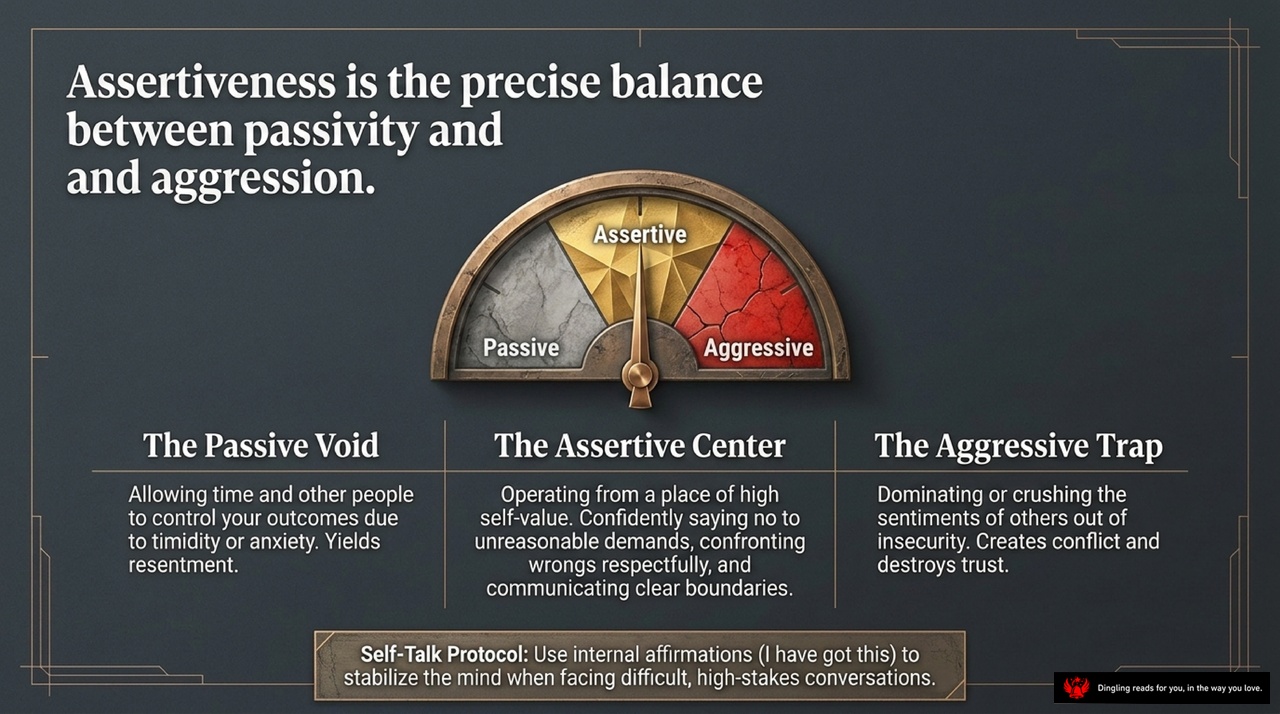
Assertiveness is the precise balance between passivity and aggression. Think of it as a delicate gauge: too much passivity leaves you in a void where others control your outcomes, breeding resentment; too much aggression traps you in a cycle of domination that destroys trust. True assertiveness lives in the golden center. It means operating from a place of high self-value—confidently saying no to unreasonable demands, confronting wrongs respectfully, and communicating clear boundaries without fear or hostility. When facing difficult, high-stakes conversations, remember your Self-Talk Protocol: use internal affirmations like "I have got this" to stabilize your mind and stay grounded.
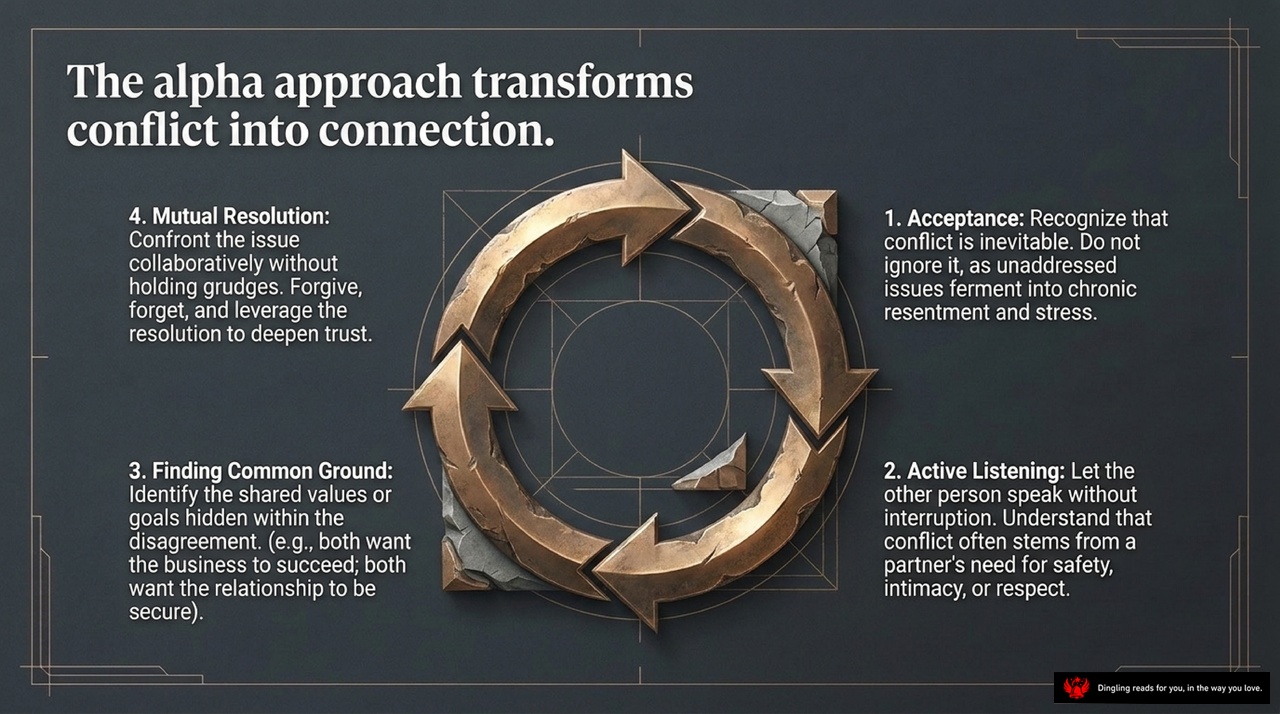
The Alpha Approach transforms conflict into connection, turning friction into a bridge for deeper trust. As we move through these steps, remember that conflict is inevitable; ignoring it only allows resentment to fester. Start with Acceptance: recognize the clash, don't suppress it, and understand that unaddressed issues grow into chronic stress. Next, practice Active Listening. Let your partner speak without interruption. Often, conflict isn't about the surface argument, but stems from a deeper need for safety, intimacy, or respect. Once you've heard each other, move to Finding Common Ground. Look past the disagreement to identify shared values or goals hidden within the tension. For example, both parents might want the business to succeed or the relationship to remain secure. Finally, achieve Mutual Resolution. Confront the issue collaboratively without holding grudges. Forgive, let it go, and leverage this resolution to deepen the trust you share. This cycle doesn't just solve problems; it strengthens your bond.
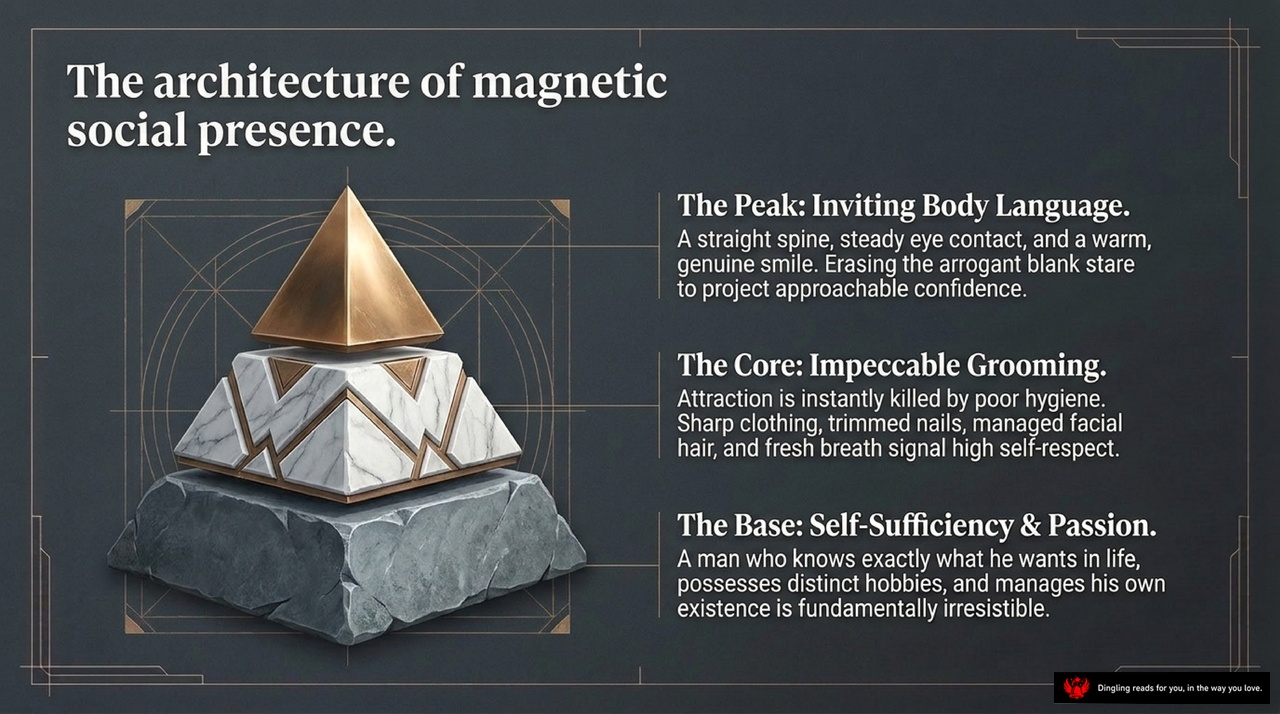
Let's talk about what truly makes someone magnetic in a social setting. Think of it not as a trick, but as a three-layer architecture. At the very top, you have the peak: inviting body language. It's about projecting approachable confidence through a straight spine, steady eye contact, and a genuine, warm smile. This is the difference between commanding respect and simply being liked.
But a peak needs a strong foundation. That brings us to the core: impeccable grooming. We often overlook this, but attraction is instantly killed by poor hygiene. It's the sharpness of your clothing, trimmed nails, managed facial hair, and fresh breath that signals high self-respect to the world. You don't need to be flashy; you just need to look put-together.
Finally, everything rests on the base: self-sufficiency and passion. This is the most critical layer. A person who knows exactly what they want in life, possesses distinct hobbies, and manages their own existence is fundamentally irresistible. When you combine a confident presence, a polished look, and a life you are actively building, you create a magnetic social presence that draws people in naturally.
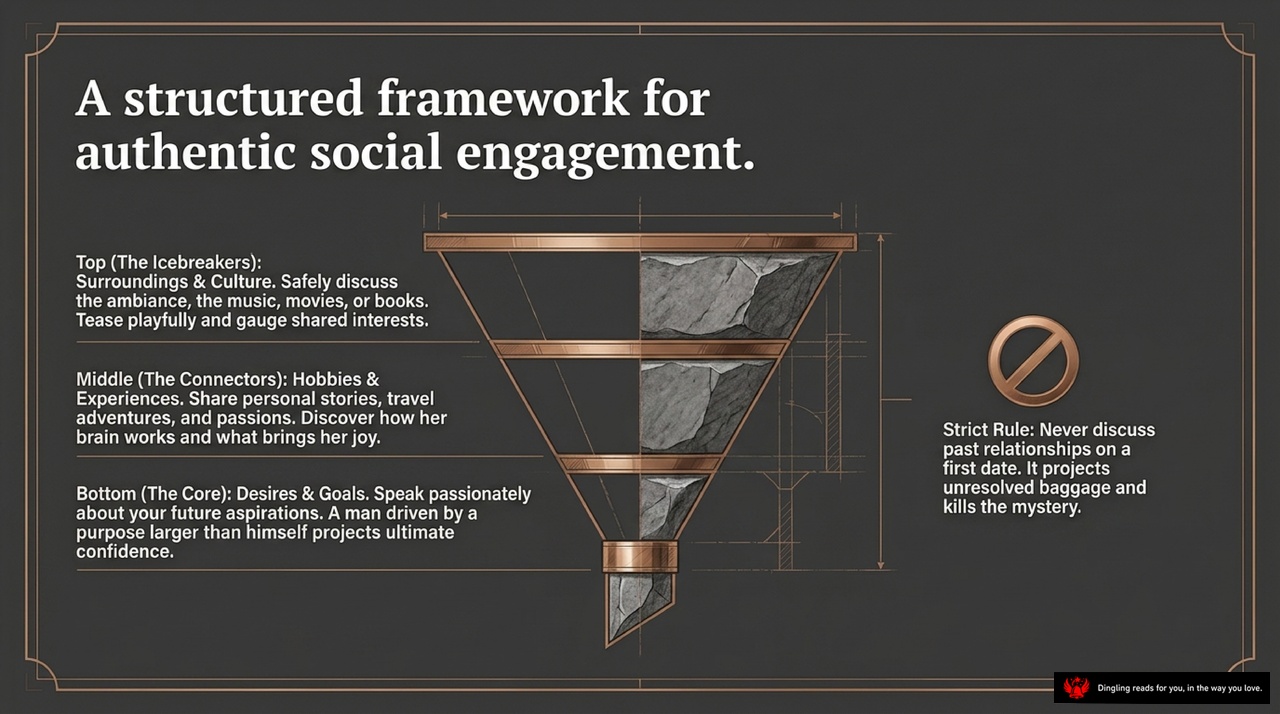
Today, let's look at the structured framework for authentic social engagement. Think of this interaction as a carefully designed funnel, guiding you from a safe first impression to a deep, meaningful connection.
At the very top, we have the Icebreakers. This is all about the surroundings and culture. Don't force deep questions immediately; instead, safely discuss the ambiance, the music playing in the background, or perhaps a movie you both enjoyed. The goal here is to tease playfully and gauge shared interests without putting pressure on either of you.
As you move down into the Middle section, known as The Connectors, the conversation shifts to hobbies and experiences. This is where you share personal stories, travel adventures, and genuine passions. It's the perfect opportunity to discover how her brain works and, more importantly, what truly brings her joy.
Finally, we reach the Bottom, or The Core. This is where you speak passionately about your future aspirations and desires. A man driven by a purpose larger than himself projects ultimate confidence, showing her that you have a vision for your life.
However, there is one strict rule you must follow on the right side of this funnel: Never discuss past relationships on a first date. Bringing up ex-partners projects unresolved baggage and instantly kills the mystery you are trying to build. Keep the focus on the present and the future to keep the connection authentic and engaging.
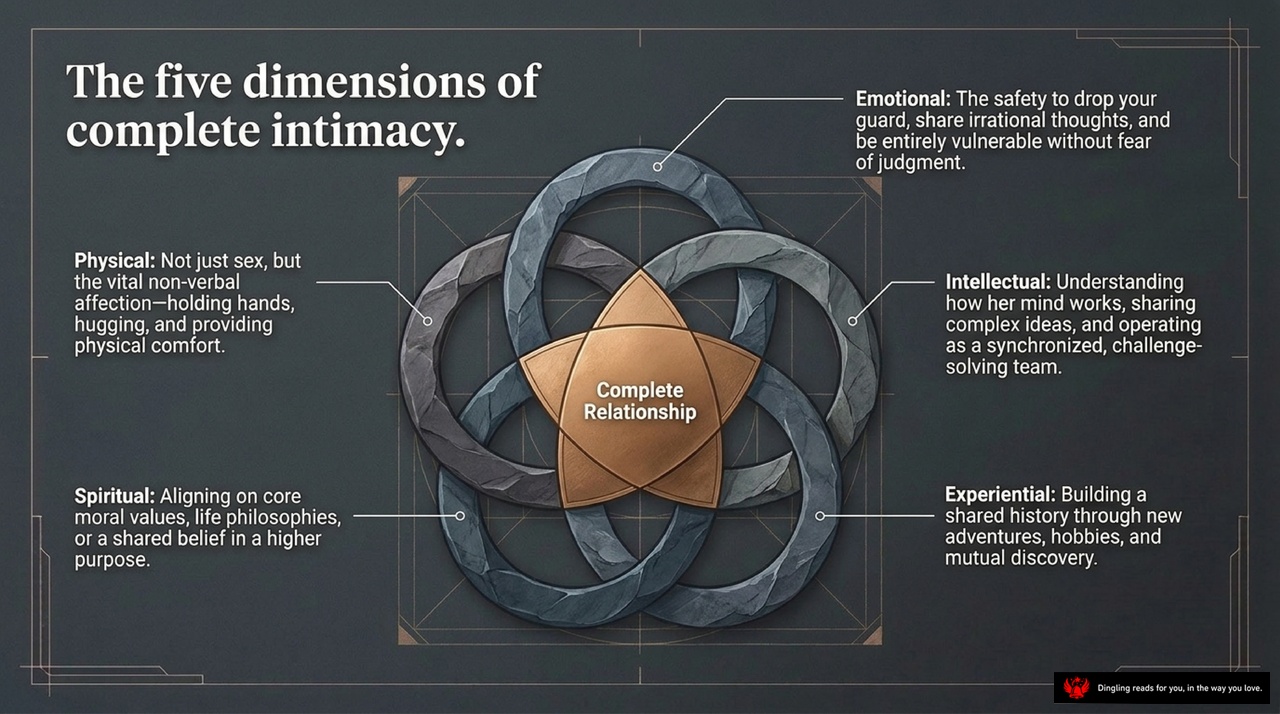
When we talk about raising a child, we often get lost in the details—checking off milestones, measuring growth, and worrying about every little scratch. But true intimacy isn't about perfection; it's about the five dimensions that weave a complete relationship. Think of it as a woven tapestry where every thread matters.
First, there's the **Physical** dimension. This goes far beyond just sex. It's about the vital non-verbal affection—the simple act of holding hands, hugging, and providing that essential physical comfort that says, "You are safe here."
Then, we move to the **Emotional** core. This is the safety to drop your guard. It's the space where you can share irrational thoughts and be entirely vulnerable without fear of judgment. In that space, your child learns that their feelings are valid and they are loved exactly as they are.
Intellectually, a complete relationship means understanding how her mind works. It's about sharing complex ideas and operating as a synchronized, challenge-solving team. You aren't just a parent and a child; you are partners in discovery.
On the **Spiritual** front, it's about aligning on core moral values, life philosophies, or a shared belief in a higher purpose. Even if you don't share a specific religion, finding common ground on what matters most creates a deep, unshakeable bond.
Finally, the **Experiential** dimension. This is about building a shared history through new adventures, hobbies, and mutual discovery. Whether it's a trip to the park or a quiet night reading, these moments become the story of your life together.
At the center of all these dimensions lies the **Complete Relationship**. When you nurture all five areas, you aren't just raising a child; you are building a lifelong connection that withstands the storms of life.
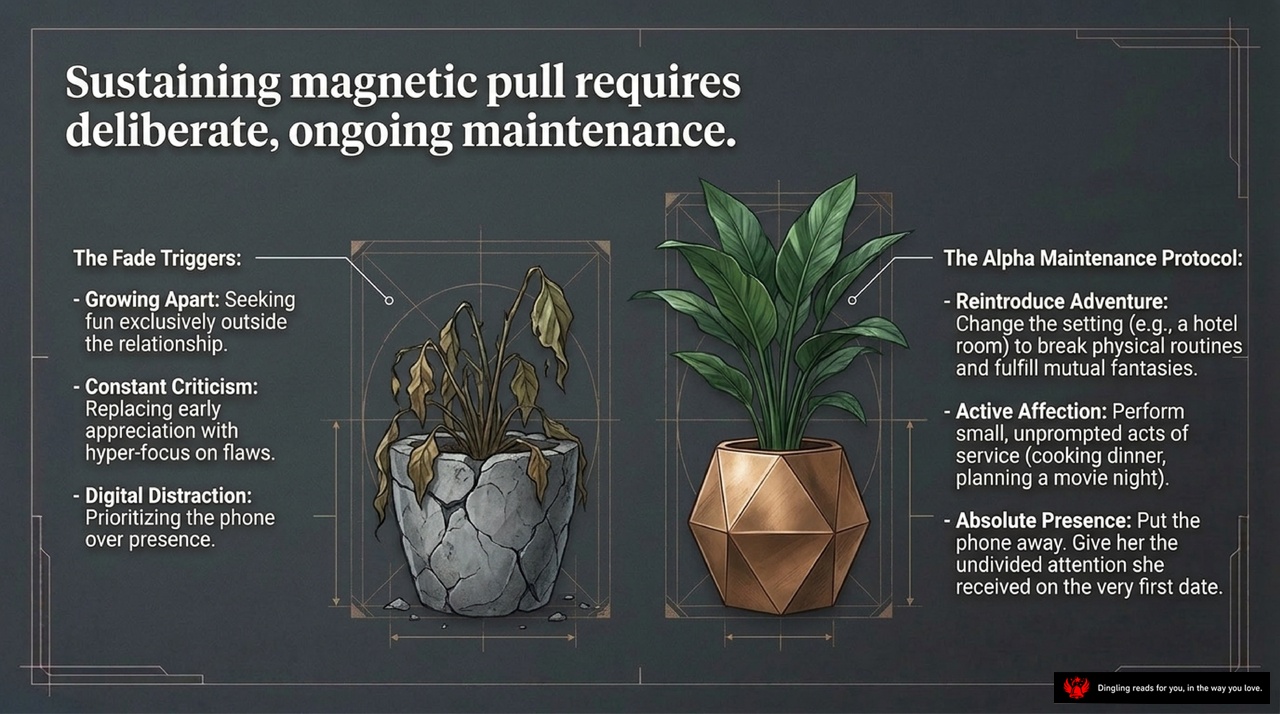
Sustaining that initial magnetic pull isn't magic; it's a deliberate, ongoing maintenance job. Think of your relationship like a living plant. On the left, we see what happens when you neglect it: "The Fade Triggers." When you start seeking fun exclusively outside the relationship, you're growing apart. When you replace early appreciation with a hyper-focus on flaws, you invite constant criticism. And when you prioritize the phone over presence, you create a digital distraction that kills connection.
But on the right, there's "The Alpha Maintenance Protocol" to keep that plant thriving. First, reintroduce adventure. Break your physical routines by changing the setting—maybe a hotel room or a new park—to fulfill mutual fantasies and spark excitement. Second, practice active affection. Perform small, unprompted acts of service, like cooking dinner or planning a movie night, without being asked. Finally, commit to absolute presence. Put the phone away completely. Give her the undivided attention she received on the very first date. That's how you keep the magnetic pull strong.

Synthesis: The continuous cycle of internal and external mastery.
Look at this infinity loop. It represents the perfect feedback loop of personal growth. On the left, we have Internal Discipline. Think of yourself as the sculptor. This is where you build your foundation through meditation, physical fitness, and conquering fear. It's about establishing unshakeable self-reliance and creating a deep reservoir of calm and self-worth.
This internal strength flows into the right side: External Magnetism. When your inner calm is solid, it naturally projects outward. You see this as confident body language, effective conflict resolution, and the ability to build profound, multi-layered intimacy with others. You become the masterpiece.
But here is the key: it's a cycle. The success you achieve externally and the strong relationships you build reinforce your internal self-esteem. This creates an upward spiral of continuous personal growth. Your external wins fuel your internal confidence, which in turn makes you even more magnetic. It's not about choosing one over the other; it's about letting them fuel each other endlessly.

Here is the spoken-word script for Slide 17, tailored for an American audience, focusing on the core message of self-mastery and authentic leadership.
"The masterpiece revealed. Look at this figure. It represents the true Alpha Male, but not in the way you might expect. It's not about loudness, dominance, or chasing external validation. It's about absolute self-mastery. The summary on the left breaks it down: by conquering fear through your Mind Arsenal, forging a resilient physical vessel, communicating with assertive clarity, and fostering deep, multi-dimensional intimacy, you carve away the beta traits to reveal an irresistible, self-reliant leader. Now, let's look at the question on the right. It's the most important one: If you stripped away all external validation, status, and the opinions of others today, what is the first internal habit you must chisel away to reveal the man you are meant to be? This isn't about building a persona; it's about the raw, unfiltered work of becoming who you were always meant to be. That is the masterpiece."