
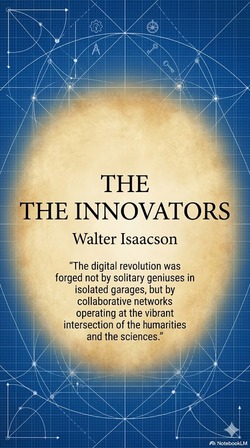
The Innovators
Walter Isaacson’s *The Innovators* traces the collaborative tapestry of visionaries who ignited the digital revolution, spanning from 19th-century pioneers Ada Lovelace and Charles Babbage to 20th-century architects of transistors, personal computers, and the internet. Rejecting the myth of the lone genius, Isaacson shows how breakthroughs emerged from cross-disciplinary teamwork: Bell Labs’ trio inventing the transistor, Intel’s founding team driving microprocessors, and the diverse minds behind ARPANET and the World Wide Web. At the book’s core is Lovelace’s enduring 'poetic science'—the fusion of artistic imagination and technical rigor—an ethos that shaped innovations from early computing to AI’s focus on human-machine symbiosis. Isaacson explores tensions between open collaboration and controlled ecosystems, emphasizing that the digital age’s greatest triumphs stem from bridging disciplines, sharing ideas, and framing technology as a tool to amplify human creativity, not replace it.