Existential Wisdom from the Sickbed
Loading…

Existential Wisdom from the Sickbed

Shi Tiesheng

41269 learners

Confined to a wheelchair for decades and battling kidney failure requiring regular dialysis, Shi Tiesheng turned his lifelong struggle with illness into a profound exploration of existential truth. In *Existential Wisdom from the Sickbed*, he shares unflinching insights: framing life as a script where each of us plays an assigned role to embrace, not resent; rejecting transactional worship to advocate for faith rooted in hope amid suffering, not material gain; redefining love as a vulnerable opening of souls, not just physical connection; and arguing disability is a universal human condition of limitation, not a marginalizing label. He also reflects on writing as a lifeline for his restless spirit, a tool to confront his identity and life’s mysteries. Beyond personal reflection, he critiques societal pitfalls: the tyranny of groupthink, hollow materialism, and the urgent need to honor life’s dignity—including the right to assisted dying. This is no tale of victimhood, but a testament to finding meaning and grace in life’s darkest corners.
life meaningExistential WisdomFate AcceptanceTrue FaithSpiritual Love
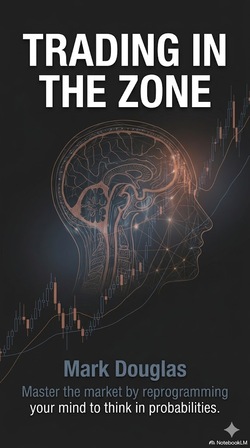
Trading in the Zone
Loading…

Trading in the Zone

Mark Douglas

4.61125 learners

For decades, traders have chased technical indicators and fundamental data in search of a market 'holy grail', only to end up trapped in cycles of loss and frustration. In *Trading in the Zone*, veteran trader and coach Mark Douglas draws on 30 years of experience to shatter the myth that analysis alone guarantees success. He reveals that the true barrier to consistent profitability isn’t market knowledge—it’s the trader’s own mind. Douglas breaks down why even skilled analysts fail: fear, greed, overconfidence, and a refusal to accept market uncertainty hijack decision-making. He contrasts this with the mindset of top traders, who embrace risk, operate with probability-based thinking, and take full responsibility for every trade outcome. The book provides actionable strategies to rebuild your belief system, neutralize emotional biases, and develop the disciplined, objective mindset needed to turn trading from a gamble into a sustainable, profitable endeavor.

Self-ResponsibilityTrading PsychologyProbability ThinkingRisk AcceptanceBelief System
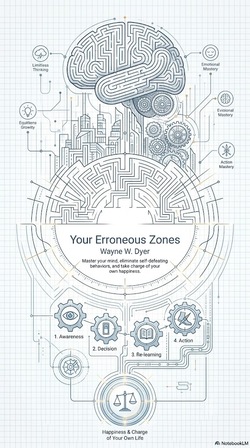
Your Erroneous Zones
Loading…

Your Erroneous Zones

Wayne W. Dyer

4.51119 learners

Wayne W. Dyer’s *Your Erroneous Zones* is a timeless self-help classic that dismantles the self-defeating mindsets holding you back from true happiness and personal freedom. Dyer argues that many of our daily struggles—from constant anger and paralyzing guilt to relentless approval-seeking and chronic procrastination—stem from false, ingrained beliefs: that emotions are controlled by external events, that our worth depends on others’ opinions, or that we’re trapped by past labels. Through relatable real-life anecdotes and practical, actionable strategies, he guides readers to take full responsibility for their feelings, embrace the present moment, and reject rigid societal 'shoulds' that stifle authenticity. The book emphasizes that true fulfillment comes from self-acceptance, breaking free from psychological dependence, and choosing to live on your own terms rather than conforming to others’ expectations. Whether you’re stuck in cycles of worry, trapped in toxic relationships, or struggling to prioritize your own joy, this book offers a clear roadmap to rewrite your thought patterns and build a life rooted in confidence and inner peace.

Emotional ControlProcrastinationself-acceptanceSelf-defeating mindsetsPresent-moment living
You Can Heal Your Life
Loading…

You Can Heal Your Life

Louise L. Hay

4.3895 learners

Louise L. Hay’s iconic guide *You Can Heal Your Life* unpacks how we lose touch with our innate, unshakable worth from childhood onward. We absorb limiting beliefs from critical parents, judgmental teachers, and societal pressures, internalizing self-doubt that manifests as anxiety, strained relationships, and even physical ailments. Hay uses relatable case studies—from patients trapped in self-defeating cycles to Winston Churchill’s journey through adversity—to illustrate how these toxic narratives warp our self-perception. She lays out actionable practices to reclaim your true self: practicing radical self-kindness, releasing old resentments, reframing negative thoughts, and embracing your inherent perfection. Whether navigating romantic relationships, finding purpose in work, or healing from past wounds, this book teaches you to rewrite your internal story, heal mind and body, and live a life rooted in self-love and authentic joy.

Work-Life BalanceLimiting Beliefsself-acceptanceMind-Body Connectionself-kindness
On Death and Dying: What the Dying Have to Teach Doctors, Nurses, Clergy and Their Own Families
Loading…

On Death and Dying: What the Dying Have to Teach Doctors, Nurses, Clergy and Their Own Families

Elisabeth Kübler-Ross

0884 learners

Based on groundbreaking interviews with terminally ill patients, *On Death and Dying* explores the universal fear of death in modern society, tracing its roots to medical advancements that have distanced death from daily life and normalized avoidance. The book introduces the five pivotal stages of end-of-life psychological adjustment—denial, anger, bargaining, depression, and acceptance—offering profound insights into how patients navigate grief, fear, and hope. It also examines the toll of terminal illness on families, the barriers to honest communication between doctors and patients, and the critical need for interdisciplinary, compassionate care. Through real-world case studies and reflections from medical professionals, it challenges the medical field to prioritize patient dignity and emotional support over purely technical interventions, urging doctors to learn from the dying to transform end-of-life care into a humane, respectful experience.

AcceptancedenialAngerdepressionDeath anxiety
The Courage to Be Happy
Loading…

The Courage to Be Happy

Ichiro Kishimi;Fumitake Koga

4.2736 learners

In *The Courage to Be Happy*, Ichiro Kishimi continues the engaging dialogue between a skeptical young educator and a wise philosopher, unpacking Adlerian psychology’s transformative insights for happiness and growth. Frustrated by pushback against Adler’s ideas in his teaching, the youth challenges the philosopher to defend its validity, sparking deep dives into core concepts: teleology (rejecting the myth that past trauma defines the present), task separation, and the critical role of respect over praise or criticism in education. The book dismantles the fantasy of "destined love," framing love as an active, collaborative choice rather than a passive feeling, and emphasizes community connection over cutthroat competition. Packed with actionable advice for educators, professionals, and anyone seeking meaningful relationships, it teaches readers to embrace self-acceptance, take initiative in connections, and find the courage to choose happiness in every present moment.

Independenceself-acceptanceAdlerian PsychologyTeleologyTask Separation
When Nietzsche Wept
Loading…

When Nietzsche Wept

Irvin D. Yalom

4.1661 learners

In Irving D. Yalom’s gripping fictional narrative, *When Nietzsche Wept* imagines a transformative meeting between two iconic figures: Josef Breuer, a pioneering Viennese physician grappling with midlife despair and an obsessive fixation on a patient, and Friedrich Nietzsche, the brilliant philosopher crippled by physical agony and existential hopelessness. When Lou Salomé, a bold young intellectual, begs Breuer to treat Nietzsche’s suicidal despair—knowing the proud philosopher would never accept direct help—Breuer devises an unorthodox plan: he’ll pose as Nietzsche’s patient, seeking guidance on his own turmoil, in exchange for treating Nietzsche’s physical ailments. What follows is a raw, intimate journey as both men confront their deepest wounds: Breuer confronts his fear of aging, marital stagnation, and unresolved guilt, while Nietzsche confronts his crippling loneliness and heartbreak over Salomé. Through their intense, often contentious conversations, they uncover profound truths about suffering, freedom, and self-acceptance, ultimately healing each other in ways neither could have anticipated.

self-acceptanceMidlife CrisisFriedrich NietzscheJosef BreuerLou Salomé
Scenario

Return to New York

Back in NY, David feels like a stranger. Skyscrapers seem silent giants. He stops chasing 'success'—plans to organize Ford Curtis films, go to Maine, just be himself.

ReturnNew Beginningsself-acceptance
Quote

Life as a River

Life is like a flowing river—no matter the reefs or rapids, it eventually merges into the sea. The waves are temporary; the flow is eternal.

life meaningAcceptanceTransience
Method

Embrace Every Experience

Siddhartha learns to accept all experiences (good/bad) as necessary steps toward enlightenment.

GrowthAcceptanceExperience