
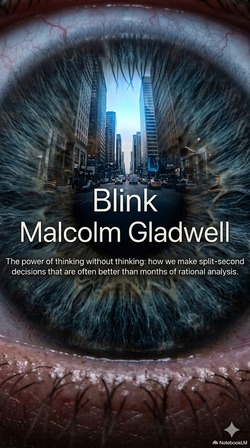
Blink
In Malcolm Gladwell’s *Blink*, we dive into the hidden power of split-second decisions—the unconscious judgments we make in the blink of an eye that often outperform hours of deliberate analysis. Opening with the shocking story of the Getty Museum’s fake marble statue, where art experts’ gut reactions trumped months of scientific testing, Gladwell introduces the concept of 'thin-slicing': the ability to extract critical insights from tiny, focused snippets of information. He explores the adaptive unconscious, the brain’s fast, intuitive processor that operates below our awareness, drawing on experiments like Iowa’s card game study and John Gottman’s marriage prediction research to reveal how it shapes our choices. But Gladwell also warns of the pitfalls of rapid cognition: the 'Warren Harding Effect,' where surface biases skew judgments, and implicit prejudices that undermine fair decision-making. Through real-world examples—from orchestras using blind auditions to reduce gender bias to Chicago’s Cook County Hospital overhauling chest pain diagnoses—*Blink* teaches readers to recognize, refine, and harness their instant instincts, turning quick thinking into a reliable tool rather than a source of error.