

Democracy in America
Loading…

Democracy in America

Alexis de Tocqueville

01590 learners

First published in the 1830s after Alexis de Tocqueville’s extended field research across the United States, *Democracy in America* remains one of the most incisive, timeless accounts of how American democratic systems operate from the ground up. Starting with the grassroots New England township governance model, Tocqueville breaks down how local self-rule cultivates public participation, shared civic belonging, and collective habits that sustain a free society far more effectively than top-down state mandates. He unpacks the carefully calibrated checks and balances of the U.S. federal system, the hidden risks of "tyranny of the majority" that suppress independent thought, and the unique American tradition of voluntary associations that counter the isolating effects of individualism born from widespread social equality. He also explores underdiscussed tensions between democratic civilian priorities and military ambition, the evolution of social honor in a commercialized equal society, and deep structural divides around race and federal vs state power that still shape U.S. politics today.

IndividualismPopular SovereigntyAlexis de TocquevilleTownship self-governanceTyranny of the majority
The Old Regime and the Revolution
Loading…

The Old Regime and the Revolution

Alexis de Tocqueville

4.3895 learners

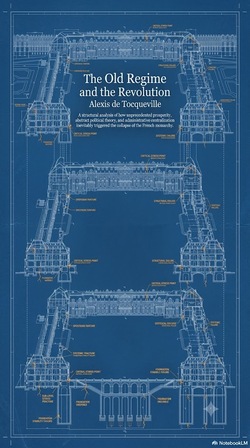
In *The Old Regime and the Revolution*, Alexis de Tocqueville dismantles the myth that the French Revolution was a sudden, unforeseen upheaval. Instead, he argues that the revolution’s seeds were planted deep within the decaying structures of the Old Regime itself. Tocqueville dissects how overbearing centralized governance eroded local autonomy, while a rigid class system—marked by noble privileges, unequal taxation, and a disconnected intellectual elite that seized public opinion—fueled widespread resentment. He highlights the monarchy’s self-defeating contradictions: empty promises of reform, public exposure of injustices without action, and a corrupt venal office system that hollowed out state legitimacy. Most strikingly, Tocqueville reveals an irony: the revolution that claimed to destroy the Old Regime inherited and amplified its most authoritarian trait—centralized power. This seminal work offers a prescient analysis of how systemic decay and unaddressed grievances ignite revolutionary change, making it essential reading for anyone seeking to understand modern political upheaval.

French RevolutionCentralized governanceFiscal CrisisClass inequalityIntellectual elites
Alexis de Tocqueville

Alexis de Tocqueville

Author
No more