
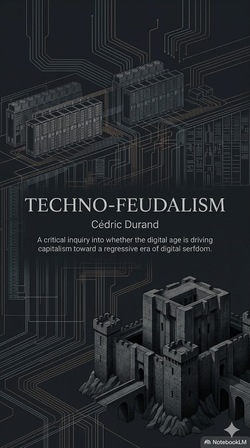
Techno-feudalism
In *Techno-feudalism*, Cedric Durand dismantles the myth of Silicon Valley as a self-made tech utopia, tracing its rise to a unique ecosystem of public investment, academic research, and private enterprise. He unpacks the Silicon Valley Consensus—the 21st-century economic ideology that replaced the discredited Washington Consensus, framing tech innovation and entrepreneurship as the path to global prosperity. But Durand reveals the contradictions at its core: startups hailed as innovators evolve into monopolistic giants, 'autonomous' tech jobs mask algorithmic control, and open culture fuels extreme spatial inequality. The book introduces the concept of techno-feudalism, where digital platforms act as modern lords, controlling data and algorithms to extract rent from users, workers, and small businesses. Durand analyzes how this new system reshapes power structures, enables knowledge monopolies, and erodes democratic public spheres, concluding with urgent discussions on antitrust reform and reimagining digital governance to counteract this new form of domination.