The Metamorphosis
Loading…

The Metamorphosis

Franz Kafka

4.51343 learners

Franz Kafka’s *The Metamorphosis* is a haunting, surreal masterwork that lays bare the quiet cruelty of alienation and family duty. When traveling salesman Gregor Samsa wakes up one morning trapped in the body of a giant beetle, his world collapses—not just because of his physical transformation, but because of his family’s shifting reactions. At first, his mother, father, and sister show tentative concern, but as Gregor can no longer work to support their debt-ridden household, their care curdles into disgust and resentment. Trapped in his room, Gregor grapples with his loss of identity, his unfulfilled dreams (like sending his sister to music school), and the slow erosion of the love he once took for granted. Kafka’s sparse, visceral prose turns this absurd premise into a raw meditation on what it means to be seen, valued, and discarded in a world that reduces people to their productivity. By the story’s tragic end, Gregor’s death brings his family a twisted sense of relief, forcing readers to confront the harsh truth of how easily we can become invisible to those we love most.
Alienationexistential despairGregor SamsaMetamorphosisFamily Obligation
Everything I Never Told You
Loading…

Everything I Never Told You

Celeste Ng

4.11307 learners

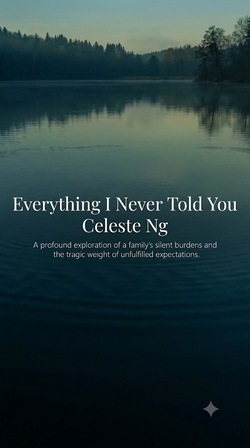
Set in 1970s small-town Ohio, *Everything I Never Told You* unfolds when Lydia Lee, the golden child of a mixed-race Chinese-American family, vanishes without a trace. Her disappearance cracks open the quiet tension simmering beneath the Lee household’s surface: Marilyn, Lydia’s white mother, has poured her unfulfilled medical school dreams into her daughter, pressuring her to excel in science and defy gender norms. James, her Chinese father, haunted by a lifetime of feeling like an outsider, pushes Lydia to fit in and make friends, desperate to spare her his own loneliness. As the family grapples with Lydia’s fate, secrets emerge—her hidden academic struggles, fake friendships, and the rift with her astronaut-obsessed brother, Nate, who’s desperate to escape their suffocating home. Through flashbacks and intimate perspectives, Celeste Ng lays bare the cost of unspoken expectations, the pain of being unseen, and how a family’s love can turn into a cage. In the aftermath of tragedy, the Lees confront their mistakes, learning to listen to each other and heal the wounds they’ve inflicted.

family secretsEmotional ReconciliationMixed-race familyUnspoken expectationsParental projection
Steppenwolf
Loading…

Steppenwolf

Hermann Hesse

4.4903 learners

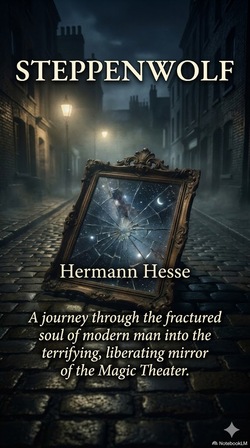
Hermann Hesse’s *Steppenwolf* plunges readers into the tortured mind of Harry Haller, a disillusioned intellectual who sees himself as half man, half wild steppenwolf. Trapped between his longing for high art and spiritual transcendence, and his revulsion toward the complacent bourgeois world around him, Harry grapples with crippling alienation and suicidal despair. His life shifts when he meets Hermina, a sharp, enigmatic woman who forces him to confront repressed parts of his soul—teaching him to dance, love, and embrace the messy, mundane joys he once scorned. Their journey leads to the surreal Magic Theater, where Harry confronts the multiplicity of his self through hallucinatory, symbolic adventures. This timeless classic explores the universal struggle to reconcile conflicting identities, find meaning in a fractured world, and learn to laugh at life’s absurdities instead of succumbing to despair.

Harry HallerSteppenwolfHerminaMagic TheaterDual Personality
The Society of the Spectacle
Loading…

The Society of the Spectacle

Guy Debord

4.4607 learners

Guy Debord’s *The Society of the Spectacle*—a foundational text of the Situationist International—unpacks the insidious nature of late capitalist alienation through the lens of the “spectacle”: not just a collection of images, but a pervasive social relationship mediated by visual representations. Debord argues that the spectacle is both the product and engine of modern capitalist production, reducing human life from “being” to “having” to mere “appearing.” He traces its roots to commodity fetishism, showing how it colonizes every sphere of life—time, space, culture, and even personal identity—trapping individuals in passive consumption and isolating them from authentic experience. Blending Marxist dialectics, revolutionary history, and sharp cultural critique, Debord dissects the spectacle’s dual forms (concentrated and diffuse), exposes its role in erasing historical consciousness, and outlines a radical path to liberation: the workers’ council, a democratic structure that dismantles hierarchy and reunites theory with practice. This landmark work remains essential for understanding the image-saturated, alienated world of contemporary consumer society.

Spectacle SocietyCommodity FetishismWorkers' CouncilsDetournementAlienation
Alienation and Return
Loading…

Alienation and Return

Zhang Kaiyuan

3.8530 learners

Alienation and Return traces China’s turbulent modern transformation through the lens of cultural conflict—between breaking free from age-old traditions and clinging to ancestral roots. Starting with the little-known Qing Dynasty woman Shan Shili, whose overseas travels sparked radical shifts in her views on society and culture, the book moves through pivotal figures like Gong Zizhen, the first intellectual to declare the Qing’s decline, and Wei Yuan, whose *Sea Map of the World* laid the groundwork for learning from the West. It contrasts China’s slow, struggle-filled modernization with Russia’s sweeping reforms and Japan’s rapid "Leave Asia, Join Europe" push, unpacking why China faced steeper barriers to change. From the Self-Strengthening Movement to the Hundred Days’ Reform and Xinhai Revolution, the book explores how each wave of reform grappled with tradition’s pull, then examines the dual forms of cultural return after the revolution—reactionary backsliding and progressive revival. Finally, it offers insights into balancing tradition and modernity amid globalization, making this complex history accessible through vivid stories and cross-national comparisons.

Cultural AlienationCultural ReturnChinese ModernizationSelf-Strengthening MovementXinhai Revolution
The Art of Loving
Loading…

The Art of Loving

Erich Fromm

4.1459 learners

Erich Fromm’s *The Art of Loving* dismantles the pervasive myth that love is a fleeting, luck-dependent feeling, arguing instead that it is a teachable skill requiring intentional learning and practice. Drawing on psychoanalysis, philosophy, and social critique, Fromm explores humanity’s inherent struggle with loneliness and how mature love—rooted in creative giving, care, responsibility, respect, and understanding—offers the only genuine escape without sacrificing individual identity. He breaks down distinct forms of love, including brotherly love, maternal love, romantic love, self-love, and divine love, while exposing modern society’s alienating effects that reduce love to a transaction or fleeting passion. Fromm also outlines practical steps to cultivate love: embracing discipline, focus, patience, overcoming narcissism, and fostering rational faith, urging readers to prioritize love over material success to live a fulfilled, connected life.

Self-LoveMature LoveLove as an ArtCreative GivingCare and Responsibility
The Castle
Loading…

The Castle

Franz Kafka

4.1459 learners

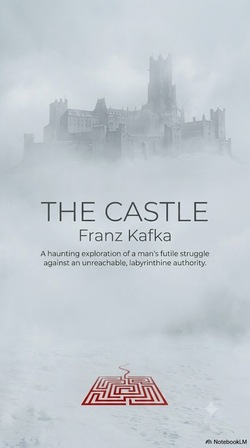
K, a land surveyor, arrives uninvited at a remote village huddled beneath the imposing, unreachable Castle, only to find himself trapped in a labyrinth of bureaucratic absurdity. Tasked with a job the village insists it never requested, he navigates a world where rules shift without warning, officials are maddeningly unreachable, and villagers oscillate between suspicion and reluctant aid. His desperate quest to gain entry to the Castle—and thus validate his identity and purpose—leads him into tangled relationships: with Frieda, a former barmaid who becomes his fiancée; the Barnabas family, whose ties to the Castle are fraught with hidden trauma; and petty bureaucrats who toy with his fragile hopes. As K’s efforts to break through the Castle’s impenetrable barriers grow increasingly futile, Franz Kafka’s masterpiece lays bare the existential dread of an individual pitted against an indifferent, dehumanizing system, posing profound questions about identity, belonging, and the illusion of control.

Identity CrisisbureaucracyExistential AlienationKThe Castle
The Ethics of Leisure and Boredom
Loading…

The Ethics of Leisure and Boredom

Koichiro Kokubun

3.4421 learners

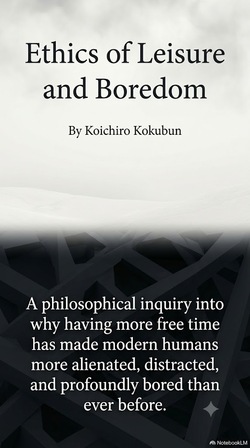
Drawing on philosophy, anthropology, and social economics, *The Ethics of Leisure and Boredom* unpacks the complex relationship between boredom, leisure, and human existence. Starting with foundational theories from Pascal, Nietzsche, Russell, and Heidegger, it traces boredom’s origins to the 'Settled Revolution'—when early humans abandoned nomadic life for fixed settlements, triggering unmet cognitive stimulation needs. The book critiques consumer culture’s role in amplifying alienation and cyclic boredom, exploring Heidegger’s three distinct forms of boredom and challenging his claim that only humans experience this emotion through Jakob von Uexküll’s umwelt theory. It concludes with actionable ethical frameworks: embracing mundane boredom instead of fleeing to distraction, training oneself to savor experiences over symbolic consumption, and working toward a 'Kingdom of Leisure' where all can access intentional, fulfilling free time.

Boredom EthicsSettled RevolutionConsumer AlienationHeidegger’s Boredom TypologyUmwelt Theory
Scenario

Insurance Office Torment

Kafka worked at an insurance company, hating it. He said drafting documents was like "tearing flesh from his body." This drudgery influenced his alienation themes.

WorkAlienationInsurance Office
Scenario

Telescope’s World Shift

The telescope proved Earth isn’t the center. This shifted our view to the universe, starting modern science and human alienation from Earth.

AlienationModern ScienceTelescope
Concept

World Alienation

World alienation is losing connection to lasting things we build. Modern science/consumerism focus on temporary stuff—we feel disconnected from our world.

StabilitymodernityWorld Alienation
Concept

Alienated Labor

Alienated labor means workers lose control over their product, work process, and own human nature. Their labor becomes a forced chore, not a fulfilling activity, disconnecting them from everything—product, work, and self.

laborMarxismAlienation