Liar's Poker
Loading…

Liar's Poker

Michael Lewis

4.31101 learners

Michael Lewis’s *Liar’s Poker* pulls back the curtain on the raucous, cutthroat world of 1980s Wall Street through his wild journey as an unlikely Solomon Brothers trader. Starting as an art history grad laughed out of investment bank interviews, Lewis lands a spot at Solomon’s legendary training program, where he witnesses the firm’s brutal, profit-obsessed culture firsthand. He dives into the rise of the mortgage-backed securities division, led by the larger-than-life Lewis Ranieri, who turned a neglected corner of finance into a cash cow—only to see it collapse amid internal backstabbing, talent poaching, and market shifts. Along the way, Lewis exposes the absurdities: million-dollar poker bets between executives, ruthless office politics, and a system where greed trumps ethics. By the end, he walks away from seven-figure paychecks, disillusioned by a world where success hinges on deception and self-preservation over real value.
Solomon BrothersMortgage-Backed SecuritiesLiar's PokerJohn GutfundLewis Ranieri
A Monetary History of the United States
Loading…

A Monetary History of the United States

Milton Friedman;Anna Jacobson Schwartz

4.51098 learners

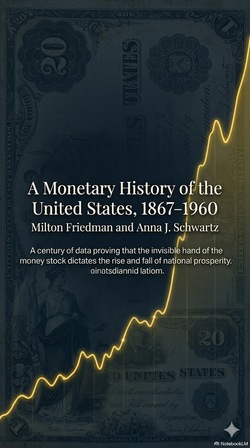
Co-authored by Milton Friedman and Anna J. Schwartz, *A Monetary History of the United States* is a landmark work spanning 93 years of U.S. economic and financial history (1867–1960). Through rigorous empirical analysis, the book traces fluctuations in the money supply and their profound, often underrecognized, impact on pivotal events—from the paradoxical Greenback Era where deflation coincided with rapid economic growth to bitter gold-silver debates, the creation of the Federal Reserve, the catastrophic policy failures of the Great Depression, and post-WWII monetary policy evolution. Challenging conventional wisdom, Friedman and Schwartz argue that changes in the money stock are independent drivers of economic booms and busts, not just passive responses to shifts. This seminal text redefined monetary policy’s role, offering timeless insights into how monetary decisions shape national prosperity and crisis.

Monetary PolicyGreat DepressionGold standardMonetary StockFederal Reserve System
This Time Is Different
Loading…

This Time Is Different

Carmen M. Reinhart;Kenneth S. Rogoff

4.4917 learners

This book dismantles the persistent 'This Time Is Different' myth by drawing on centuries of global financial crisis data—from 14th-century sovereign defaults to the 2008 subprime meltdown. Carmen Reinhart and Kenneth Rogoff systematically unpack recurring patterns across crises, including sovereign debt defaults, banking collapses, hyperinflation, and currency devaluations, revealing that overconfidence, excessive borrowing, and disregard for historical precedents drive every crisis. They introduce pivotal concepts like 'debt intolerance,' explaining why emerging markets face default risks at far lower debt thresholds than developed nations, and shed light on the overlooked role of domestic public debt in triggering financial meltdowns. By cross-referencing cross-country and historical case studies, the authors prove financial crises are predictable, not random, and urge policymakers and investors to prioritize historical warning signs over the illusion of 'new era' immunity.

HyperinflationThis Time Is Different SyndromeSovereign Debt DefaultDebt IntoleranceBanking Crisis
Wisdom External Brain
Loading…

Wisdom External Brain

Shiruo

3.8872 learners

Tired of scattered notes, broken links, and knowledge that never seems useful when you need it? *Wisdom External Brain* solves these common knowledge management (KM) headaches by introducing a grid-based system designed to turn disjointed information into actionable wisdom. The book first breaks down the five core bottlenecks of traditional KM: broken connections, disorganized storage, confusing tags, misaligned management, and low knowledge reuse. It then lays out the grid-based KM model, centered on three core elements: knowledge payloads (independent, reusable knowledge units), meta-knowledge (the "rules" for managing knowledge), and knowledge connections (logical links that turn isolated facts into systems). You’ll learn to build layered knowledge structures—from individual grids to focused systems, interconnected subnets, and a full cross-domain knowledge network—plus practical strategies for knowledge adaptation, reuse, and monetization. The final chapter walks you through hands-on tools like Obsidian, flomo, and Anki to put the system into practice, making it perfect for professionals, content creators, and lifelong learners.

Knowledge NetworkGrid-based Knowledge ManagementMeta-KnowledgeKnowledge PayloadKnowledge Connection
Principles of Economics
Loading…

Principles of Economics

N. Gregory Mankiw

4.3803 learners

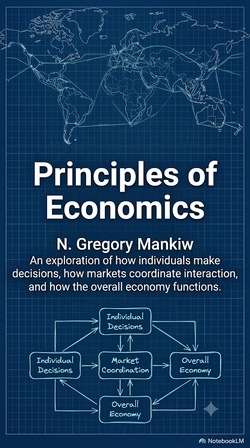
Gregory Mankiw’s *Principles of Economics* is the definitive introductory guide for anyone seeking to understand how economies function at every level—from individual choices to global markets. Anchored by 10 core principles grouped into three pillars—individual decision-making, interpersonal trade, and macroeconomic performance—the book demystifies complex concepts with relatable, real-world examples: from why airlines sell last-minute tickets cheap to how Reagan-era tax policies reflected the Laffer Curve. It covers foundational models like the circular-flow diagram and production possibility frontier, dives into microeconomics (supply and demand, market structures, consumer choice) and macroeconomics (inflation, unemployment, economic growth), and explores critical topics such as trade policy, market failures, taxation, and income inequality. Designed to be accessible yet rigorous, it equips readers to decode daily economic decisions, evaluate policy impacts, and think critically about how resources are allocated in society.

ExternalitiesComparative AdvantageOpportunity costInvisible HandProduction Possibility Frontier
The Partnership
Loading…

The Partnership

Charles D. Ellis

4.4513 learners

Tracing Goldman Sachs’ century-long journey from a humble street-side bill business to Wall Street’s most dominant investment bank, *The Partnership* pulls back the curtain on the larger-than-life partners who shaped its fate. From rags-to-riches trailblazer Sidney Weinberg, who turned a janitorial assistant gig into firm leadership, to trading visionary Gus Levy, who revolutionized block trading, and crisis navigator Lloyd Blankfein, who steered the firm through the 2007 subprime meltdown, this book chronicles the firm’s triumphs and near-collapse. It unpacks how Goldman survived the 1929 stock crash, the Penn Central bankruptcy, and the LTCM crisis, while pioneering game-changing strategies like merger defense and bond proprietary trading. More than a financial history, it explores the unwritten rules of partner culture—teamwork, integrity, and relentless talent recruitment—that turned a family-run firm into a global financial powerhouse, revealing the power struggles, tough calls, and unyielding ambition that defined its rise.

Wall StreetRisk ManagementGoldman SachsIPOSidney Weinberg
Method

Anki Card Making

Make your own cards (don't use ready ones), focus on one point per card, use multimedia (images/audio), and follow the forgetting curve for review.

MemoryExam PrepAnki
Insight

Morgan's Decline Reason

The book argues Morgan's decline came from failing to adapt to rules like Glass-Steagall and shifting from relationship to transactional banking.

AdaptationGlass-SteagallMorgan's Decline
Scenario

Wells Fargo Stagecoach

Wells Fargo, the smallest of top 4 US banks, is the most profitable one. Its vintage stagecoach visual hammer effectively communicates its 150+ years of history and financial stability to consumers.

Case StudyBrand HeritageBanking Marketing
Concept

Risk Arbitrage Logic

A trading strategy that profits from price gaps of identical assets across different markets, quantifies uncertainty, and improves overall market consistency and fairness for all investors.

TradingInvestment BankingArbitrage
Concept

Goodhart's Law

When a measure becomes a target, it stops being useful. Like colleges gaming US News rankings—they manipulate data (e.g., reject top applicants) to look better, not improve education.

MetricsManipulationGoodhart's Law
Concept

Federal Reserve Act1913

Created US central bank (Fed) to address 'inelastic' money supply. Designed to provide liquidity during crises, replacing 1908 Aldrich-Vreeland Act.

banking reformFed Creation1913 Act
Quote

End of Morgan's Magic

The book notes: 'The banking industry's unique magic was fading.' This refers to Morgan's old charm and power declining as finance changed.

Morgan's DeclineBanking MagicChanging Times
Concept

Relationship Banking

Relationship banking was Morgan's old model—trusted clients only, no ads/branches. Being a Morgan client was a status symbol, fading in the 1970s.

Relationship BankingMorgan ModelStatus Symbol
Insight

Short Term Hot Hands Do Not Last

Multiple studies confirm top performing funds in one year almost never stay on top the next. Quarterly fund rankings that the industry obsesses over are totally meaningless for long term results.

Fund PerformanceinvestingShort Term
Insight

Simple Algorithms Beat Complex Ones

A simple, reliable algorithm that runs fast and is easy to debug is almost always better than a fancy complex one. Amit Singhal’s simple search ranking design beat all complicated alternatives at Google.

EngineeringGoogleAlgorithm Design
Insight

No Shortcut To Trust Building

When the BP share offering crashed during 1987 market meltdown, Goldman chose to take the loss instead of walking away. This one responsible call won the whole UK market’s long-term trust for decades.

reputationCrisis ManagementInvestment Banking
Insight

Depression Is Not Just Crash

The author argues the Great Depression was not just a short stock market correction, but a result of overlapping crises including collapsed southern agriculture, broken banking system and unequal wealth distribution.

Great DepressionEconomic HistoryUS 1930s