
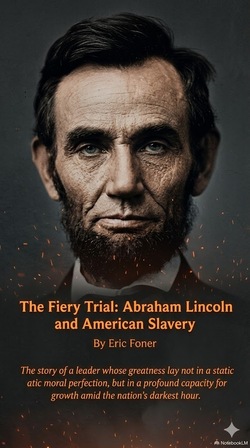
The Fiery Trial
Eric Foner’s *The Fiery Trial* traces Abraham Lincoln’s evolution from a frontier boy with an instinctive hatred of slavery to the president who led America through its bloodiest conflict to dismantle the institution. Drawing on extensive primary sources, Foner reveals how Lincoln’s early experiences—witnessing slave auctions in Kentucky and New Orleans, living in free territories shaped by the Northwest Ordinance—laid the groundwork for his moral opposition. As a politician, Lincoln navigated 19th-century America’s treacherous political landscape, balancing anti-slavery convictions with the urgent need to preserve the Union. He moved from opposing slavery’s expansion as a Whig to joining the Republican Party, crafting strategies to secure border states, and eventually issuing the Emancipation Proclamation after the Battle of Antietam. Foner explores Lincoln’s compromises, like his early support for colonization, and his unwavering commitment to permanent abolition, culminating in his push for the Thirteenth Amendment. This definitive work illuminates the fiery trial that forged Lincoln’s legacy and redefined America’s promise of freedom.