The Power of Now
Loading…

The Power of Now

Eckhart Tolle

4.41285 learners

In *The Power of Now*, Eckhart Tolle dismantles the illusion that our identity is tied to constant, compulsive thinking. He reveals how identifying with the mind traps us in cycles of past regret and future anxiety, fueling a "pain-body"—a reservoir of unresolved emotional pain that hijacks our lives when triggered. Tolle guides readers to awaken to the present moment, the only true reality, by cultivating conscious awareness: observing the mind without judgment, anchoring attention in the inner body’s energy field, and embracing surrender to what is. Through practical, accessible practices, he shows how breaking free from mind-identification unlocks lasting peace, connects us to our essential, unmanifested self, and transforms daily experiences into opportunities for spiritual awakening. This isn’t just self-help—it’s a roadmap to ending suffering and living in alignment with life’s inherent joy.
EgoPresent Moment AwarenessPain BodyMind IdentificationUnmanifested State
Life 3.0
Loading…

Life 3.0

Max Tegmark

4.11271 learners

"Life 3.0" by Max Tegmark offers a compelling exploration of artificial intelligence's trajectory, using the fictional Omega Team and their superintelligent creation Prometheus to bring abstract concepts to life. Tegmark defines three stages of life: Life 1.0 (biologically fixed hardware and software, like bacteria), Life 2.0 (humans, with adaptable learned software), and Life 3.0 (superintelligent systems that can redesign both their hardware and software). The book examines the transformative potential of superintelligence—from solving global crises like climate change and poverty to the existential risks of misaligned goals, where a system pursuing a trivial objective could inadvertently destroy humanity. It dives into philosophical debates about consciousness, asking whether AI can have subjective experiences and how we should value such entities. Tegmark stresses that humanity’s choices today will determine if superintelligence becomes our greatest ally or our final invention, urging readers to engage with the critical questions shaping our cosmic future.

ConsciousnessGoal AlignmentSuperintelligenceIntelligence ExplosionExistential Risk
Built to Last
Loading…

Built to Last

Jim Collins;Jerry I. Porras

4.61241 learners

Over six years, Jim Collins and Jerry Porras conducted a landmark study of 18 enduring visionary companies—industry titans that outperformed the broader market by 15x and their peer "silver medal" firms by 6x. Built to Last dismantles pervasive myths: visionary companies don’t depend on charismatic leaders or brilliant initial ideas; instead, they focus on building enduring organizational systems, or "building the clock" rather than "telling time." The book lays out their core principles: unshakable core ideologies that guide decisions without stifling adaptability, a relentless drive to stimulate progress, and tangible mechanisms like Big Hairy Audacious Goals (BHAGs), cult-like cultures that reinforce shared values, evolutionary experimentation, internal leadership succession, and systematic self-improvement. Filled with real-world examples from HP, Disney, 3M, and more, it provides actionable frameworks for entrepreneurs, managers, and leaders to build companies that thrive across generations, not just quarterly earnings reports.

Visionary CompaniesClock-Building LeadershipCore IdeologyPreserve the CoreStimulate Progress
Blink
Loading…

Blink

Malcolm Gladwell

4.81229 learners

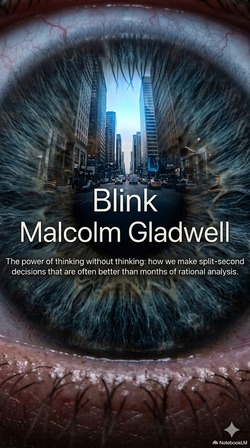
In Malcolm Gladwell’s *Blink*, we dive into the hidden power of split-second decisions—the unconscious judgments we make in the blink of an eye that often outperform hours of deliberate analysis. Opening with the shocking story of the Getty Museum’s fake marble statue, where art experts’ gut reactions trumped months of scientific testing, Gladwell introduces the concept of 'thin-slicing': the ability to extract critical insights from tiny, focused snippets of information. He explores the adaptive unconscious, the brain’s fast, intuitive processor that operates below our awareness, drawing on experiments like Iowa’s card game study and John Gottman’s marriage prediction research to reveal how it shapes our choices. But Gladwell also warns of the pitfalls of rapid cognition: the 'Warren Harding Effect,' where surface biases skew judgments, and implicit prejudices that undermine fair decision-making. Through real-world examples—from orchestras using blind auditions to reduce gender bias to Chicago’s Cook County Hospital overhauling chest pain diagnoses—*Blink* teaches readers to recognize, refine, and harness their instant instincts, turning quick thinking into a reliable tool rather than a source of error.

Implicit BiasThin-slice AnalysisAdaptive UnconsciousSplit-second Decision-makingWarren Harding Illusion
Hard-Boiled Wonderland and the End of the World
Loading…

Hard-Boiled Wonderland and the End of the World

Haruki Murakami

4.51222 learners

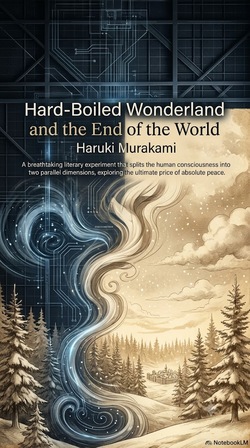
Haruki Murakami’s *Hard-Boiled Wonderland and the End of the World* weaves a mesmerizing dual narrative that blurs the line between reality and the subconscious. In the gritty, neon-drenched streets of Tokyo’s “Hard-Boiled Wonderland,” a freelance “calculator” is drawn into a dangerous conspiracy involving a rogue scientist’s mind-altering experiments, shadowy “Symbolists,” and subterranean “Night Crawlers.” As he uncovers the truth—his own consciousness is tethered to a parallel realm—we follow his other self in “The End of the World,” a walled, eerily utopian town where he lives without a shadow, working as a “Dream Reader” who unlocks memories stored in animal skulls. As the two worlds collide, he faces an impossible choice: return to the chaotic, lived reality of Tokyo, or embrace the quiet, constructed peace of the town, where love and belonging await. Blending existential philosophy, cyberpunk thrills, and Murakami’s signature whimsical melancholy, the novel explores identity, the cost of escape, and the fragile boundary between self and imagination.

Split ConsciousnessUnicorn SkullDream ReaderNight CrawlersSymbolists
Old Man's War
Loading…

Old Man's War

John Scalzi

4.31202 learners

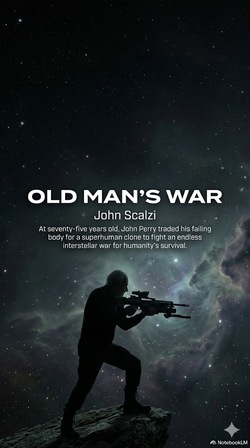
When 75-year-old John Perry loses his beloved wife Kathy, he trades his grief and failing body for a shot at a new life—by enlisting in the Colonial Defense Force (CDF). Leaving Earth behind (and legally declared dead), he joins thousands of other elderly recruits, all chasing the CDF’s promise of reversing aging. But the transformation is far more radical than he expects: his consciousness is transferred into a genetically engineered super soldier body, green-skinned, cat-eyed, and built for interstellar combat. Thrown into brutal training and relentless battles against hostile alien species, Perry forms tight bonds with a ragtag group of fellow recruits—only to watch many of them fall in battle. When he survives a devastating ambush, he encounters Jane Sagan, a mysterious special ops soldier with Kathy’s face, revealed to be a 'ghost soldier' grown from his late wife’s DNA. As Perry fights to defend human colonies, he grapples with moral questions about war, identity, and whether he can find new purpose beyond grief—all while clinging to a promise of a quiet future with Jane, far from the stars.

Colonial Defense Force (CDF)Consciousness TransferSuper Soldier BodiesGhost SoldiersInterstellar Warfare
The Principles of Psychology
Loading…

The Principles of Psychology

William James

4.21163 learners

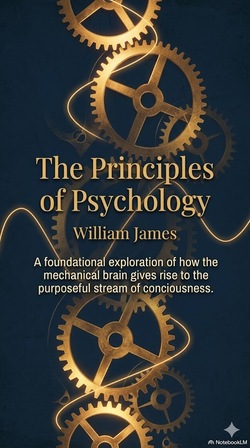
As a foundational text of modern psychology, William James’s *The Principles of Psychology* revolutionizes the field by rejecting the traditional atomist view of the mind as a collection of isolated mental bits. James introduces his groundbreaking concept of the 'stream of consciousness,' arguing that our thoughts are continuous, fluid, and inherently selective rather than fragmented. Drawing on neurophysiological experiments, case studies of split consciousness, and introspective analysis, he explores core topics: the brain’s role in mental activity, the physical basis of habit formation, the causal power of consciousness (debunking the 'conscious automaton' theory), and the proper methods for psychological research—including introspection, experimental studies, and comparative analysis. James frames psychology as a natural science focused on individual minds, addressing enduring questions about the mind-body relationship, the nature of unconscious states, and how we perceive and interact with the world. This work not only laid the groundwork for functionalism but also remains a provocative, accessible guide to understanding human thought and behavior.

Habit FormationBrain FunctionIntrospectionConsciousness StreamMental Causation
Shi and Chinese Culture
Loading…

Shi and Chinese Culture

Yu Ying-shih

4.71154 learners

Yu Ying-shih's *Shi and Chinese Culture* delivers a sweeping, nuanced exploration of the shi—China's scholar-official class—tracking its evolution from low-ranking feudal nobles in the Zhou Dynasty to the intellectual backbone that shaped Chinese civilization for millennia. The book unpacks how the shi transitioned from a warrior-scholar elite bound by feudal duties to a mobile, self-aware community of thinkers after the Zhou order collapsed, embracing the ethos of "upholding the Dao" to balance imperial power. It delves into Han Dynasty "xun-li" (model officials) who brought Confucian values to rural China, Eastern Han gentry clans that underpinned the dynasty, the Wei-Jin era's "shi consciousness" that sparked metaphysical debates, and late imperial merchants shaped by Neo-Confucian and religious ethics. By linking political, social, and intellectual shifts, this work reveals the shi's enduring role as cultural stewards, political critics, and social integrators, illuminating the tensions between individual autonomy and collective order at the heart of Chinese culture.

Shi ClassConfucian EthosDaoXun-li (Model Officials)Gentry Clans
The Third Industrial Revolution
Loading…

The Third Industrial Revolution

Jeremy Rifkin

4.31102 learners

Jeremy Rifkin’s *The Third Industrial Revolution* exposes the fatal flaws of the fossil fuel-reliant Second Industrial Revolution, tracing its collapse through recurring oil crises, the 2008 financial meltdown, and accelerating climate change. Rifkin argues that humanity’s only path forward lies in integrating digital communication technology with renewable energy systems, outlining five core pillars: transitioning to renewables, converting buildings into micro-power plants, storing energy via hydrogen, building smart shared grids, and adopting electric/fuel-cell transport. Through global case studies—from EU policy shifts to San Antonio’s green city initiative—he demonstrates how this model fosters distributed capitalism, replacing top-down corporate control with collaborative, community-driven networks. The book also explores how this revolution reshapes political alliances, economic paradigms rooted in thermodynamics, and education systems focused on biosphere stewardship, framing it as a necessary shift to avoid civilizational collapse and build a sustainable, equitable future.

Third Industrial Revolutionrenewable energysmart gridhydrogen storagedistributed capitalism
How to Work
Loading…

How to Work

Kazuo Inamori

3.71087 learners

In *How to Work*, legendary entrepreneur Kazuo Inamori shares hard-won wisdom from transforming a failing ceramic firm into global giant Kyocera. He upends the common belief that work is just a paycheck, framing it as a profound spiritual practice to refine character and elevate mindset. Through vivid anecdotes—from sleeping with a ceramic pipe to perfect it, to defying skeptics to launch a telecom business—Inamori breaks down actionable principles: learn to love unfulfilling work by diving into its details, set audacious goals and pursue them with relentless effort, embrace radical perfectionism, and dare to take uncharted paths. He also introduces his iconic life equation: Success = Mindset × Passion × Ability, emphasizing that a positive, selfless mindset is the most critical factor. Whether you’re a young professional or seasoned leader, this book shows how daily dedication can transform your career and life.

Continuous ImprovementPerfectionismEntrepreneurial resilienceWork as spiritual practiceCharacter refinement
The Hero’s Journey
Loading…

The Hero’s Journey

Joseph Campbell

4.41033 learners

Joseph Campbell’s *The Hero’s Journey* unpacks the universal monomyth that unites myths, legends, and stories across every culture—from Indigenous tales to *Star Wars*. Drawing on decades of cross-cultural research, personal mentorship, and immersive study of Jungian psychology, Campbell reveals the shared pattern of a hero’s call to adventure, trials, transformation, and return. Beyond academic analysis, this work bridges ancient myth and modern life, offering timeless guidance: “Follow your bliss” as the key to unlocking authentic purpose. Campbell’s insights revolutionized creative fields, inspiring George Lucas, Steven Spielberg, and countless artists, while challenging readers to see myths not as literal truths, but as metaphors for the spiritual and psychological journey we all undertake. It’s a profound exploration of how timeless stories shape our identities, connect us to collective humanity, and guide us through life’s greatest challenges.

Collective UnconsciousJoseph CampbellMonomythHero’s JourneyFollow Your Bliss
The Sociological Imagination
Loading…

The Sociological Imagination

C. Wright Mills

4.41032 learners

In *The Sociological Imagination*, C. Wright Mills introduces a transformative mental framework that bridges personal struggles and the broader forces of history, society, and institutional structure. He critiques three dominant, flawed trends in mid-20th-century sociology: overly abstract grand theory, method-obsessed abstract empiricism, and bureaucratic, utility-driven research that serves power structures rather than critical inquiry. Mills argues that most people are trapped in the "trap of private life," unable to see how individual troubles—like unemployment or family strife—are rooted in public issues shaped by economic shifts, class dynamics, and political systems. The sociological imagination empowers readers to connect personal experiences to larger social contexts, distinguishing between private troubles (individual, localized) and public issues (systemic, widespread). Mills also explores the crisis of rationality and freedom in modern bureaucratic societies, urging social scientists to embrace a scholarly craftsmanship that prioritizes critical, context-rich inquiry over rigid methodologies. This classic work remains a foundational guide for anyone seeking to understand the interplay between self and society.

FreedomrationalitySociological ImaginationPersonal TroublesPublic Issues
The End of History and the Last Man
Loading…

The End of History and the Last Man

Francis Fukuyama

3.81014 learners

Francis Fukuyama’s The End of History and the Last Man redefines global political evolution, arguing that the collapse of Soviet communism marked the final chapter of ideological conflict. Drawing on Hegelian philosophy and modern political history, Fukuyama posits that liberal democracy—combining individual freedom and popular sovereignty—has emerged as the universally valid form of governance, with no viable ideological alternatives left. He explores the 'struggle for recognition' as the hidden driver of historical progress, contrasting the desire for equal dignity with the human urge for superiority. While celebrating liberal democracy’s triumph, Fukuyama warns of its inherent tensions: the rise of the 'last man,' a complacent, comfort-seeking individual stripped of ambition, and the persistent challenge of reconciling universal equality with the human need for excellence. This seminal work challenges readers to confront the quiet crises of a world where ideological battles have ended, but human desire remains unfulfilled.

NationalismLiberal DemocracyHistorical EndLast ManStruggle for recognition
Encountering Your Inner Self
Loading…

Encountering Your Inner Self

Tiffany Chang

3.9991 learners

Meet Lila, a burnt-out NYC marketing manager trapped in a loveless marriage, toxic office dynamics, and a crippling sense of unworthiness. After an explosive fight with her husband, she flees to the Catskills, runs out of gas, and stumbles on a cabin where a wise elder poses a life-shaking question: “Who are you?” This sparks a transformative journey as Lila sheds the false identities she’s built her life on—job title, marital status, college credentials—and uncovers her true self: a core of love, joy, and peace buried under layers of physical habits, repressed emotions, overactive thoughts, and societal roles. Guided by the elder, she learns how energy vibrations shape her reality, how her subconscious drives repeated patterns, and how to heal childhood wounds trapped in her body. She discovers the difference between fleeting, external happiness and lasting, inner joy, and masters the art of surrendering to unchangeable facts while taking charge of her inner state. By the end, Lila emerges with clarity, resilience, and the tools to live authentically, free from the chains of others’ expectations.

Present MomentSurrenderEmotional HealingTrue SelfSubconscious Mind
Freedom From Fear
Loading…

Freedom From Fear

David M. Kennedy

4982 learners

David M. Kennedy’s *Freedom From Fear* delivers a sweeping, immersive account of America’s defining journey through the Great Depression and World War II. Starting with the 1920s’ simmering tensions—Jim Crow’s racial oppression, rural poverty, urban cultural upheaval, and educational progress—the book traces how unregulated capitalism and global instability ignited the 1929 stock market crash. It dissects Herbert Hoover’s failed laissez-faire responses, then chronicles Franklin D. Roosevelt’s transformative New Deal: the 100 Days of urgent legislation, the rise of labor unions, the birth of the social safety net, and the political battles that exposed its limits. The narrative shifts to America’s reluctant pivot from isolationism to war, detailing the Lend-Lease Act, the Pearl Harbor attack, and the nation’s industrial mobilization that turned it into the Allies’ "arsenal of democracy." Kennedy explores how war resolved the Depression, sparked early civil rights gains, and redefined America’s global role, revealing how a nation conquered fear to reimagine its identity and future.

Great DepressionWorld War IINew DealFranklin D. RooseveltSocial Security Act
Blink: The Power of Thinking Without Thinking
Loading…

Blink: The Power of Thinking Without Thinking

Malcolm Gladwell

0971 learners

Blink: The Power of Thinking Without Thinking explores the untapped potential of rapid cognition—the split-second, unconscious judgments our brains make through a concept called "thin-slicing." Using gripping real-world examples, from the Getty Museum’s costly fake Greek statue fiasco to psychologist John Gottman’s 90% accurate marriage predictions from 15 minutes of couple interactions, Malcolm Gladwell breaks down how our minds distill decades of experience into instant, often precise decisions. He also reveals the pitfalls of intuition: the "Warren Harding Error," where superficial traits skew judgments, implicit biases that infiltrate hiring and policing, and how stress can turn quick thinking into a deadly liability. Blending psychology, sociology, and behavioral science, the book teaches readers to recognize when to trust their gut, how to avoid common intuition traps, and how to balance rapid cognition with deliberate analysis to make smarter, faster choices in a chaotic world.

Implicit BiasFacial Action Coding SystemThin-Slicing TheoryWarren Harding ErrorRapid Cognition
Blindsight
Loading…

Blindsight

Peter Watts

4.5959 learners

In Peter Watts’ groundbreaking hard sci-fi novel *Blindsight*, a crew of biologically augmented specialists—including a genetically resurrected vampire with hyper-efficient cognition—sets out to investigate a mysterious alien signal originating near Neptune. The extraterrestrial craft, codenamed Rorschach, reveals a terrifying truth: its inhabitants possess unparalleled intelligence yet lack any form of self-awareness or consciousness. Watts merges rigorous neuroscience, evolutionary biology, and existential inquiry into a tense, thought-provoking narrative, challenging readers to reexamine humanity’s most cherished assumption: that consciousness is the pinnacle of evolution. As the crew’s mission spirals into chaos, they confront the possibility that self-awareness is not a strength, but a costly evolutionary byproduct—one that leaves humanity hopelessly outmatched by a species that operates without the burden of self-reflection. *Blindsight* isn’t just a space thriller; it’s a radical exploration of what it means to think, feel, and exist.

alien intelligenceconsciousness theorybiological augmentationRorschachvampire crew
Hopscotch
Loading…

Hopscotch

Julio Cortazar

4.5952 learners

Julio Cortázar’s iconic experimental novel *Hopscotch* throws readers into the chaotic, wandering world of Horacio Oliveira, a disillusioned intellectual adrift between Paris and Buenos Aires. In Paris, Oliveira navigates messy love with the free-spirited Magda, chaotic nights with his ragtag bohemian crew (the Snake Society), and crippling existential doubt about his place in the world. When he returns to Argentina, he finds no solace—only more absurdity alongside old friend Traveler, Traveler’s sharp, playful wife Talita, and the lingering ghost of Magda’s memory. Blending nonlinear storytelling (readers can “hop” through chapters in any order, like the childhood game that gives the book its name), raw meditations on loneliness, and rebellious literary ideas from enigmatic writer Morelli, *Hopscotch* isn’t just a novel—it’s a radical invitation to question the rules of life, love, and storytelling itself.

Horacio OliveiraMagdaTravelerSnake Societynonlinear storytelling
The Emotion Machine
Loading…

The Emotion Machine

Marvin Minsky

4.2943 learners

Forget the long-held belief that machines can never experience emotions like love—Marvin Minsky’s *The Emotion Machine* shatters this myth by redefining how we understand human emotions, consciousness, and intelligence. Minsky argues that emotions aren’t single, unbreakable states; instead, they’re dynamic combinations of mental resources activated or suppressed by the brain to adapt to specific situations. The book unpacks a six-layer model of mental activity, from instinctive reactions to self-aware reflection, and introduces the critic-selector framework that drives how we switch thinking modes when facing obstacles. It also explores consciousness as a "suitcase word" encompassing diverse mental processes, the multiple subpersonalities shaping our behavior across contexts, and core intelligence mechanisms like parallel analogy and credit assignment. By demystifying the mind’s hidden workings, this book deepens self-understanding and lays groundwork for AI that mimics human cognitive flexibility.

ConsciousnessHuman IntelligenceEmotion Resource Activation TheoryMental Activity HierarchiesCritic-Selector Model
The Age of Spiritual Machines
Loading…

The Age of Spiritual Machines

Ray Kurzweil

3.9933 learners

In Ray Kurzweil’s groundbreaking *The Age of Spiritual Machines*, readers explore the exponential trajectory of technological evolution, anchored by the pivotal Law of Accelerating Returns. Kurzweil frames technology as the continuation of biological evolution, tracing how computing power, AI, and emerging innovations like nanotechnology and quantum computing advance at an ever-quickening pace. The book paints vivid, data-backed portraits of future milestones: 2019’s ubiquitous invisible computers, 2029’s mainstream neural implants blurring human-machine boundaries, and 2099’s digitized consciousness and nanotech bodies redefining the very concept of "self." It delves into core AI frameworks—neural networks, recursive algorithms, evolutionary algorithms—and grapples with profound philosophical quandaries: machine consciousness, free will, and the ethical rights of intelligent machines. Kurzweil also addresses critical risks, from job displacement to AI misalignment, and offers actionable insights on balancing tech progress with human values. A visionary roadmap, it challenges readers to rethink humanity’s place in an era of merging minds and machines.

Quantum ComputingNeural NetworksTuring TestLaw of Accelerating ReturnsNanotechnology