Freakonomics
Loading…

Freakonomics

Steven D. Levitt;Stephen J. Dubner

4.51372 learners

Freakonomics, by Steven D. Levitt and Stephen J. Dubner, upends conventional wisdom by applying data-driven economic analysis to everyday mysteries. The book unpacks hidden motives behind seemingly ordinary behaviors: why a $3 daycare fine doubled late pickups (replacing moral guilt with a cheap "service"), how Stetson Kennedy dismantled the KKK by exposing its secret rituals to the public, and why low-level drug dealers earn less than minimum wage despite the gang’s violent reputation. It also dives into counterintuitive truths—like how 1973's Roe v. Wade contributed to the 1990s crime drop, and why parenting "hacks" have far less impact on kids than peer groups do. Blending quirky case studies with rigorous research, Freakonomics teaches readers to look beyond surface-level assumptions and recognize the incentives shaping every choice, big or small.
Parenting MythsInformation AsymmetryMotive AnalysisIncentive StructuresCrime Rate Trends
Understanding Human Nature
Loading…

Understanding Human Nature

Alfred Adler

4.51269 learners

Alfred Adler’s *Understanding Human Nature* lays the foundational framework of individual psychology, redefining how we perceive human behavior through a social, purpose-driven lens. Rejecting fragmented views of the mind, Adler argues that all actions are guided by a hidden pursuit of superiority, shaped by childhood experiences, family dynamics, and the innate need for social connection. He explores how inferiority feelings—rooted in early struggles or perceived weaknesses—drive either constructive growth or destructive compensation, and how a lack of social interest fuels isolation, aggression, or withdrawal. Packed with clinical case studies and real-world observations, this classic offers practical tools to decode personality traits, resolve interpersonal conflicts, and foster healthy development in children and adults alike. It challenges the idea of fixed 'character' and empowers readers to recognize and redirect unhelpful behavioral patterns, building more meaningful relationships and a deeper understanding of themselves and others.

Life StyleChildhood DevelopmentIndividual PsychologyInferiority ComplexSocial Interest
The Principia
Loading…

The Principia

Isaac Newton

4.41267 learners

Isaac Newton’s *The Principia* is the foundational work of classical physics, reshaping humanity’s grasp of motion and cosmic harmony. Through rigorous mathematical proof and empirical observation, Newton establishes core definitions of mass, inertia, and force, then unveils his three laws of motion—the backbone of modern mechanics. He extends these principles to derive the law of universal gravitation, uniting terrestrial phenomena (like falling objects) with celestial motion (planetary orbits, comet trajectories). The text also includes pioneering analyses of fluid dynamics, orbital mechanics, and pendulum behavior, alongside four rules for scientific inquiry that laid the groundwork for the modern scientific method. By merging mathematics and physics, Newton created a unified framework to explain everything from a falling apple to the orbits of planets, a paradigm that dominated scientific thought for centuries.

Newtonian Mechanicsthree laws of motionuniversal gravitationinertial forcecentripetal force
When We Cease to Understand the World
Loading…

When We Cease to Understand the World

Benjamin Labatut

4.41206 learners

Benjamin Labatut’s *When We Cease to Understand the World* weaves spellbinding tales of scientific breakthroughs that blur the line between progress and catastrophe. From the accidental invention of Prussian blue—an affordable dye that democratized art, yet birthed deadly cyanide—to Fritz Haber’s ammonia synthesis, which ended global famine but prolonged WWI and enabled Nazi atrocities, each story exposes the dual-edged nature of human curiosity. It follows Carl Schwarzschild, who derived the first exact solution to Einstein’s general relativity from a WWI trench, only to be haunted by the singularity he uncovered until his death. The book also dives into the chaotic birth of quantum mechanics, pitting Einstein’s belief in a deterministic universe against Bohr and Heisenberg’s radical uncertainty principle. More than a science history, it forces readers to confront the limits of human understanding: when unraveling the universe’s secrets, we often find truths that shake the foundations of how we see the world.

Quantum mechanicsPrussian blueCyanideHaber-Bosch ProcessSchwarzschild Singularity
The Grand Design
Loading…

The Grand Design

Stephen Hawking;Leonard Mlodinow

4.51177 learners

Stephen Hawking’s *The Grand Design* redefines humanity’s grasp of the cosmos, merging cutting-edge physics with timeless questions about reality, existence, and our place in the universe. Moving past traditional religious and philosophical explanations, Hawking argues that science—not philosophy—now holds the keys to unraveling the universe’s deepest mysteries. He introduces model-dependent realism, a framework positing our perception of reality stems from brain-built models that interpret observations, not a direct reflection of absolute truth. The book dives into quantum mechanics’ oddities, including Feynman’s path integral formulation and the radical idea that the universe has no single history. It explores M-theory, the leading candidate for a unified "theory of everything" tying all fundamental forces together, and the multiverse hypothesis, which suggests our universe is just one of countless others with varying physical laws. Hawking also uses the weak anthropic principle to explain why our universe’s constants are perfectly tuned for life: we exist because we’re in a universe that allows it, not due to divine design. Accessible yet profound, this book challenges long-held assumptions and invites readers to see the cosmos through a revolutionary scientific lens.

MultiverseModel-dependent realismM-theoryQuantum mechanicsBig Bang
The User's Manual for Human Body
Loading…

The User's Manual for Human Body

Wu Qingzhong

3.41171 learners

For decades, modern medicine has fixated on treating symptoms instead of root causes, leaving chronic conditions like diabetes, hypertension, and cancer effectively uncurable. In *The User's Manual for Human Body*, author Wu Qingzhong challenges this flawed approach by leveraging Traditional Chinese Medicine (TCM) principles to frame the body as an interconnected, self-sustaining system. He breaks down core concepts like blood qi (vital energy), meridians, and trapped cold, explaining how poor lifestyle choices and Western medical interventions disrupt the body’s natural balance. Wu shares practical, low-effort strategies—including tapping the gallbladder meridian, prioritizing early sleep, and massaging the pericardium meridian—to boost blood qi, clear blocked pathways, and eliminate lingering cold. The book also debunks common myths about obesity, insomnia, and chronic disease, offering a actionable roadmap to reclaim health without relying on lifelong medications. Whether you’re navigating a persistent condition or aiming to optimize wellness, this guide empowers you to work with your body’s innate wisdom rather than against it.

Emotional RegulationSleep HygieneBlood QiMeridian SystemCold Retention
Einstein: His Life and Universe
Loading…

Einstein: His Life and Universe

Walter Isaacson

4.71139 learners

Walter Isaacson’s *Einstein: His Life and Universe* delivers a rich, humanizing portrait of history’s most iconic scientist, weaving groundbreaking physics with the messy, relatable story behind the genius. From his curious childhood—captivated by a compass and Mozart’s violin—to his 1905 “miracle year,” where four papers redefined quantum theory, atomic science, and relativity, Isaacson traces Einstein’s relentless pursuit of cosmic truth. The book explores his turbulent personal life: his marriages to Mileva Marić and Elsa Einstein, complicated relationships with his children, and struggles with global fame. It also delves into his bold political stances—opposing Nazism, advocating for a world government to prevent nuclear war, and fighting for racial equality. Readers witness his fiery debates with Bohr over quantum mechanics, lifelong quest for a unified field theory, and quiet acceptance of death while still scribbling equations. This biography humanizes the icon, showing how his rebellious spirit, childlike curiosity, and unwavering faith in the universe’s order drove his revolutionary discoveries.

Albert EinsteinGeneral RelativitySpecial RelativityQuantum mechanicsManhattan Project
How to Know a Person
Loading…

How to Know a Person

David Brooks

41118 learners

In *How to Know a Person*, New York Times columnist David Brooks shares his transformative journey from an emotionally guarded, intellectually focused man to someone who prioritizes deep human connection. Drawing on personal anecdotes—from his awkward teenage years to the wake-up call of fatherhood—and rigorous research in psychology, sociology, and neuroscience, Brooks unpacks the hidden barriers that prevent us from truly seeing others: seven common psychological habits like self-centeredness and static thinking. He introduces the concept of "brighteners" vs. "diminishers," outlining the traits of those who lift others up through curiosity, patience, and respect. The book breaks down actionable skills: the three core components of empathy (mirroring, mentalization, and care), how to navigate difficult conversations without conflict, and the power of narrative thinking to understand someone’s life story. Brooks also addresses the growing crisis of social isolation in America, linking it to social media’s shallow interactions and a decline in moral education. Offering practical tools for every stage of life—from understanding personality traits via the Big Five model to supporting loved ones through depression—this book is a guide to breaking through isolation, building meaningful relationships, and finding purpose in seeing others fully.

Social IsolationEmpathetic understandingBrightener vs. diminisherBig Five traitsNarrative identity
Our Inner Conflicts
Loading…

Our Inner Conflicts

Karen Horney

4.21049 learners

In *Our Inner Conflicts*, pioneering psychoanalyst Karen Horney challenges traditional Freudian frameworks to redefine neurosis and its roots. She draws a clear line between universal inner struggles—normal for all humans navigating free will—and crippling neurotic conflicts, which emerge from childhood environments of fear, neglect, or hostility that foster "basic anxiety." Horney identifies three rigid, contradictory neurotic trends people adopt to cope: moving toward others (compliance), moving against others (aggression), and moving away from others (detachment). Unlike healthy individuals who flex these attitudes, neurotics are trapped in forced patterns, using defense mechanisms like idealized self-images and externalization to mask their turmoil. These tactics deepen alienation from the true self, leading to despair, self-sabotage, and even sadistic tendencies. Horney argues healing is attainable: through targeted psychoanalysis, patients can uncover hidden conflicts, reclaim their authentic identities, and build genuine, fulfilling relationships.

Defense MechanismsBasic AnxietyNeurotic TrendsBasic ConflictIdealized Self-Image
Cybernetics
Loading…

Cybernetics

Norbert Wiener

4.41045 learners

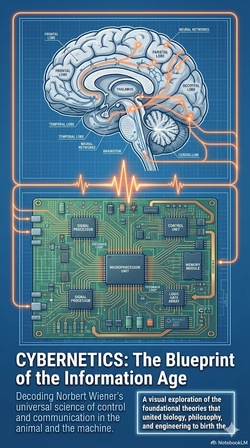
Norbert Wiener’s *Cybernetics*—the cornerstone of the information age—revolutionizes our understanding of control, communication, and order across machines, biological systems, and societies. First published in 1948 (with a revised 1961 edition), this seminal work breaks down disciplinary silos by identifying shared feedback-driven mechanisms governing everything from human motor functions to automated engineering systems. A polymath blending math, engineering, biology, and philosophy, Wiener introduces core concepts like negative entropy (information as a counterforce to disorder), black box analysis, and the statistical nature of control. The revised edition expands into cutting-edge territory, exploring learning machines (early AI prototypes that outperform their designers) and self-organizing systems, where order emerges spontaneously from nonlinear interactions. Beyond technical innovation, *Cybernetics* challenges mechanical determinism, laying the groundwork for fields like artificial intelligence, robotics, biocybernetics, and social systems theory, while prompting critical reflections on automation’s ethical and societal impacts.

CyberneticsFeedback MechanismInformation TheoryNegative EntropyLearning Machine
The Global History of Science and Technology
Loading…

The Global History of Science and Technology

Jun Wu

3.41039 learners

Spanning from humanity’s first stone tools to cutting-edge gene editing and quantum communication, *The Global History of Science and Technology* traces how technological breakthroughs have shaped every era of human civilization. Starting with the 1.76-million-year-old Acheulean handaxe and controlled fire use that let early humans expand beyond Africa, it moves through agricultural revolutions, the rise of metallurgy, and the birth of systematic scientific methods in ancient Greece and the Islamic Golden Age. The book highlights pivotal moments like the Industrial Revolution’s steam engines, Einstein’s relativity, the atomic age, and the digital revolution’s computers and internet. It also explores emerging technologies—CRISPR, quantum communication, artificial photosynthesis—and their ethical implications. More than a timeline, it connects tech advancements to social shifts, from early settlement to modern globalization, showing how science has always been intertwined with human survival, progress, and ambition.

Industrial RevolutionNuclear EnergyQuantum mechanicsAgricultural RevolutionQuantum Communication
The Evolution of Physics
Loading…

The Evolution of Physics

Albert Einstein;Leopold Infeld

4.31025 learners

Co-authored by Albert Einstein and Leopold Infeld, *The Evolution of Physics* takes readers on a captivating, accessible journey through the most transformative shifts in physical thought. Starting with Aristotle’s intuitive, long-dominant views on motion, it traces how Galileo’s experimental rigor laid the groundwork for Newton’s classical mechanics—establishing laws that governed our understanding of the macro world for centuries. The book then explores the cracks in this "mechanical view": the rise of thermodynamics and electromagnetic theory, which challenged the idea that all phenomena could be reduced to particle interactions. It delves into the revolutionary concepts of fields, Einstein’s special and general relativity (redefining space, time, and gravity as curved spacetime), and the birth of quantum mechanics, which upended deterministic views with wave-particle duality and probability waves. More than a textbook, it focuses on the evolution of ideas, making complex physics approachable for anyone curious about how we’ve unlocked the universe’s secrets.

General Relativitywave-particle dualityClassical MechanicsQuantum TheoryField Concept
Dune Messiah
Loading…

Dune Messiah

Frank Herbert

4.3997 learners

Set in the brutal, spice-rich universe of Arrakis, *Dune Messiah* picks up where *Dune* left off: Paul Atreides, now Emperor Muad'Dib, is trapped between the godhood his followers thrust upon him and the crushing weight of a galaxy-spanning jihad he can’t stop. Surrounded by conspirators—shape-shifting Tleilaxu, manipulative Bene Gesserit, and paranoid Spacing Guild navigators—Paul struggles to retain his humanity while fending off plots to dethrone him. When the Tleilaxu send Gola Harkonnen, a cloned weapon with echoes of his fallen friend Duncan Idaho, Paul faces his greatest test: trusting a man who might be a puppet. As visions of his beloved Chani’s death loom, Paul confronts the cost of power, the fragility of prophecy, and whether he can break free from the destiny that chained him. In the end, loss forces him to abandon his imperial crown, choosing to return to the desert as a man rather than rule as a god, leaving his twin heirs to carry the Atreides dynasty’s fate.

Bene Gesseritsandwormsmelange spicePaul Muad'DibTleilaxu Face Dancer
Gamification Marketing
Loading…

Gamification Marketing

Hu Huacheng

2.7958 learners

Gamification Marketing taps into humanity’s innate love of play to transform stale, pushy advertising into immersive, engaging experiences that drive customer action. Unlike traditional marketing that makes consumers feel pressured, this approach leverages core game mechanics—including instant feedback loops, flow states, achievement recognition, and social connection—to meet deep psychological needs. The book breaks down how to design effective gamified campaigns, from crafting compelling challenges to building layered incentive systems that balance extrinsic rewards (like discounts) and intrinsic motivation (like pride and belonging). It features real-world examples that resonate with U.S. audiences, from Barack Obama’s groundbreaking in-game campaign ads targeting young voters to McDonald’s and Tesla’s successful gamified strategies that boost brand loyalty and sales. Whether you’re a marketer, business owner, or entrepreneur, this guide shows you how to turn passive customers into active participants, foster emotional brand connections, and unlock measurable growth across industries.

Flow StateBehavioral PsychologyFeedback MechanismUser EngagementBrand Loyalty
The Universe in a Nutshell
Loading…

The Universe in a Nutshell

Stephen Hawking

4.4940 learners

Stephen Hawking’s *The Universe in a Nutshell* distills cutting-edge cosmic physics into an accessible, mind-expanding journey through the universe’s most profound mysteries. Starting with the collapse of classical physics and Einstein’s revolutionary theories of special and general relativity, Hawking unpacks how spacetime bends, time dilates, and gravity emerges as a geometric effect. He then introduces his groundbreaking no-boundary universe model, framing our cosmos as a finite yet edge-less realm shaped by quantum mechanics. The book delves into mind-bending topics like black holes, time travel paradoxes, the fate of the universe (from heat death to the big rip), and the radical membrane theory that reimagines spacetime as a high-dimensional 'brane.' Hawking also explores humanity’s future, from interstellar travel challenges to the Fermi Paradox and the search for extraterrestrial life. Blending rigorous science with witty, approachable prose, this book invites readers to grasp the universe’s complexities without sacrificing depth, making even the most abstract concepts feel tangible.

Time DilationGeneral RelativitySpecial RelativityQuantum mechanicsBig Bang Theory
A Briefer History of Time
Loading…

A Briefer History of Time

Stephen Hawking;Leonard Mlodinow

4.4854 learners

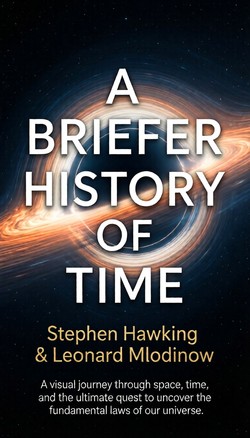
A Briefer History of Time, Stephen Hawking and Leonard Mlodinow’s accessible cosmic guide, demystifies the universe’s deepest mysteries for general readers. Traversing humanity’s evolving understanding—from ancient flat-earth myths and geocentric models to Einstein’s relativity, quantum mechanics, and the Big Bang theory—it breaks down complex concepts like black holes, time dilation, dark matter, and the quest for a unified field theory into digestible explanations. Hawking and Mlodinow also explore mind-bending ideas: time travel, the nature of time, and the anthropic principle, inviting readers to ponder their place in the vast cosmos. More than a science textbook, it celebrates human curiosity and the relentless pursuit of knowledge, showing how abstract cosmic rules shape our daily lives and existence.

Time DilationGeneral RelativityQuantum mechanicsCosmic microwave backgroundString theory
The Global Minotaur
Loading…

The Global Minotaur

Yanis Varoufakis

4.4733 learners

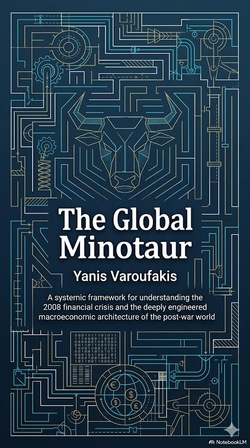
In *The Global Minotaur*, economist Yanis Varoufakis uses the Greek myth of the half-man, half-bull beast to unpack the U.S.-led global economic system that dominated from 1971 to 2008. He argues that America’s twin deficits (fiscal and trade) acted as the Minotaur, sucking in excess goods from surplus nations like Germany, Japan, and China, while those countries’ profits flowed back to Wall Street to fund U.S. consumption, debt, and financial speculation. Varoufakis dismantles simplistic explanations for the 2008 crash—from greed to bad regulation—framing it instead as the inevitable collapse of this unsustainable, debt-fueled cycle. He explores the crisis’s aftermath: Wall Street’s taxpayer-funded bailout, soaring inequality, the eurozone’s self-defeating austerity, and China’s struggle to shift from export-led growth. Finally, he outlines the urgent need for a new global surplus-recycling mechanism to replace the fallen Minotaur, warning that without coordinated reform, the world faces permanent economic stagnation.

Wall StreetGlobal MinotaurTwin Deficits2008 Financial CrisisCollateralized Debt Obligations (CDOs)
Transcending Boundaries
Loading…

Transcending Boundaries

Xiang Biao

3.6675 learners

Based on 6 years of immersive participant observation in Beijing’s Zhejiang Village—a bustling enclave of Wenzhou migrant entrepreneurs—*Transcending Boundaries* challenges Western-dominated social science frameworks that often misinterpret Chinese social dynamics. Author Xiang Biao unpacks how this community thrived beyond formal systems, building a nationwide circulation network rooted in flexible, overlapping family and business ties. He critiques outdated theories like embeddedness and the traditional-modern dichotomy, introducing localized concepts such as *xi* (a dynamic, individual-centered network) and "cluster of relations" to explain the village’s resilience—from evading government crackdowns to bouncing back stronger after the 1995 mass cleanup. This ethnographic study advocates for centering everyday practices over abstract theories, offering a fresh lens to understand migrant communities, informal economies, and the interplay between grassroots networks and state institutions.

Informal EconomyZhejiang Villagexi (social network)cluster of relationsmigrant community
The History of Science
Loading…

The History of Science

Wu Guosheng

4.4535 learners

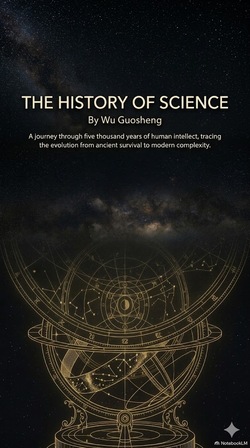
Spanning millions of years, The History of Science chronicles humanity’s awe-inspiring journey from primitive toolmaking and celestial observations to cutting-edge quantum physics and genetic engineering. It starts with the scientific sparks in ancient civilizations—Egyptian solar calendars, Mesopotamian 60-进制 math, and China’s Four Great Inventions—then moves to the Greek rational revolution, where thinkers like Aristotle and Archimedes laid Western science’s foundational framework. The book navigates the medieval era by highlighting Arab scholars’ critical role in preserving and advancing classical knowledge, then dives into the Scientific Revolution: Copernicus’s heliocentrism, Galileo’s experimental breakthroughs, and Newton’s universal laws. It covers 19th-century milestones like Darwin’s evolution and Mendel’s genetics, 20th-century revolutions in relativity and quantum mechanics, and the rise of high-tech fields like nuclear energy, aerospace, and the internet. Finally, it explores modern debates over scientific unity and time’s role in the universe, offering a comprehensive look at how science has shaped civilizations and humanity’s understanding of the world.

scientific methodQuantum mechanicsCopernican RevolutionNewtonian MechanicsEvolutionary Theory
Algorithms to Live By
Loading…

Algorithms to Live By

Brian Christian;Tom Griffiths

4.2497 learners

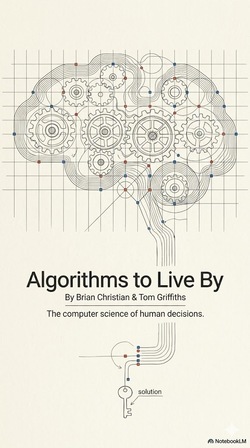
Algorithms to Live By, by Brian Christian and Tom Griffiths, bridges computer science and everyday life, translating core computational logic into actionable strategies for real-world decisions. From choosing a partner or apartment (using the 37% rule for optimal stopping) to managing your schedule (scheduling algorithms) and predicting outcomes (Bayesian inference), this book shows how algorithms solve messy, relatable dilemmas. It explores concepts like the explore-exploit tradeoff, cache mechanisms, and relaxation strategies to help balance uncertainty, avoid overfitting, and make smarter choices. Whether navigating career moves, optimizing productivity, or understanding social dynamics, this book proves algorithms aren’t just for coders—they’re practical tools for anyone looking to make rational, effective decisions in an unpredictable world.

OverfittingGame Theoryscheduling algorithmsOptimal StoppingExplore-Exploit Tradeoff