Year Zero: A History of 1945
Loading…

Year Zero: A History of 1945

Ian Buruma

4.51247 learners

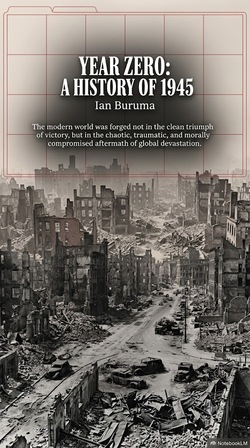
Ian Buruma’s *Year Zero: A History of 1945* frames the end of World War II as a raw, chaotic "zero year"—a moment where old empires collapsed, moral certainties shattered, and the modern world struggled to take shape. Weaving intimate personal narratives with sweeping historical analysis, Buruma takes readers across war-ravaged Europe and Asia: from Dutch civilians starving through the brutal "Hunger Winter" to Japanese "Panpan girls" navigating survival under U.S. occupation, from Jewish survivors facing hostility in their former hometowns to German refugees expelled en masse from Eastern Europe. He unpacks the cycle of vengeance—Polish pogroms against Jewish survivors, Soviet atrocities in Germany, French purges of collaborators—and the messy compromises of justice, where war criminals were sometimes spared to prioritize economic recovery or political stability. Buruma also explores the fragile idealism of the era: the rise of welfare states in Western Europe, the founding of the United Nations, and the quiet seeds of the Cold War that would soon divide the globe. More than a chronicle of defeat and recovery, this book captures the raw humanity of a year that redefined global order, where hope and despair walked hand in hand.
Post-WWII ReconstructionDisplaced PersonsNuremberg TrialsCold War OriginsRevenge and Retribution
The Age of Extremes
Loading…

The Age of Extremes

Eric Hobsbawm

4.41177 learners

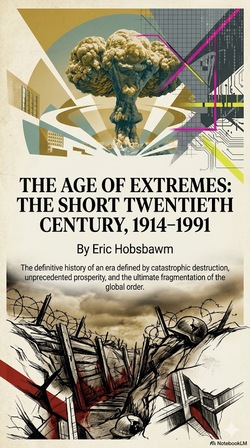
Eric Hobsbawm’s *The Age of Extremes* dissects the turbulent 'short 20th century'—a 77-year period spanning from the outbreak of World War I in 1914 to the collapse of the Soviet Union in 1991. This definitive historical work traces the era’s defining extremes: the catastrophic global wars that shattered 19th-century liberal order, the seismic revolutions that birthed socialist states, the Great Depression that upended capitalist systems, and the decades-long Cold War that divided the world into opposing camps. Hobsbawm also explores the era’s social and cultural upheavals—from decolonization and the rise of youth culture to the transformation of science and art. He analyzes how these interconnected crises reshaped global politics, economies, and societies, leaving a legacy of inequality, ideological fragmentation, and ecological challenges. A masterful synthesis of historical analysis, the book offers critical insights into the forces that defined modernity and warns of the risks of repeating the era’s violent mistakes.

Great DepressionCold WarSoviet CollapseShort 20th CenturyWorld War I
Underworld
Loading…

Underworld

Don DeLillo

4.4957 learners

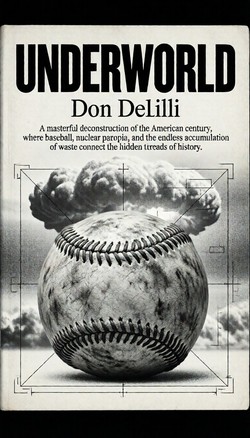
Don DeLillo’s *Underworld* spins a sweeping, immersive narrative of 20th-century America, anchored by the 1951 baseball playoff where Bobby Thomson’s legendary home run collided with the Soviet Union’s first nuclear test. Spanning decades, the novel weaves together interconnected lives: Nick Shay, a waste management executive haunted by a teenage manslaughter conviction; Klara Sax, an artist transforming decommissioned B-52 bombers in the desert; and Matt Shay, Nick’s brother entangled in top-secret nuclear weapons research. DeLillo digs into the quiet chaos beneath American prosperity—Cold War paranoia, the weight of unspoken secrets, the absurdity of consumer excess, and the fragile line between public spectacle and private despair. Through gritty vignettes of Bronx street life, comedy clubs during the Cuban Missile Crisis, and nuclear test sites, the novel reveals how history’s shadows shape ordinary lives, turning a single baseball into a symbol of a nation’s hidden underworld.

Waste ManagementNick ShayKlara Sax1951 Thomson Home RunCold War Nuclear Paranoia
Diplomacy
Loading…

Diplomacy

Henry Kissinger

4860 learners

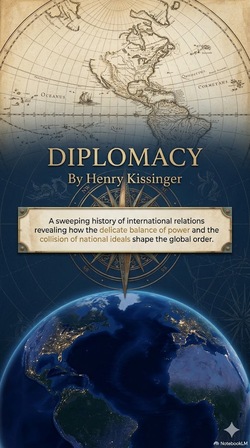
In *Diplomacy*, legendary statesman Henry Kissinger delivers a sweeping, authoritative exploration of global statecraft spanning centuries. Drawing on his firsthand experience shaping U.S. Cold War policy, he contrasts Europe’s centuries-old tradition of realpolitik—rooted in balance of power and national interest, exemplified by figures like Richelieu and Bismarck—with America’s enduring idealism, from Washington’s isolationism to Wilson’s vision of collective security and Reagan’s moral crusade against communism. Kissinger dissects pivotal moments: the rise and fall of European equilibrium, the catastrophic failures of interwar diplomacy, the Cold War’s nuclear standoffs, and Nixon’s groundbreaking China opening. He reveals how U.S. foreign policy has oscillated between its exceptionalist moral mission and the harsh realities of global power dynamics, offering timeless insights into the art of negotiation, alliance-building, and maintaining stable world order. This masterwork is essential reading for anyone seeking to understand the forces that shape international relations.

RealpolitikBalance of PowerWilsonian IdealismContainment PolicyCold War
The Silk Roads
Loading…

The Silk Roads

Peter Frankopan

4.3662 learners

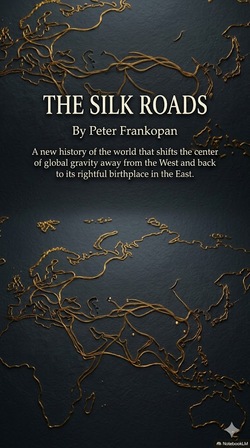
Spanning millennia, Peter Frankopan’s *The Silk Roads* redefines global history by shifting focus from Europe to Eurasia’s interconnected heart. Far more than a commercial network, these routes were the crucible where civilizations collided, empires rose and fell, and ideas reshaped the world. From the Persian Empire’s rise and Alexander the Great’s eastward expansion to the spread of Buddhism, Christianity, and Islam, the book traces medieval trade booms, Mongol conquests that linked continents, the Age of Exploration that shifted power westward, 19th-century British-Russian geopolitical rivalries, the oil-driven transformation of the Middle East, and Cold War proxy conflicts. It concludes with the modern revival of the Silk Roads via initiatives like China’s Belt and Road, arguing this historic crossroads remains key to understanding today’s global power dynamics and cultural shifts.

Cold WarMiddle EastMaritime TradeSilk RoadsPersian Empire
The Spy and the Traitor
Loading…

The Spy and the Traitor

Ben Macintyre

4.4482 learners

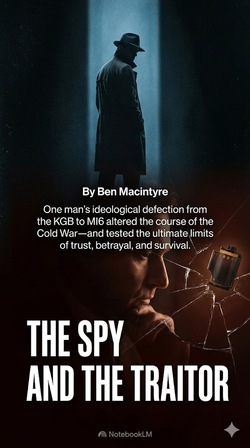
Oleg Gordievsky grew up steeped in the KGB’s shadow—his father was a loyal officer, and Soviet privilege came with constant surveillance and ideological control. But the 1968 Prague Spring invasion shattered his faith in the USSR: as his brother helped crush Czechoslovakia’s reforms, Gordievsky watched from Denmark, horrified by his regime’s brutality. He turned to MI6, becoming one of the Cold War’s most valuable double agents. For years, he leaked top-secret KGB intel, exposing Soviet paranoia during Operation RYAN and warning the West that the USSR believed NATO’s 1983 'Able Archer' exercise was a nuclear strike prelude—defusing a crisis that could have sparked Armageddon. When Aldrich Ames betrayed him to the KGB, Gordievsky executed a daring escape across the Finnish border, leaving his family behind. This gripping true story reveals how one man’s courage altered the course of the Cold War, at the cost of his homeland and years of family separation.

Cold WarOleg GordievskyKGBMI6Operation RYAN
Insight

Cold War Ended Mutually

Hobsbawm says the Cold War ended not just US victory, but mutual rational choices by both superpowers.

Cold WarSuperpowersEnd
Concept

Cold War Definition

The Cold War (1945-1991) was a US-Soviet standoff. It avoided direct war due to nuclear deterrence.

Cold WarNuclear DeterrenceSuperpowers
Concept

Immunological Paradigm

The 20th century social logic that draws clear lines between self and other, repels all foreign alien threats, which fits the Cold War enemy-opposition social structure.

SociologySocial ParadigmHan Byung-Chul
Insight

Andropov’s Paranoia Risk

Andropov’s obsession with proving a non-existent US nuclear attack risked triggering a real nuclear war. He forced all KGB agents to only collect evidence that matched his pre-set conclusion, violating the most basic rule of intelligence work.

Cold WarIntelligence Failurenuclear risk
Insight

Gordievsky Saved Millions

Gordievsky’s intelligence on the Soviet nuclear panic during Able Archer 83 let the West avoid accidental nuclear conflict. Without his tip, NATO might have misread Soviet alert moves and triggered a full nuclear exchange.

PeaceCold WarNuclear Safety
Scenario

Aldrich Ames’ Betrayal

CIA officer Aldrich Ames, deep in debt and resentful of his unpromising career, sold top secret intelligence to the KGB in 1985. His leak directly revealed Gordievsky’s double agent identity to Moscow, putting Gordievsky at mortal risk.

Cold WarBetrayalCIA Spy
Scenario

Crossed The Border Safely

When the British convoy drove across the Soviet-Finnish border, the team played Sibelius’ Finlandia loudly in the car. The music marked that Gordievsky had finally escaped the KGB’s reach and gained his long-awaited freedom.

FreedomCold WarEscape
Scenario

Family Separation Pain

Gordievsky’s wife Leila and two daughters were trapped in the USSR for 6 years after his escape. They were constantly interrogated, monitored, and cut off from all their old friends, before finally being allowed to leave for UK in 1991.

Cold WarSeparationSpy Family
Scenario

Military Dominates 1954 R&D

In 1954, 85% of U.S. federal government R&D funding was allocated to military related projects, while only 6% of the total budget went to basic scientific research with no military use.

Cold WarMilitary Industrial ComplexScience Policy
Scenario

Bill Anders Saved General Dynamics

After the Cold War ended, Bill Anders sold half of General Dynamics' businesses, returned 5 billion USD to shareholders, and the company's annual compound return hit 23.3% for decades.

General DynamicsTurnaround Case
Concept

Secret Nuclear Underworld

The hidden network of top-secret nuclear test sites, hidden military facilities and unreported radiation accidents that the US government kept from the public for decades during the Cold War.

Cold WarSecrecyNuclear History