
The Future of Management
Loading…

The Future of Management

Gary Hamel;Bill Breen

4.3853 learners

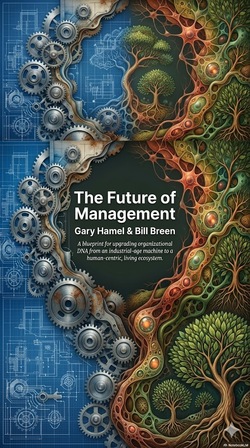
Outdated industrial-era management—rooted in 19th-century principles, optimized for 20th-century efficiency—has hit a wall in the fast-paced, unpredictable 21st century. In *The Future of Management*, Gary Hamel and Bill Breen argue that rigid hierarchies, top-down control, and efficiency-obsessed processes are stifling creativity and adaptability, leaving businesses vulnerable to disruption. Drawing on real-world case studies from trailblazers like Whole Foods, W.L. Gore, and Google, the book outlines a radical shift toward human-centered, adaptive management models. It explores how decentralized decision-making, trust in frontline employees, systematic creativity cultivation, and dynamic resource allocation can build resilient organizations. The authors introduce Management 2.0, a network-driven framework where power flows from contribution, not title, and every team member becomes an innovator. Packed with actionable strategies and eye-opening insights, this book is a blueprint for leaders ready to ditch outdated practices and build organizations built for long-term success in an era of constant change.
GoogleManagement InnovationDecentralized OrganizationsManagement 2.0Self-Managing Teams
Connected
Loading…

Connected

James H. Fowler;Nicholas A. Christakis

4692 learners

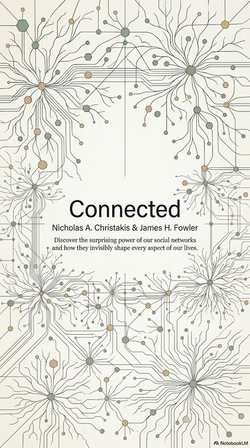
Written by Nicholas A. Christakis and James H. Fowler, *Connected* dives deep into the hidden architecture of social networks and their profound impact on every facet of human life. Drawing on decades of research and real-world case studies, the book uncovers core principles like the three-degree rule—how your choices ripple through friends, friends of friends, and friends of friends of friends—and explains how network shapes (from bucket brigades to button networks) dictate connection dynamics. It explores how networks drive emotional contagion (spreading joy and loneliness alike), influence health behaviors (obesity, smoking, and disease transmission), shape romantic relationships, fuel economic trends, and even sway political outcomes. The authors also examine virtual networks, showing how online interactions mirror real-world social rules while amplifying both collective intelligence and risks. Ultimately, *Connected* reveals that we’re not isolated individuals—we’re nodes in a living, breathing superorganism, and understanding these connections can help us improve our well-being, build stronger communities, and navigate the interconnected world more effectively.

Emotional ContagionCollective Intelligencesocial networksThree-Degree InfluenceDunbar's Number
Concept

Holos Super Organism

A giant global interconnected system that combines all human collective intelligence, machine behavior and natural intelligence. It has far more processing power than the human brain and keeps expanding exponentially.

FutureCollective IntelligenceGlobal Network
No more