
The Whisperers
Loading…

The Whisperers

Orlando Figes

4.7886 learners

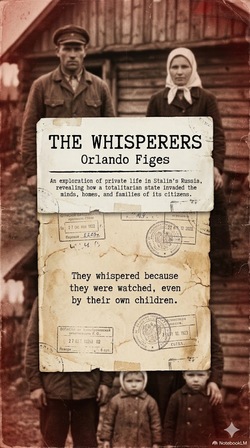
Orlando Figes’ *The Whisperers* delivers an intimate, unflinching portrait of ordinary Soviet families navigating the brutal tides of totalitarian rule, from the 1917 Bolshevik Revolution to the post-Stalin thaw. Drawing on personal diaries, letters, and oral histories, Figes centers stories like poet Konstantin Simonov’s tangled loyalty to the regime, peasant families destroyed by forced collectivization, and “enemies of the people” survivors grappling with lifelong trauma. The book exposes how Stalin’s regime infiltrated every corner of private life—eroding family bonds, fostering a culture of betrayal and whispered secrecy, and forcing individuals to choose between survival and conscience. It humanizes the grand, brutal history of the Soviet Union, revealing the quiet resilience, guilt, and longing that defined daily life for millions under oppressive rule.
StalinismSoviet UnionGulagCollectivizationGreat Terror
Seeing Like a State
Loading…

Seeing Like a State

James C. Scott

4.3760 learners

In *Seeing Like a State*, James C. Scott exposes how modern states impose sweeping simplifications on complex natural and social systems to exert control. Drawing on vivid historical examples—from Prussia’s scientific forestry that reduced diverse ecosystems to timber-producing factories, to Soviet agricultural collectivization and Brazil’s Brasilia, a rigidly planned city that failed to serve real human needs—Scott reveals that these top-down, one-size-fits-all schemes often backfire catastrophically. While they boost short-term bureaucratic efficiency, they erase local practical knowledge (or 'metis')—the context-specific wisdom communities develop over generations to adapt to their environments. Scott argues that ignoring this on-the-ground expertise leads to ecological collapse, social unrest, and failed policies. In the end, he advocates for humble, adaptive governance that respects diversity, embraces uncertainty, and makes space for the flexible, problem-solving skills that keep societies and ecosystems resilient.

State simplificationMetis (practical knowledge)High modernismScientific forestryAgricultural collectivization
Scenario

Pavlik the Hero

15-year-old Pavlik reported his father (a 'kulak') and was killed. Soviet media made him a hero, promoting loyalty to the state over family.

PropagandaLoyaltyYouth
Scenario

Siberian Exile Survival

Evdokia and her kids survived Siberian exile by selling berries, growing potatoes, and enduring harsh winters. She even led others to grow food to survive.

SurvivalExileGulag
Scenario

Soviet Collectivization

Stalin forced farmers into collective farms, destroying local agricultural knowledge. This led to famine and long-term agricultural decline.

State ControlAgricultural Disaster
View

Extreme Modernism Flaw

Extreme modernist plans fail because they ignore local context and Mētis. Examples like Braziliania or Soviet collectivization show rigid plans can’t adapt.

Local KnowledgeExtreme Modernism
Concept

Gulag Labor Camps

The Gulag was a Soviet network of labor camps for political prisoners and 'state enemies.' Used for forced labor in harsh regions like Siberia, it served as a tool for repression and economic exploitation.

GulagRepressionSoviet System
Concept

Forced Collectivization

Stalin’s policy to merge private farms into collective ones. It destroyed rural traditions, caused famine, and led to millions of deaths or exiles.

FamineCollectivizationRural Impact
No more