Beyond Justice
Loading…

Beyond Justice

Zhao Hong;Chen Bi;Li Hongbo;Luo Xiang

3.81066 learners

Beyond Justice challenges the U.S. legal system’s overreliance on punitive punishment, arguing that true justice extends far beyond courtrooms and prison sentences. Drawing on decades of on-the-ground work with communities, schools, and correctional facilities, author Zhaohong Chen Bi unpacks the principles of restorative justice—an approach centered on repairing harm, empowering victims, and fostering accountability in offenders. Through compelling real-world cases, from neighborhood disputes to juvenile offenses, the book contrasts the cycle of resentment caused by traditional punishment with the healing and connection built through facilitated dialogues, restitution, and community involvement. It offers actionable frameworks for individuals, community leaders, and legal professionals to implement restorative practices, showing how this model can reduce recidivism, strengthen trust in justice systems, and create more inclusive, compassionate communities. Whether you’re a concerned citizen, social worker, or lawyer, this book redefines what justice can look like when we prioritize healing over retribution.
Conflict ResolutionLegal ReformRestorative justicePunitive justiceCommunity healing
Learn Like a Leader
Loading…

Learn Like a Leader

Marshall Goldsmith;Beverly Kaye;Ken Shelton

4.61064 learners

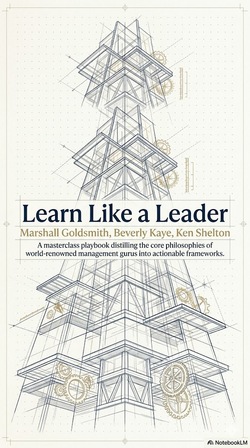
Learn Like a Leader, curated by renowned leadership expert Marshall Goldsmith, distills decades of actionable wisdom from top leaders and thinkers into a practical guide for growing through intentional learning. The book emphasizes counterintuitive yet proven principles: teaching others as the most effective way to deepen your own knowledge, using 360-degree feedback to bridge gaps between self-perception and how others see you, and leading with authenticity by embracing your true self instead of mimicking others. Through real-world stories—from a toll booth attendant turning his job into a creative outlet to CEOs transforming teams by prioritizing empathy and mission—Goldsmith shows that great leadership isn’t about authority, but about empowering others, staying curious, and continuously refining your approach. Whether you’re a new manager or a seasoned executive, this book offers strategies to build self-awareness, resolve conflicts gracefully, and turn everyday experiences into opportunities to lead better and grow faster.

Self-AwarenessAuthentic LeadershipConflict Resolution360-Degree FeedbackTeaching-Learning Loop
Shielding Power
Loading…

Shielding Power

Fushu

3.4765 learners

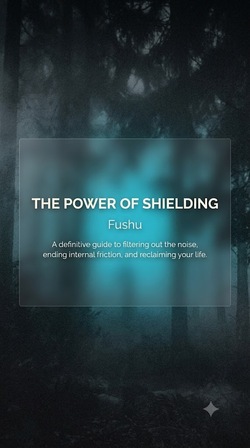
In today’s hyper-connected, high-pressure world—where work bleeds into personal time and constant demands drain our mental energy—*Shielding Power* by Fushu is a practical, empathetic guide to protecting your psychological well-being. Drawing on years of clinical counseling experience and real-life stories from professionals, caregivers, and entrepreneurs, the book breaks down actionable strategies to build and maintain healthy mental boundaries. You’ll learn how to identify subtle emotional triggers that deplete your energy, step-by-step methods to communicate boundaries clearly without guilt, and techniques to recover from burnout. Fushu emphasizes that shielding your power isn’t selfish—it’s essential for long-term productivity, meaningful relationships, and overall life satisfaction. Whether you’re navigating toxic work environments, overwhelming caregiving duties, or just feeling constantly stretched thin, this book gives you the tools to reclaim control of your mental space and thrive.

Conflict ResolutionEmotion TriggersMental BoundariesEmotional BurnoutEnergy Preservation
Nonviolent Communication
Loading…

Nonviolent Communication

Marshall B. Rosenberg

4.4647 learners

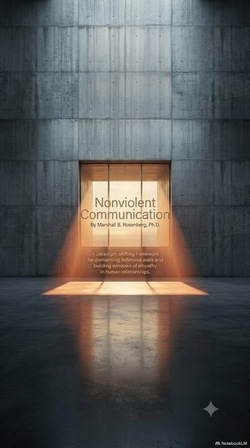
Developed by Marshall B. Rosenberg after witnessing radical compassion amid violence and conflict, *Nonviolent Communication (NVC)* provides a life-changing framework to break free from judgmental, alienating language and build genuine connections. At its core are four actionable components: observing behavior without criticism, naming feelings instead of making assumptions, identifying unmet needs that drive emotions, and making clear, respectful requests. This guide isn’t limited to personal relationships—it equips readers to navigate workplace tensions, resolve conflicts, manage anger constructively, and practice self-compassion by letting go of harsh self-judgment. Through real-world examples and step-by-step exercises, Rosenberg shows how shifting focus from blame to mutual understanding can turn difficult conversations into opportunities for empathy, healing, and collaboration, helping readers foster deeper, more fulfilling interactions with others and themselves.

Conflict ResolutionNonviolent Communication (NVC)Empathetic ListeningObservational LanguageEmotional Awareness
Method

Group Cooperation Steps

Build cooperative groups: 1. Shared goals. 2. Reward cooperation. 3. Fair conflict resolution. Boosts group survival.

CooperationConflictGroup Survival
Insight

NVC Conflict Resolution

NVC solves conflicts by focusing on needs, not blame. It finds solutions that meet everyone’s needs instead of compromising.

Conflict ResolutionNVC
Method

Third Path: Universalism

To avoid hyperculture vs essentialism, use cultural universalism. It builds shared values (from Enlightenment) via museums/education, respecting diversity while finding common ground.

Conflict ResolutionEnlightenmentCultural Universalism
Method

Analysis Process Steps

Analysis has two parts: 1) Examine unconscious efforts (idealized image, externalization). 2) Handle conflicts directly. Do step by step, not too early.

Conflict ResolutionTherapy Process
Method

Compromise Effectively

1. Identify core non-negotiables. 2. Trade secondary issues for core gains. 3. Ensure clear, enforceable agreements.

Conflict ResolutionNegotiation
Method

J.T.'s Gang Management Steps

J.T. managed his gang by monitoring sales, resolving conflicts between members, maintaining community relations, and keeping police at bay through bribes or negotiations.

Conflict Resolutiongang managementcommunity relations
Method

Joint Jewish-Arab Council

Form a council with 4 Jewish/4 Arab reps (doctors, lawyers, workers, clergy) to work for mutual well-being via secret consensus.

Conflict ResolutionPalestineJewish-Arab relations
Scenario

Mary Sister's School Case

Mary Sister used democratic style to close a school—she listened to parents and staff, avoiding conflict and ensuring smooth transition.

ConsensusConflict ResolutionDemocratic Leadership
Method

Conflict Resolution With Empathy

Resolve conflicts by: 1) Listening to all sides; 2) Understanding each person's perspective; 3) Finding a win-win solution.

EmpathyCollaborationConflict Resolution
View

Lawyers Should Prioritize Reconciliation

Gandhi believes a lawyer’s real job is not to win cases at all costs. Helping conflicting parties make peace and save both their money and relationship is far more meaningful.

EthicsConflict ResolutionLegal Practice
Method

Resolve Cross Team Conflicts

If two high-performing teams fight with each other, use the "Freaky Friday" strategy: let them swap roles for a short time, so they can understand each other’s pain points and end the conflict quickly.

ManagementConflict ResolutionTeam Collaboration
Method

J.T.'s Conflict Resolution

J.T. resolves conflicts by mixing violence (for serious issues like theft) and negotiation (for minor disputes). He uses fear and respect to keep members in line.

Conflict ResolutionJ.T.gang management
Method

Handle 'No' with Empathy

When someone says 'no', don’t take it personally. Ask: 'What do you feel? What need do you have?' to understand their perspective.

EmpathyConflict Resolution