Father Goriot
Loading…

Father Goriot

Honore de Balzac

4.21193 learners

Set in the grim, cramped Vauquer Boarding House—an unforgiving refuge for Paris’s down-and-out—Honoré de Balzac’s *Father Goriot* lays bare the cold, merciless underbelly of 19th-century French high society. At its core is Jean-Joachim Goriot, a once-wealthy pasta merchant who drains every franc to fund the lavish lifestyles of his two daughters, Anastasie and Delphine, after they marry into aristocratic and banking families. As Goriot descends into poverty and isolation, his daughters shun him as an embarrassment, only reaching out when they need more money to fuel their vanity. Parallel to his tragedy is Eugene Rastignac, a naive provincial law student hungry to climb the social ladder. Guided by the cynical wisdom of Vautrin, a mysterious escaped convict, and the worldly Countess de Beauseant, Rastignac witnesses Goriot’s slow ruin and confronts a brutal truth: in Paris’s elite circles, money trumps family, and ambition demands sacrificing morality. By the novel’s end, Goriot’s lonely, neglected death forces Rastignac to abandon his innocence, embracing the cutthroat rules of the society he once admired.
materialismFather GoriotEugene RastignacVautrin (Trompe-la-Mort)Vauquer Boarding House
The Dictator's Handbook
Loading…

The Dictator's Handbook

Bruce Bueno de Mesquita;Alastair Smith

4.21173 learners

Forget the textbook myths about 'democracy vs. dictatorship'—*The Dictator's Handbook* lays bare the universal logic of power governing every leader, from small-town corrupt officials to corporate CEOs and global autocrats. Drawing on real-world cases like the Bell City salary scandal and Liberia’s Samuel Doe, authors Bruce Bueno de Mesquita and Alastair Smith argue all political systems boil down to three key groups: the selectorate (potential supporters), influencers (power brokers), and winning coalition (the tiny few who keep leaders in office). They break down five unbreakable rules of political survival—from shrinking your winning coalition to controlling resource flows—that apply to governments, corporations, and even criminal organizations. Rejecting idealistic political philosophy, this book cuts through noise to show how leaders actually stay in control, and how ordinary people can use this knowledge to challenge unjust systems and push for meaningful change.

Corporate GovernanceResource AllocationWinning CoalitionSelectorate GroupInfluencer Group
The Lychees of Chang'an
Loading…

The Lychees of Chang'an

Ma Boyong

3.81094 learners

Set in the bustling, corrupt Tang Dynasty capital of Chang’an, *The Lychees of Chang’an* follows Li Shande, a low-ranking, math-savvy government clerk who stumbles into an impossible mission: delivering fresh lychees from the tropical Lingnan region—over 3,000 miles away—to the Emperor’s favorite concubine, Yang Guifei, in just 11 days. Tasked with a death sentence if he fails, Li navigates cutthroat court politics, treacherous terrain, and bureaucratic red tape to crack the code of lychee preservation and rapid transit. Along the way, he confronts the brutal cost of imperial indulgence: exploited villagers, exhausted couriers, and broken friendships. As he succeeds against all odds, Li realizes the hollow glory of court success, choosing integrity over power and retreating to Lingnan to rebuild his life. Ma Boyong’s witty, tightly woven narrative humanizes the hidden struggles of ordinary people in a grand, unforgiving empire, offering a sharp critique of bureaucratic corruption and the price of luxury.

Yang GuifeiLi ShandeFresh Lychee DeliveryTang Dynasty BureaucracyYang Guozhong
Hidden Rules
Loading…

Hidden Rules

Wu Si

4.1947 learners

Hidden Rules by Wu Si pulls back the curtain on the unspoken norms that governed China’s imperial bureaucracy—norms that often overshadowed formal laws and shaped every layer of power. At the core of this system lies the "legal right to inflict harm": low-ranking officials and even clerks held the power to legally ruin lives, extort bribes, and manipulate resources, all while hiding behind formal regulations. Wu Si uses vivid historical cases—from a minor clerk controlling military promotions to corrupt prison officials exploiting inmates—to show how these powers spawned hidden rules: unspoken agreements where citizens bribed officials to avoid harm, and bureaucrats colluded to siphon wealth from the people. The book also explores how bad policies filtered out honest officials and elevated ruthless ones, the power struggle between emperors and their lying bureaucracies, and parallels to modern power dynamics, making it an eye-opening look at enduring unspoken power structures.

interest groupsLegal Harm PowerHidden RulesImperial Chinese BureaucracyOfficial Corruption
The Human Nature You Have To Know
Loading…

The Human Nature You Have To Know

Liu Yong

3.2883 learners

Packed with relatable, real-life stories spanning office politics, friendships, marriage, and everyday social interactions, *The Human Nature You Have To Know* lays bare the unspoken truths of human behavior. From navigating a boss’s fragile ego to avoiding the wrath of seemingly 'useless' coworkers, from understanding why friends drift apart after success to learning how to preserve relationships without hurting others’ pride, this book offers practical, no-nonsense wisdom to help you navigate life’s trickiest social pitfalls. It doesn’t just analyze human flaws—it teaches you to anticipate them, adapt your behavior, and protect yourself while maintaining empathy, making it an essential guide for anyone looking to thrive in both professional and personal spheres.

Relationship ManagementMoral CorruptionHuman nature pitfallsWorkplace dynamicsSocial etiquette
Age of Ambition
Loading…

Age of Ambition

Evan Osnos

4.4780 learners

Drawing on years of on-the-ground reporting across China, Evan Osnos’ *Age of Ambition* captures the chaotic, exhilarating, and often contradictory era of the country’s post-1978 rise. From Lin Yifu—the Taiwanese army officer who swam to mainland China to embrace reform—to Gong Haiyan, the rural girl who built China’s largest dating app, Osnos weaves intimate stories of ordinary people chasing fortune, freedom, and identity amid explosive economic growth. He also confronts the dark underbelly of this ambition: rampant corruption, strict political censorship, the moral vacuum left by decades of upheaval, and the clash between traditional values and modern individualism. Through portraits of dissidents like Ai Weiwei, activists like Chen Guangcheng, and everyday citizens navigating a rapidly changing society, the book reveals how China’s “age of ambition” is both a story of unprecedented progress and a struggle to reconcile material success with spiritual and political fulfillment.

CorruptionSocial MobilityLin YifuCentury JiaYuanAi Weiwei
Microscope Ming
Loading…

Microscope Ming

Ma Boyong

4630 learners

Dive into the untold, gritty stories of the Ming Dynasty’s grassroots through *Microscope Ming*. This collection of true, meticulously researched cases pulls back the curtain on the empire’s hidden underbelly: a scholar’s decade-long fight to fix a skewed silk tax burden across Huizhou counties, a bitter battle over a “dragon vein” tied to exam fortunes, an 8-year lawsuit to reclaim an ancestral grave from corrupt monks, the slow collapse of the Xuanwu Lake Yellow Register Archives (the empire’s once-perfect tax record system), and petty officials exploiting power to extort ordinary people. Each story reveals how grand imperial policies unraveled at the local level, exposing the tangled web of bureaucratic inertia, elite privilege, and the quiet resilience of common folks caught in the crossfire. It’s a micro-history that turns dry institutional details into vivid, relatable tales of power, justice, and survival.

Ming DynastyXuanwu Lake ArchivesAncestral Grave LitigationGrassroots GovernanceLocal Gentry
Coin Locker Babies
Loading…

Coin Locker Babies

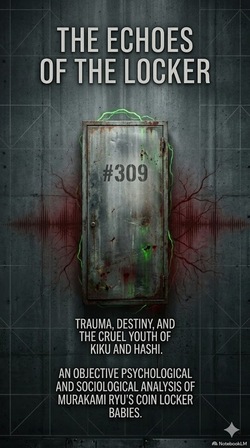
Murakami Ryu

4.4522 learners

In 1972, two newborns are abandoned in Japanese coin lockers, surviving against all odds to become inseparable foster brothers. Kikuno (Akira) and Joe, scarred by the near-death trauma of their infancy, develop symbiotic psychosis—Akira obsessed with endless movement to outrun stagnation, Joe fixated on building isolated, guarded spaces. When adopted by a rural couple, their fragile bond frays as Joe flees to Tokyo to find his birth mother, falling into the glitzy, exploitative world of pop stardom. Akira, desperate to locate his brother, tracks him to Tokyo, only to be consumed by violent delusions tied to Mandragora, a mysterious hallucinogenic drug. After a catastrophic shooting at a televised mother-reunion event, Akira is sent to a juvenile detention center, while Joe spirals into mental collapse, grappling with fabricated fame and a fractured sense of self. Ryu Murakami’s raw, visceral novel explores trauma, identity, and the desperate search for belonging in a world that rejects outcasts.

Identity CrisisTrauma RecoveryLocker AbandonmentSymbiotic PsychosisMandragora
Scenario

She's Prison Ordeal

She Junmen gave 3000 taels as a prison bribe, but the warden thought it was too little. He was left hungry and suffering opium withdrawal until he added another 3000 taels.

InjusticePrison CorruptionBribe Culture
Quote

Eisman on Ratings

"The ratings agencies are just whores." Eisman said this because they gave AAA ratings to junk subprime bonds for money.

CorruptionSteve EismanRatings Agencies
Quote

Clerks Get Rich Quick

"Enter in blue clothes; leave with gold." Describes Jiajing-era clerks making fast money via power.

Clerk CorruptionJiajing ReignRent-seeking
Context

Di Renjie's Living Shrine

People built a living shrine for Di Renjie in Wei Prefecture for his good governance. Later, his son's corruption led to the statue being destroyed and rebuilt.

Di RenjieLiving ShrineFolk Respect
View

Low Salary Forces Corruption

Ming officials' salaries were too low (e.g., county magistrate got <1840 yuan/month) to cover needs. They had to take gray income—else, they couldn't even greet superiors.

SurvivalCorruptionLow Salary
Quote

Official's Distorted Roles

"To superiors, I'm a slave; to guests, a prostitute; to taxpayers, a keeper; to people, a matchmaker—switching roles daily, losing dignity." (Yuan Hongdao's magistrate experience.)

CorruptionDignity LossOfficial Roles
Quote

City as Prostitute & Pimp

The city is like a prostitute in love with her pimp. Ergueta rants about the city's corrupt, codependent nature.

CorruptionMetaphorCity
Scenario

Mao's Fake Title

Mao Desguan bought an official title for 30 taels from a poor man. He changed his name and got a gunboat captain position. His past was almost exposed but he bribed his way out.

CorruptionFake TitleIdentity Fraud