
The Great Flowing River
Loading…

The Great Flowing River

Chi Pang-yuan

4.4537 learners

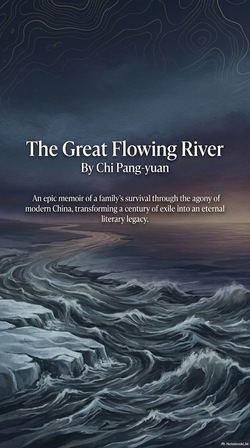
Born in 1924 amid the frozen plains of Manchuria, Chi Pang-yuan’s memoir *The Great Flowing River* weaves an intimate, sweeping tale of survival, love, and cultural resilience through China’s most turbulent decades. From her childhood listening to her mother’s folk songs while war looms over the Liao River, to fleeing the Japanese invasion as a refugee, Chi’s journey takes her to Nankai Middle School in wartime Chongqing, Wuhan University, and finally to Taiwan in 1947. Along the way, she confronts profound loss—including the death of her beloved Zhang Dafei, a pilot who died fighting the Japanese—and finds purpose in teaching literature and championing Taiwanese writing on the global stage. This isn’t just a personal story; it’s a vivid chronicle of a generation displaced, of the quiet courage of ordinary people, and of how literature becomes a lifeline in times of chaos. Chi’s voice is warm, unflinching, and deeply human, making her journey feel both universal and uniquely intimate.
Cultural PreservationManchurian exileSecond Sino-Japanese WarZhang DafeiTaiwanese literature
Old Temple New Gods
Loading…

Old Temple New Gods

Duan Zhiqiang

3.8490 learners

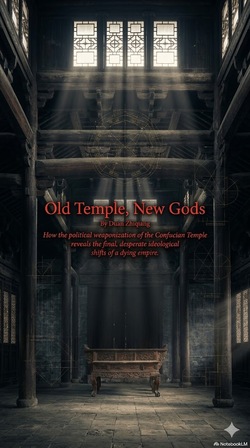
Old Temple New Gods takes readers on a vivid journey through the evolving rituals of Confucian temple enshrinement during the Qing Dynasty, unpacking how this ancient institution shifted to navigate political upheaval and cultural change. Starting with the dual public-private role of Confucian temples—serving as state tools for social order and professional shrines for scholar-officials—the book traces key turning points: from Emperor Yongzheng’s massive expansion of enshrined scholars to Daoguang’s crackdown on overcrowding, and finally to the fiery late-Qing debate over honoring Ming loyalists Gu Yanwu, Huang Zongxi, and Wang Fuzhi. It reveals fierce clashes between conservatives, reformers, and revolutionaries, showing how the Qing court tried to co-opt these unorthodox thinkers to legitimize constitutional reform and preserve traditional culture, even as their ideas were weaponized by opposing factions. This isn’t just a story of rituals; it’s a window into a dying dynasty’s desperate struggle to redefine orthodoxy amid crisis.

Cultural PreservationState RitualsLate Qing DynastyGu YanwuConfucian Temple Enshrinement
View

Culture Defines Civilization

Saving human lives alone is not enough, you have to preserve all cultural, historical and technical records to make sure the new civilization is still human, not a random new species.

Cultural PreservationCivilization IdentityKnowledge Backup
No more