
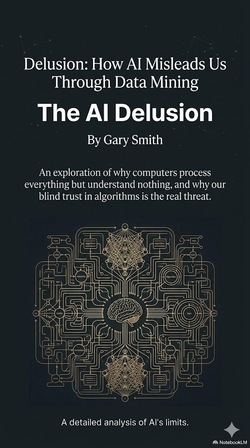
The AI Delusion
Loading…

The AI Delusion

Gary Smith

3.31112 learners

In *The AI Delusion*, economist Gary Smith dismantles the hype surrounding artificial intelligence, arguing that today’s AI systems are not truly intelligent—they’re just sophisticated tools for data matching and brute-force computation. Using vivid examples from Jeopardy!’s Watson, chess-playing programs like AlphaZero, and real-world failures in medicine, stock trading, and hiring, Smith shows that machines lack human understanding: they can’t grasp context, distinguish meaningful patterns from random coincidences, or apply common sense. He exposes the dangers of data mining, from the Texas Sharpshooter Fallacy (cherry-picking data to fit theories) to overfitting models that work perfectly on old data but fail catastrophically on new inputs. Smith also warns against blind trust in black-box algorithms, which perpetuate bias, enable unfair decisions, and risk catastrophic errors in high-stakes fields like healthcare and military operations. Ultimately, he emphasizes that human reasoning, critical thinking, and common sense are irreplaceable—we should use AI as a tool, not mistake it for a thinking, feeling counterpart.
Data MiningOverfittingTuring TestHuman IntelligenceArtificial Intelligence (AI)
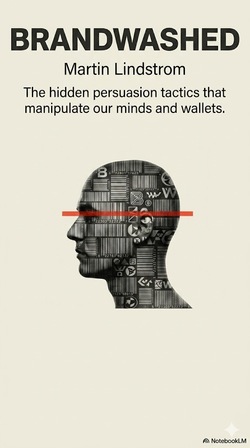
Brandwashed
Loading…

Brandwashed

Martin Lindstrom

4.3548 learners

In *Brandwashed*, veteran marketer Martin Lindstorm pulls back the curtain on the hidden tactics brands use to manipulate consumer behavior—starting with his own eye-opening year-long "brand detox" experiment, which he shockingly failed. Lindstorm reveals how brands infiltrate our lives from before birth, leveraging maternal sensory exposure to implant lifelong preferences. He explores how marketers target children with addictive ads, exploit fear and peer pressure to drive purchases, use nostalgia to trigger emotional connections, and wield data mining to track every consumer move. Through groundbreaking experiments like the Morgensons family social test, he proves that peer recommendations and trusted social circles are far more persuasive than traditional ads. Packed with neuroscience insights and real-world case studies, this book empowers readers to recognize the invisible forces shaping their buying decisions and reclaim control over their spending.

Data MiningPeer PressureBrand manipulationConsumer psychologyFear marketing
Concept

Overfitting in Models

Overfitting is when a model fits past data perfectly but fails future. Like using random variables to predict elections—great for old data, but way off for new. It's common in data mining when variables outnumber observations.

StatisticsData MiningOverfitting
Quote

Coase on Data Torture

"If you torture the data long enough, it will confess to anything." Coase's take on data mining—forcing data to show patterns even if they're fake.

CoaseData MiningSpurious Patterns
Scenario

Bem's Fake Future Perception

Bem claimed people could predict porn image positions (53% accuracy). It's a data mining trick—he only reported the one 'significant' result, ignoring others. No real future perception.

Data MiningSpurious ResultsBem
Insight

Data Needs Theory

Data alone isn't enough. You need a theory to explain why a pattern exists. AI just finds patterns—without theory, they're likely fake (like storks and babies).

AIDataTheory
Insight

Data Mining Invades Privacy

Every digital action (search, purchase, location) is tracked. Brands use this data to predict your needs and manipulate your buying decisions.

Data Privacyconsumer tracking
Concept

Correlation Relation

It describes the quantifiable matching pattern between two or more variables, no need to find the inner causal logic, only tells you how one changes along with the other.

PredictionStatisticsData Mining
Scenario

Dead Salmon MRI Joke

Researchers put a dead salmon in an MRI and found 'brain activity'. It's a joke showing data mining can find fake patterns in noise—AI does this too, missing real meaning.

AI LimitationsData MiningNoise
Concept

Spurious Correlation

A correlation without causal link. Like stork nests and baby births—they both rise with time but no real connection. AI often mistakes these for meaningful patterns.

AICorrelation vs CausationSpurious
Concept

Surveillance Capitalism

Surveillance capitalism is a system where platforms collect user data to predict/modify behavior for profit. It turns human experience into data, using algorithms to guide actions without full user awareness.

Data MiningSurveillance CapitalismBehavioral Control
No more