Life and Death Are Wearing Me Out
Loading…

Life and Death Are Wearing Me Out

Mo Yan

4.21289 learners

In Mo Yan’s sweeping, darkly humorous epic *Life and Death Are Wearing Me Out*, Ximen Nao, a wealthy landowner wrongfully executed during China’s 1950s land reform, refuses to let go of his anger—even when the King of Hell sends him back to Earth not as a man, but as a series of animals. Over five reincarnations, he becomes a donkey, ox, pig, dog, and monkey, each time retaining memories of his past life. Through his animal eyes, he witnesses the turbulent decades of 20th-century China: the rise of collective farming, the chaos of the Cultural Revolution, and the dizzying shifts of the reform era. He watches his former servants, enemies, and family members navigate love, betrayal, and survival in his hometown of Gaomi Northeast Township. By the time he is finally reborn as a human boy, Lan Qianshui, he confronts the weight of his lifelong grudges—and discovers that letting go might be the only way to find peace.
ReincarnationCultural Revolutionreform eraXimen NaoGaomi Northeast Township
The Tibetan Book of Living and Dying
Loading…

The Tibetan Book of Living and Dying

Sogyal Rinpoche

41154 learners

Drawing from his lifelong Tibetan Buddhist training and intimate encounters with death, Sogyal Rinpoche’s *The Tibetan Book of Living and Dying* bridges Eastern wisdom and Western cultural gaps around mortality. Unlike the West’s tendency to deny or fear death, Rinpoche unpacks the core Tibetan concept of bardos—transitional states spanning life, death, and rebirth—revealing how each moment holds potential for liberation. He guides readers through practices to uncover rigpa, the pure, unchanging nature of the mind, including meditation, compassion cultivation, and the phowa technique for conscious transition at death. The book also offers practical, heartfelt advice for caring for the dying, processing grief, and embracing impermanence to live more fully. By reframing death not as an end but as a gateway, Rinpoche empowers readers to let go of fear, awaken to their true selves, and find profound peace in both life and death.

MeditationReincarnationBardo teachingsRigpaPhowa practice
The Ego and the Id
Loading…

The Ego and the Id

Sigmund Freud

4.61070 learners

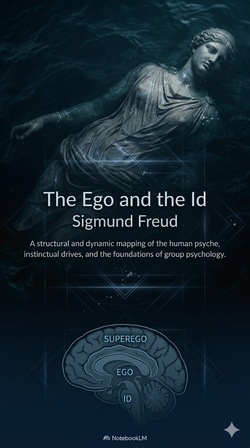
Sigmund Freud’s *Ego & Id* lays the foundational framework for modern psychoanalytic theory, unpacking the hidden structures of the human mind and the primal forces driving behavior. Freud breaks down mental life into three interconnected components: the id, the raw, pleasure-seeking reservoir of instincts; the ego, the rational mediator between the id’s demands and external reality; and the superego, the internalized moral compass shaped by childhood experiences. Beyond this tripartite model, the book explores the tension between the pleasure principle and the compulsion to repeat, delves into the libido-fueled dynamics of group psychology, and examines how repressed instincts and unconscious conflicts manifest in neuroses. Drawing on clinical case studies and evolutionary insights, Freud challenges conventional views of consciousness, arguing that most mental activity operates outside our awareness. This seminal work not only revolutionized psychology but also provided a lens to understand human motivation, relationships, and the roots of psychological distress.

RepressionEgoIdSuperegoLibido
Zhuangzi
Loading…

Zhuangzi

Zhuang Zhou

4.41009 learners

Dive into the whimsical, profound world of Zhuangzi, a foundational text of Chinese Daoism packed with playful fables and radical wisdom that challenges rigid societal norms. Through tales like the giant Peng bird soaring 90,000 li, the butcher Paoding who masters the 'Way' of butchering without dulling his knife, and Zhuang Zhou’s dream of being a butterfly (or vice versa), Zhuangzi explores core ideas: the contrast between small-mindedness and great vision, the relativity of right and wrong, and the power of 'wu wei'—non-forced action aligned with nature’s flow. He argues that 'uselessness' can be a superpower, protecting one from harm and enabling authentic living. Zhuangzi also frames life and death as natural cycles, urging readers to let go of attachment to fame, wealth, and rigid morality to embrace 'xiaoyao'—unfettered freedom of the spirit. Whether critiquing hypocritical scholars or guiding readers through chaos, this text invites redefining success and finding peace in harmony with nature.

Dao (The Way)Xiaoyao (True Freedom)Wu Wei (Non-Action)RelativismNaturalness
The Book Thief
Loading…

The Book Thief

Markus Zusak

4.2986 learners

Set against the brutal backdrop of Nazi Germany during World War II, *The Book Thief* is narrated by Death, who observes 9-year-old Liesel Meminger as she navigates loss, love, and survival. After her younger brother dies en route to a foster home, Liesel steals her first book—the *Gravedigger’s Handbook*—from his snowy gravesite, sparking a lifelong obsession with words. Taken in by the kind-hearted Hans Hubermann and his sharp-tongued but loving wife Rosa, Liesel finds solace in Hans’s late-night reading lessons and the books she steals from bonfires and a wealthy mayor’s library. When the Hubermanns hide Max Vandenburg, a Jewish boxer fleeing persecution, Liesel forms an unbreakable bond with him, sharing her stolen books and their shared trauma of nightmares. As the war closes in, books become a lifeline, weaving moments of warmth and humanity through the chaos of bombings and Nazi tyranny, proving that words can outlast even the darkest of times.

World War IIbook theftLiesel MemingerHans HubermannMax Vandenburg
Americana
Loading…

Americana

Don DeLillo

4.1965 learners

David Bell, a handsome, disillusioned young advertising executive in 1960s New York, escapes the suffocating hypocrisy of corporate politics and fractured personal relationships to embark on a cross-country journey. Armed with a 16mm camera, he sets out to make a film that captures the unvarnished truth of America—beyond the glossy ads and polished narratives he’s spent his career selling. Along the way, he confronts the ghosts of war trauma through Glenn Yost’s harrowing Bataan Death March memories, navigates the raw class divides of Texas tire fields, and connects with the quiet resilience of Arizona’s Apache communities. As he moves from bustling cities to desolate small towns, David dismantles his own illusions of success and the American Dream, confronting existential questions about identity, purpose, and the hidden fractures beneath America’s shiny surface. Don DeLillo’s debut novel is a sharp, introspective odyssey that lays bare the absurdity and quiet humanity of modern American life.

existential crisiswar traumaAmerican DreamSmall-Town AmericaDavid Bell
The Gift of Therapy
Loading…

The Gift of Therapy

Irvin D. Yalom

4.3949 learners

Drawing from 45 years of groundbreaking clinical work, Irvin D. Yalom’s *The Gift of Therapy* redefines psychotherapy by moving beyond rigid techniques and diagnostic labels to center on the authentic, healing bond between therapist and client. Yalom challenges outdated models like the "blank screen" approach, arguing that therapists must embrace intentional vulnerability and self-disclosure—rooted in the client’s needs—to foster trust. He emphasizes the power of the "here and now," using in-session interactions to uncover clients’ core relational patterns, and explores existential themes of death, freedom, meaning, and responsibility that underpin many psychological struggles. Through vivid, real-world case studies, Yalom offers actionable guidance: from navigating therapeutic boundaries to using dreams as windows into the subconscious, and from validating clients’ dark human impulses to helping them embrace life’s impermanence. At its core, the book frames therapy not as a fix, but as a shared journey where both parties grow together, removing barriers to each person’s innate drive toward self-actualization.

AuthenticityEmpathyDream AnalysisExistential psychotherapyTherapeutic relationship
- El último lector(David Toscana,2005)
Loading…

- El último lector(David Toscana,2005)

David Toscana,2005

0888 learners

Set in the parched Mexican town of Icamolé, David Toscana’s 2005 novel *The Last Reader* weaves a gritty, interconnected tale of secrets, redemption, and the fight against collective oblivion. When farmer Remigio discovers the body of young Bárbara in his dry well, he turns to Lucio, the town’s cantankerous yet dedicated librarian, who shelters him and uses literary texts to frame their quiet act of protection. As local police scapegoat Melquisedec, the gentle water-carrier, to close the case, Bárbara’s mother arrives, drawn to Lucio’s library and the novel *Bárbara’s Death* that mirrors her daughter’s fate. Toscana blends harsh realism with literary intertextuality, using Lucio’s library—an oasis of forgotten stories—to explore how books become lifelines in desolate circumstances, how guilt and grief blur moral lines, and how even the most marginalized people cling to memory to survive.

RedemptionIcamoleLucio’s LibraryBárbara’s DeathMelquisedec’s Frame-up
On Death and Dying: What the Dying Have to Teach Doctors, Nurses, Clergy and Their Own Families
Loading…

On Death and Dying: What the Dying Have to Teach Doctors, Nurses, Clergy and Their Own Families

Elisabeth Kübler-Ross

0884 learners

Based on groundbreaking interviews with terminally ill patients, *On Death and Dying* explores the universal fear of death in modern society, tracing its roots to medical advancements that have distanced death from daily life and normalized avoidance. The book introduces the five pivotal stages of end-of-life psychological adjustment—denial, anger, bargaining, depression, and acceptance—offering profound insights into how patients navigate grief, fear, and hope. It also examines the toll of terminal illness on families, the barriers to honest communication between doctors and patients, and the critical need for interdisciplinary, compassionate care. Through real-world case studies and reflections from medical professionals, it challenges the medical field to prioritize patient dignity and emotional support over purely technical interventions, urging doctors to learn from the dying to transform end-of-life care into a humane, respectful experience.

AcceptancedenialAngerdepressionDeath anxiety
My Transformation
Loading…

My Transformation

Wang Shi

3.8765 learners

Wang Shi’s *My Transformation* chronicles his extraordinary journey from a young truck driver navigating China’s Gobi Desert to a pioneering entrepreneur, world-class mountaineer, and lifelong learner. Overcoming a genetic predisposition to altitude sickness, he defied odds to summit Everest, facing near-death experiences that reshaped his views on physical limits and mental resilience. As founder of Vanke, he built a corporate legacy on uncompromising ethics—refusing bribes even when competitors gained an edge—and championed modern, transparent governance that outlasted his leadership. Later, at 60+, he traded boardrooms for Harvard and Cambridge classrooms, grappling with language barriers and academic rigor to redefine himself beyond business. His story also weaves in environmental advocacy, from leading corporate green initiatives to global climate summits, and profound reflections on life and death shaped by mountain perils and cross-cultural encounters. More than a memoir, it’s a testament to embracing change, confronting vulnerabilities, and living with purpose at every stage of life.

Lifelong LearningEnvironmental AdvocacyMountaineeringRowingVanke
Being and Time
Loading…

Being and Time

Martin Heidegger

4.4724 learners

Martin Heidegger’s *Being and Time* upends traditional Western ontology by centering its inquiry on Dasein—human beings as "beings who question their own existence." Rejecting the long-held view of humans as fixed, ready-made entities, Heidegger argues Dasein’s essence lies in its "to-be"—its dynamic, contextual existence shaped by choices, everyday engagement, and the inescapability of death. Through rigorous existential analysis, he unpacks core concepts: "care" (Sorge) as Dasein’s fundamental structure, temporality as the hidden meaning of care, and the tension between authentic (owning one’s existence) and inauthentic (following the "they") modes of being. He also redefines truth as the disclosure of existence rather than a correspondence between thought and object, and ties human historicity to the temporal unfolding of Dasein. More than a philosophical treatise, it’s a radical invitation to confront the meaning of being by examining how we live, relate to the world, and embrace our finitude.

AuthenticityDeathConscienceDaseinCare (Sorge)
The Death of Nian Gengyao
Loading…

The Death of Nian Gengyao

Zheng Xiaoyou

3.5603 learners

The Death of Nian Gengyao traces the dramatic rise and catastrophic fall of one of the Qing Dynasty’s most formidable generals. Born into a prominent official family, Nian Gengyao climbed the ranks rapidly, leveraging military prowess—most notably crushing the Qinghai rebellion—to become Emperor Yongzheng’s most trusted ally, earning lavish praise and unprecedented power. Yet his arrogance, overreach in appointing loyalists (the infamous “Nian Selection”), and failure to navigate the treacherous court politics triggered the emperor’s crippling paranoia. Drawing on court records, firsthand accounts, and the prescient essay “The Plight of Loyal Heroes” by Nian’s confidant Wang Jingqi, this book dissects the brutal clash between imperial authority and military ambition, laying bare the unforgiving nature of autocratic rule and the tragic fate of those who outshine their sovereign.

Nian GengyaoEmperor YongzhengQing Dynasty Court PoliticsNian SelectionWang Jingqi
The Death of Woman Wang
Loading…

The Death of Woman Wang

Jonathan Spence

4.1472 learners

Jonathan Spence’s *The Death of Woman Wang* pulls back the curtain on 17th-century rural China, using the remote Shandong county of Tancheng as a raw, intimate microcosm of chaos and resilience. Set against a relentless cycle of catastrophic earthquakes, brutal famines, warlord raids, and Qing Dynasty conquests, the book weaves together official gazettes, magistrate Huang Liuhong’s memoirs, and tales from Pu Songling’s *Strange Tales* to bring ordinary people’s struggles to life. At its core is the tragic story of Woman Wang, a young wife whose desperate elopement and eventual murder expose the suffocating constraints of gender norms, poverty, and familial violence in a society shattered by decades of crisis. Spence doesn’t just recount disasters—he explores how local officials fought to restore order, how widows clung to dignity amid systemic oppression, and how marginalized people navigated a world where survival often meant making impossible choices. This vivid narrative turns dry historical documents into a compelling portrait of human endurance, offering American readers a rare, unflinching look at a forgotten corner of early modern China.

Qing DynastyNatural DisastersLocal GovernanceRural ChinaTancheng County
Fate
Loading…

Fate

Cai Chongda

4.4452 learners

Set in a tight-knit coastal town in southern China, *Fate* unfolds through the eyes of the narrator’s grandmother, weaving together generations of women’s stories of struggle, loss, and quiet resilience. At the heart is Tai Tai, a sharp-witted 99-year-old who treats death like a life skill, joining a local 'death-watching club' to learn the ropes of passing well. We follow the narrator’s mother, a bound-foot widow who rages against fate after her husband vanishes at sea, and Auntie Hao, a spirit medium who bridges the living and dead, listening to ghosts’ unfulfilled wishes. Through typhoons, famines, and political upheaval, the family clings to their land, traditions, and each other—turning hardship into grit, and viewing death not as an end, but as a natural chapter in the messy, beautiful story of being alive.

Family LegacyCoastal town matriarchDeath-watching clubSpirit mediumFate resilience
Scenario

Komako's Farewell

Komako sends Shimamura to the station. When Yoko says Kikuhiko is dying, she refuses to go back—she doesn’t want to see death.

farewellKikuhiko's DeathKomako's Choice
Concept

Despair Deaths Phenomenon

"Despair deaths" are rising mortality from drug overdose, alcohol liver disease, and suicide among white working-class Americans, linked to economic stagnation.

StagnationDespair DeathsWhite Working Class