
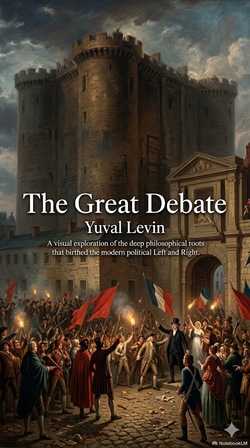
The Great Debate
Loading…

The Great Debate

Yuval Levin

3954 learners

Set against the roiling backdrop of late-18th-century transatlantic revolutions—from America’s fight for independence to France’s seismic upheaval—*The Great Debate* unpacks the defining clash between Edmund Burke and Thomas Paine, two titans whose ideas forged modern political thought. Burke, a pragmatic British statesman, championed traditional order, gradual reform, and the wisdom of collective historical experience, warning that radical revolution would unravel society’s organic bonds. Paine, a fiery radical and American independence icon, argued for natural rights, rational governance, and the right of people to overthrow tyrannical systems to build just, egalitarian societies. Their debate spanned core political tensions: justice vs. order, reason vs. convention, revolution vs. incremental change. More than a historical showdown, this clash laid the foundation for the modern left-right political spectrum, shaping debates over governance, equality, and societal change that resonate in contemporary policy fights.
French RevolutionEdmund BurkeThomas PaineConservative ThoughtRadical Liberalism
King Lear
Loading…

King Lear

William Shakespeare

4.4423 learners

William Shakespeare’s *King Lear* is a searing tragic masterpiece that dissects the corrosive nature of power, pride, and filial betrayal. When the aging king decides to divide his kingdom among his three daughters based on their declarations of love, his youngest and most loyal child, Cordelia, refuses to indulge in empty flattery, earning his wrath and banishment. His elder daughters, Goneril and Regan, shower him with false praise, only to turn on him once they seize power, stripping him of his retinue and leaving him to wander a storm-ravaged wilderness, driven to madness. Parallel to Lear’s downfall is the story of the Earl of Gloucester, whose illegitimate son Edmund plots to usurp his brother Edgar’s inheritance, ultimately leading to Gloucester’s brutal blinding for aiding Lear. As Cordelia returns with French forces to rescue her father, the play hurtles toward a devastating climax: Cordelia is captured and executed, Lear dies of grief, Goneril and Regan destroy each other, and Edmund’s late confession comes too late to undo the carnage. Through its raw exploration of human cruelty and fragile loyalty, the play exposes the catastrophic cost of unchecked ego and the emptiness of performative affection.

King LearCordeliaGonerilReganEdmund
Scenario

Final Tragedy Ending

Edmund ordered his man to hang Cordelia in prison. Lear killed the killer, but could not save his daughter. He held Cordelia’s dead body, and died of extreme sadness right on the spot.

EndingPlotClassic Tragedy
Concept

Edmund’s Injustice Concept

Edmund’s injustice refers to the resentment he felt for being labeled an illegitimate son. He thought he was no less capable than his legal elder brother Edgar, but had no right to inherit property.

Human NatureTragedyAmbition
Scenario

Fitzgerald's Unfinished Novel

After Fitzgerald died, Perkins had Edmund Wilson edit his unfinished 'The Last Tycoon'—published it with classic works.

WilsonFitzgerald's legacyeditorial work
Scenario

Edmund Fakes Treason Letter

Edmund forged a fake letter, saying his elder brother Edgar planned to kill their father Gloucester to seize the fortune. He tricked Gloucester into believing Edgar was a cruel traitor.

BetrayalKing LearPlot
Scenario

Edgar Becomes Poor Tom

Edgar had to run away after being framed by Edmund. He covered his face with mud, wore rags, and pretended to be a crazy beggar named Poor Tom to avoid being caught.

IdentityTragedyPlot
Scenario

Sisters Fight Over Edmund

Goneril and Regan both fell in love with the ambitious Edmund. They became deadly enemies, and Goneril even poisoned Regan to death, then killed herself out of guilt later.

BetrayalTragedyPlot
Scenario

Edmund Loses Duel

Edgar showed up in the British camp, and fought a duel with his evil half-brother Edmund. He beat Edmund badly, and exposed all the crimes Edmund had committed before.

TragedyJusticePlot
Quote

Burke on Chivalry Loss

"The age of chivalry is gone." - Edmund Burke, mourning the loss of honor and decency in the French Revolution, which he saw as replacing tradition with violence.

French RevolutionBurkeChivalry
Quote

Burke's Generational Contract Quote

"Society is a contract between the living, the dead, and the unborn." - Edmund Burke, arguing that we must preserve tradition for future generations.

BurkeGenerationsContract
No more