
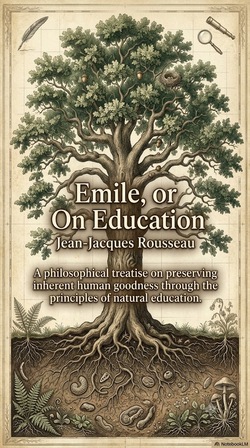
Emile
Jean-Jacques Rousseau’s *Emile* revolutionizes education with its radical naturalist philosophy, anchored in the core principle: “Everything from the Creator is good; everything in human hands turns bad.” Following the fictional boy Emile’s journey from infancy to adulthood, Rousseau outlines a stage-specific approach that rejects rigid traditional schooling. In early years, he champions “negative education”—shielding children from vice and premature moral lessons to preserve their innate goodness. As Emile matures, the focus shifts to sensory and physical training, building a robust body to lay the groundwork for rational thought. Adolescence brings moral and religious enlightenment rooted in empathy and natural religion, not dogma. For young adulthood, Rousseau guides Emile through navigating desire and social life, emphasizing respect over indulgence. He also introduces Sophie, Emile’s ideal partner, whose education aligns with feminine nature—nurturing grace, independence, and domestic responsibility. Later sections tie individual freedom to political systems via social contract theory. The appendix’s redemptive tale of Emile and Sophie underscores love’s fragility and the resilience of the free spirit. More than a manual, *Emile* is a profound exploration of human nature and what it means to raise someone true to themselves.