
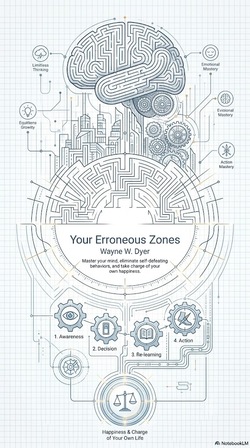
Your Erroneous Zones
Loading…

Your Erroneous Zones

Wayne W. Dyer

4.51119 learners

Wayne W. Dyer’s *Your Erroneous Zones* is a timeless self-help classic that dismantles the self-defeating mindsets holding you back from true happiness and personal freedom. Dyer argues that many of our daily struggles—from constant anger and paralyzing guilt to relentless approval-seeking and chronic procrastination—stem from false, ingrained beliefs: that emotions are controlled by external events, that our worth depends on others’ opinions, or that we’re trapped by past labels. Through relatable real-life anecdotes and practical, actionable strategies, he guides readers to take full responsibility for their feelings, embrace the present moment, and reject rigid societal 'shoulds' that stifle authenticity. The book emphasizes that true fulfillment comes from self-acceptance, breaking free from psychological dependence, and choosing to live on your own terms rather than conforming to others’ expectations. Whether you’re stuck in cycles of worry, trapped in toxic relationships, or struggling to prioritize your own joy, this book offers a clear roadmap to rewrite your thought patterns and build a life rooted in confidence and inner peace.

Emotional ControlProcrastinationself-acceptanceSelf-defeating mindsetsPresent-moment living
Concept

Emotional Control

Emotional control means not letting feelings drive actions. Pause before reacting to think about outcomes.

Emotional IntelligenceSelf-Control
View

Fear Causes Trading Mistakes

Most mistakes (holding losses, missing opportunities) come from fear—of loss, missing out, or being wrong. Overcoming fear is key to consistent profits.

FearEmotional ControlMistakes
Method

Delay Decision for Rationality

When emotional (excited or scared), delay decision for a while. Let your rational brain take over to avoid impulsive mistakes.

Decision MakingEmotional Control
Insight

Emotional Trading Kills Profits

You can't be excited and profitable. Greed/fear cloud judgment—pros stay calm and focus on correct execution, not money.

Emotional ControlTrader Psychology
Concept

External vs Internal Control

External control means blaming others for your feelings; internal control means taking responsibility for your own emotions. Choose internal control to be happy.

Self-ResponsibilityEmotional Control
View

Anger is a Choice

Anger isn’t a natural reaction—it’s a choice to let others control your emotions. When you get angry, you give power away.

Anger ManagementEmotional Control
Scenario

Mindfulness Changes Brain

Studies show long-term mindfulness users have thicker prefrontal cortex (better decision-making) and lower amygdala activity (less anxiety). It improves focus and emotional control.

neuroscienceMeditationMindfulness
Insight

Human Brain Fully Matures At 25

The prefrontal cortex, the brain region responsible for planning and emotional control, does not fully develop until people reach their mid-20s. This means most people's peak self-regulation ability comes much later than expected.

neuroscienceBrain DevelopmentLate Bloomers
Method

Set Rules to Avoid Emotional Choices

To avoid emotional financial decisions, set clear rules: like a stop-loss line for investments, or splitting money into long-term (untouchable) and short-term accounts.

Emotional ControlInvestment StrategyFinancial Rules
No more