Existential Wisdom from the Sickbed
Loading…

Existential Wisdom from the Sickbed

Shi Tiesheng

41269 learners

Confined to a wheelchair for decades and battling kidney failure requiring regular dialysis, Shi Tiesheng turned his lifelong struggle with illness into a profound exploration of existential truth. In *Existential Wisdom from the Sickbed*, he shares unflinching insights: framing life as a script where each of us plays an assigned role to embrace, not resent; rejecting transactional worship to advocate for faith rooted in hope amid suffering, not material gain; redefining love as a vulnerable opening of souls, not just physical connection; and arguing disability is a universal human condition of limitation, not a marginalizing label. He also reflects on writing as a lifeline for his restless spirit, a tool to confront his identity and life’s mysteries. Beyond personal reflection, he critiques societal pitfalls: the tyranny of groupthink, hollow materialism, and the urgent need to honor life’s dignity—including the right to assisted dying. This is no tale of victimhood, but a testament to finding meaning and grace in life’s darkest corners.
life meaningExistential WisdomFate AcceptanceTrue FaithSpiritual Love
Life Like Morning Frost
Loading…

Life Like Morning Frost

Ke Lan

3.81233 learners

Life Like Morning Frost uses the unforgettable female characters from *Dream of the Red Chamber* as a lens to unpack the brutal realities of 18th-century Qing Dynasty China. From Zhen Yinglian (later Xiangling), a kidnapped girl sold into lifelong servitude, to Qin Keqing, a noble mistress trapped by scandal and patriarchal power, and the tragic You sisters, each woman’s story reveals how rigid social systems—unequal servant laws, forced marriage customs, collective punishment, and caste hierarchies—stripped women of autonomy, regardless of their class or talent. The book goes beyond literary analysis, diving into historical records and legal texts to show why even privileged women like Lin Daiyu and Xue Baochai couldn’t escape their fates, while marginalized figures like opera girls and servant wives faced even harsher cruelty. It’s a vivid, eye-opening exploration of how a deeply patriarchal society crushed countless lives, framing *Dream of the Red Chamber* as a searing critique of a broken system, not just a romance.

Qing DynastyDream of the Red ChamberFemale OppressionServant SystemPatriarchal Marriage
Weapons of Math Destruction
Loading…

Weapons of Math Destruction

Cathy O'Neil

4.11215 learners

In *Weapons of Math Destruction*, former hedge fund mathematician Cathy O'Neil pulls back the curtain on seemingly neutral algorithms that operate as hidden tools of systemic oppression. She defines these "WMDs" by three core traits: opacity (their inner workings are kept secret), scalability (they target millions at once), and destructiveness (they trap marginalized groups in cycles of harm). Through gripping case studies—from criminal justice recidivism models that penalize poor communities to predatory for-profit college ads that exploit vulnerable individuals, from biased hiring tests that shut out qualified candidates to insurance pricing that overcharges low-income drivers—O'Neil exposes how these models encode societal prejudices into code, prioritizing efficiency and profit over fairness. She also highlights hopeful alternatives: algorithms designed to uplift rather than exploit, rooted in transparency, accountability, and a commitment to serving human needs. A must-read for anyone seeking to understand how data shapes power, inequality, and justice in the digital age.

Algorithmic BiasFeedback LoopsWeapons of Math DestructionRecidivism ModelsCredit Scoring
Globalization and Its Discontents
Loading…

Globalization and Its Discontents

Joseph E. Stiglitz

4.51100 learners

In *Globalization and Its Discontents*, Nobel Prize-winning economist Joseph E. Stiglitz draws on his insider experience as World Bank Chief Economist to expose the deep flaws in how globalization has been managed. He argues that the system isn’t inherently broken—but it’s been hijacked by wealthy nations, corporate elites, and ideologically rigid institutions like the IMF and World Bank. Through searing case studies—the 1997 East Asian Crisis, Russia’s disastrous shock therapy, and the hollow promises of the Washington Consensus—Stiglitz shows how one-size-fits-all policies have exacerbated inequality, crushed developing economies, and left working classes in both rich and poor countries disillusioned. He dismantles myths about free trade, capital flows, and debt relief, and lays out a pragmatic roadmap to reform global governance, prioritize equitable growth, and refashion globalization to serve the many, not just the powerful few.

Washington ConsensusGlobal GovernanceInternational Monetary Fund (IMF)World BankEast Asian Crisis
A Theory of Justice
Loading…

A Theory of Justice

John Rawls

4.41007 learners

John Rawls’ *A Theory of Justice* redefines social justice through a groundbreaking contractarian framework, positing that fair principles of justice would be chosen by rational, free individuals in an 'original position'—a hypothetical state shielded by a 'veil of ignorance' that erases personal status, wealth, or talents. Rawls argues these individuals would select two core principles: first, the Equal Liberty Principle, guaranteeing all citizens the broadest possible set of basic freedoms compatible with others’ freedoms; second, the Difference Principle, which permits social and economic inequalities only if they benefit the least advantaged members of society, paired with fair equality of opportunity. Contrasting sharply with utilitarianism’s focus on maximizing total welfare, Rawls prioritizes individual rights over collective good, emphasizing that justice is the 'first virtue' of social institutions. This landmark work provides a rigorous, egalitarian blueprint for structuring just societies, influencing debates in philosophy, politics, and economics for decades.

Veil of IgnoranceJustice as FairnessEqual Liberty PrincipleDifference PrincipleOriginal Position
Why Nations Fail
Loading…

Why Nations Fail

Daron Acemoglu;James A. Robinson

4.6996 learners

Why Nations Fail dismantles pervasive myths about global inequality—from geographic determinism to cultural stereotypes—and argues that the root of national prosperity or poverty lies in institutional systems. Using vivid case studies, from the divided border city of Nogales (where U.S. inclusive systems drive wealth while Mexican extractive ones trap poverty) to the rise and fall of Venice, the book contrasts two core models: inclusive systems, which distribute power broadly, protect property rights, and encourage innovation, and extractive systems, which concentrate power in elite hands, exploit the majority, and stifle progress. It explores how historical path dependence amplifies small initial institutional differences over time, creating self-reinforcing cycles of prosperity or stagnation, and shows that breaking extractive cycles requires grassroots empowerment and institutional reform, not top-down fixes or foreign aid.

Path DependenceProperty RightsColonial LegacyExtractive InstitutionsEconomic inequality
Nickel and Dimed
Loading…

Nickel and Dimed

Barbara Ehrenreich

4.4906 learners

In *Nickel and Dimed*, journalist Barbara Ehrenreich leaves her middle-class life behind to go undercover as a low-wage worker, taking jobs as a waitress, house cleaner, and Walmart associate across three U.S. cities. Earning just $7 to $8 an hour, she quickly discovers that even full-time, backbreaking labor isn’t enough to cover basic needs like rent, food, and healthcare. She navigates predatory housing markets where a month’s rent eats up most of her paycheck, endures demeaning management tactics, and witnesses how coworkers rely on food banks, skip medical care, and work multiple jobs just to survive. Ehrenreich’s eye-opening experiment dismantles the myth that hard work alone lifts people out of poverty, exposing a broken economic system where millions of working Americans are trapped in cycles of insecurity and exploitation. Her raw, firsthand account forces readers to confront the hidden crisis of working poverty in the U.S.

Housing CrisisLow-wage workersWorking povertyCorporate exploitationUnion suppression
Children of the County
Loading…

Children of the County

Lin Xiaoying

3.7896 learners

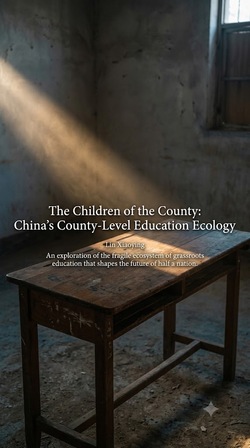
Set in a fading agricultural county in the American Midwest, *Children of the County* follows three teens—Lila, a farm girl with dreams of becoming a large-animal vet; Jax, a star athlete trapped by his family’s mounting debt; and Mia, a first-gen Latina teen raising her younger brother while her parents work two jobs. Over their senior year of high school, these kids navigate underfunded schools, limited job prospects, and the quiet pressure of small-town expectations that box them into predetermined paths. Blending intimate interviews with vivid narrative, author Lin Xiaoying pulls back the curtain on the often-overlooked struggles of rural youth, highlighting how they lean on each other to chase their goals, confront systemic barriers, and redefine what success means in a place where the future feels uncertain. This book isn’t just a story of hardship; it’s a celebration of resilience, community, and the quiet courage of kids who refuse to let their zip code define their destiny.

Community resilienceRural American youthSmall-town lifeAdolescent dreamsEconomic hardship
The Old Regime and the Revolution
Loading…

The Old Regime and the Revolution

Alexis de Tocqueville

4.3895 learners

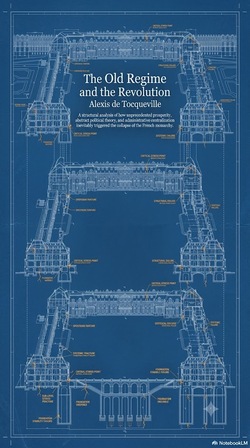
In *The Old Regime and the Revolution*, Alexis de Tocqueville dismantles the myth that the French Revolution was a sudden, unforeseen upheaval. Instead, he argues that the revolution’s seeds were planted deep within the decaying structures of the Old Regime itself. Tocqueville dissects how overbearing centralized governance eroded local autonomy, while a rigid class system—marked by noble privileges, unequal taxation, and a disconnected intellectual elite that seized public opinion—fueled widespread resentment. He highlights the monarchy’s self-defeating contradictions: empty promises of reform, public exposure of injustices without action, and a corrupt venal office system that hollowed out state legitimacy. Most strikingly, Tocqueville reveals an irony: the revolution that claimed to destroy the Old Regime inherited and amplified its most authoritarian trait—centralized power. This seminal work offers a prescient analysis of how systemic decay and unaddressed grievances ignite revolutionary change, making it essential reading for anyone seeking to understand modern political upheaval.

French RevolutionCentralized governanceFiscal CrisisClass inequalityIntellectual elites
Capital in the Twenty-First Century
Loading…

Capital in the Twenty-First Century

Thomas Piketty

4.1669 learners

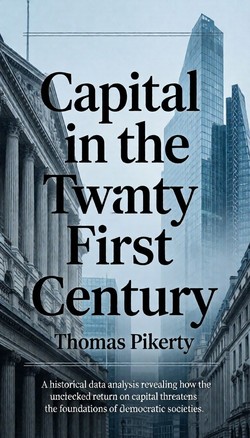
Thomas Piketty’s *Capital in the Twenty-First Century* upends mainstream views on inequality by analyzing 300 years of global economic data, from 19th-century European aristocracies to 21st-century U.S. super-executives. At its core is the pivotal formula: when the rate of return on capital (r) outpaces overall economic growth (g), inherited wealth accumulates faster than earned income, widening the gap between the haves and have-nots. Piketty contrasts Europe’s legacy of inherited wealth concentration with America’s surge in sky-high executive pay, showing both systems fuel systemic inequality. He debunks myths about "natural" market balance, arguing unregulated capitalism will revert to a "patrimonial" system where birth determines fortune. The book’s bold prescription? A global progressive capital tax to rein in extreme wealth, boost financial transparency, and reframe capitalism to serve the many, not just the few—offering a roadmap for a more equitable future.

Wealth InequalityInherited wealthCapital-income ratioPublic debtCapital Return Rate
Jane Eyre
Loading…

Jane Eyre

Charlotte Bronte

3.9657 learners

Jane Eyre, Charlotte Brontë’s timeless classic, follows the journey of a resilient orphan who defies the constraints of 19th-century society to claim her identity, equality, and love. From the cruel neglect at Gateshead Hall, where she’s abused by her aunt and cousins, to the harsh discipline of Lowood School, where she forges lifelong friendships and finds mentorship, Jane grows into a fiercely independent woman. As a governess at Thornfield Hall, she falls for the brooding Edward Rochester, only to discover a devastating secret that forces her to flee. Finding refuge at Marsh End, she reconnects with long-lost family and inherits unexpected wealth, yet her heart remains tied to Rochester. When she learns of Thornfield’s destruction and Rochester’s tragic fate, she returns to him, proving that true love is rooted in mutual respect and unwavering loyalty.

EqualityResilienceMoral Integritytrue loveJane Eyre
Unpaid Housewife
Loading…

Unpaid Housewife

Chizuko Ueno

3.3594 learners

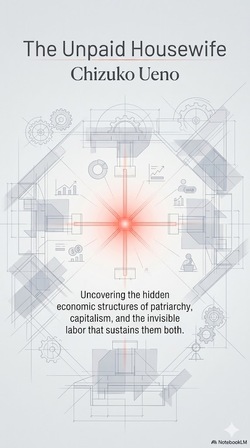
Chizuko Ueno’s *Unpaid Housewife* begins with her mother’s trapped, unfulfilling life as a Japanese housewife, sparking a decades-long exploration of the invisible, uncompensated labor women perform in homes. Challenging the mainstream myth that housewifery was a "peak achievement" for middle-class women, Ueno frames this struggle as a structural issue rooted in the collusion of patriarchy and capitalism. She leverages feminist theory to reframe domestic work as legitimate unpaid labor, pushing back against economists who dismissed its value and housewives who saw their work as "priceless" acts of love. The book delves into care work’s critical role—sustaining society yet being systematically undervalued—and explores paths to care socialization, from welfare pluralism to policy shifts. Using real-world examples like Japan’s long-term care insurance and the COVID-19 pandemic’s exposure of care gaps, Ueno argues for a society that respects all people, including those in vulnerable roles. Her work isn’t just about housewives; it’s a call to redefine labor, gender, and mutual support for a more equitable world.

Gender EqualityCapitalismUnpaid Domestic LaborPatriarchyReproductive Labor
Has China Won?
Loading…

Has China Won?

Kishore Mahbubani

4.3553 learners

Renowned Singaporean scholar Kishore Mahbubani’s *Has China Won?* dissects the high-stakes geopolitical rivalry between the U.S. and China, challenging pervasive Western myths while offering a nuanced look at both nations’ strategic missteps. Mahbubani argues the U.S. has already lost the first round of competition due to its lack of a coherent long-term China strategy, wasteful defense spending driven by lobbying, and domestic decay marked by soaring income inequality and money-dominated politics. He refutes claims of Chinese expansion, highlighting China’s historical non-imperialist roots and defensive military posture. The book also analyzes how key global players—Australia, Europe, Japan, India, and ASEAN—navigate their conflicting economic and security ties to both powers. Finally, Mahbubani identifies five critical areas of shared interest, from climate action to counterterrorism, urging both nations to prioritize cooperation over zero-sum confrontation to secure global stability and mutual prosperity.

Nuclear DeterrenceIncome InequalityBelt and Road InitiativeU.S.-China RivalryDollar Hegemony
21 Lessons for the 21st Century
Loading…

21 Lessons for the 21st Century

Yuval Noah Harari

4.2516 learners

In *21 Lessons for the 21st Century*, Yuval Noah Harari cuts through the noise of modern chaos to unpack the defining crises and opportunities of our time. Starting with the collapse of liberalism’s once-dominant narrative—undermined by 2008’s financial crash, Brexit, and Trump’s rise—he explores how AI and biotech are reshaping work, widening inequality, and threatening to create a “useless class” left behind by automation. Harari dives into the battle for data sovereignty, warning that tech giants and governments alike are exploiting personal information to gain unprecedented power. He also addresses cultural clashes, terrorism’s psychological tactics, and the limits of nationalism in solving global threats like climate change. Finally, he offers actionable paths forward: reorienting education around critical thinking and adaptability, embracing secular humanism’s core values, and using mindfulness meditation to reclaim control of our minds from algorithmic manipulation. This book isn’t just a diagnosis of our era—it’s a guide to navigating uncertainty with clarity and resilience.

Liberalism CrisisArtificial IntelligenceUniversal Basic IncomeData SovereigntyPost-truth Era
The Price of Inequality
Loading…

The Price of Inequality

Joseph E. Stiglitz

4.5433 learners

In *The Price of Inequality*, Nobel Prize-winning economist Joseph E. Stiglitz reveals that America’s extreme inequality isn’t an inevitable outcome of capitalism—it’s a deliberate product of rigged policy choices. Drawing on post-2008 crisis data, he details how the top 1% seized over 65% of national income growth while the middle class stagnated and low-income families faced collapsing upward mobility. Stiglitz unpacks core drivers: rent-seeking by corporations and elites, regulatory capture of financial and political institutions, regressive tax policies, and the erosion of labor protections. He argues this inequality undermines economic efficiency, distorts democracy into a "one dollar, one vote" system, and erodes social trust. Beyond diagnosis, Stiglitz outlines actionable fixes: progressive tax reform, stricter financial regulation, strengthening labor unions, investing in public education and healthcare, and overhauling campaign finance to reclaim democratic integrity. A searing critique of America’s broken systems, this book makes an urgent case for rebuilding a society where prosperity is shared by all.

Tax PolicyMarket FailureRent-seekingFinancializationIncome Inequality
Insight

Equality Beats Liberty In US

In democratic countries, people's love for equality is far stronger and more lasting than their love for freedom. Most people can accept unequal freedom temporarily, but can never stand unequal equality.

Equalitydemocratic culture
Insight

Inequality Harms Stability

High inequality leads to economic crises (like 2008): the top hoards wealth, middle class borrows to spend, and bubbles burst—hurting everyone except the rich.

InequalityCrisisEconomic Stability
Golden Sentence

Death as Equalizer

"Death is a cool night because life is a painful day." — Heine. This line highlights death as the only thing that treats everyone equally, no matter status.

PhilosophyEqualityDeath
Method

Collaborative Handshake

Shake hands frontally, match strength, keep friendly eye contact—convey equality and respect, avoid too tight/loose grips.

Trust BuildingBody LanguageHandshake Skill
Concept

Brotherly love

Responsibility, care, respect for all—no exclusivity. Core: seeing human equality beyond surface differences; base of all love.

Brotherly loveLove foundation