
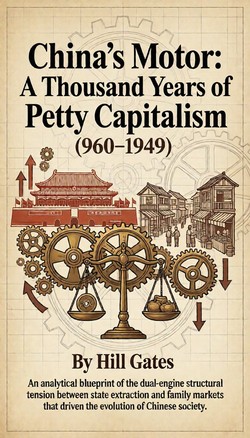
China's Motor
Loading…

China's Motor

Hill Gates

4.2729 learners

For two decades, anthropologist Hill Gates immersed herself in the daily lives of hundreds of Taipei residents, unlocking the hidden engine of Chinese society in *China's Motor*. She challenges outdated Eurocentric and Sinocentric frameworks, arguing that the clash and coexistence of two distinct production systems—tribute-based feudalism and petty capitalism—have shaped China from late imperial times to the present. Gates breaks down how these systems molded everything from urban planning (debunking G. William Skinner’s market-centric model) to kinship structures, marriage practices, and gender dynamics. She shows how state-controlled tribute systems extracted wealth through taxes and forced labor, while petty capitalism thrived on family/clan networks, prioritizing local trust and flexible labor over formal corporate structures. This book redefines global capitalism studies, highlighting East Asia’s unique trajectory and offering a cross-cultural framework bridging Marxist theory and anthropological fieldwork.
Petty CapitalismTribute SystemGender DynamicsPatriarchyUrban Development
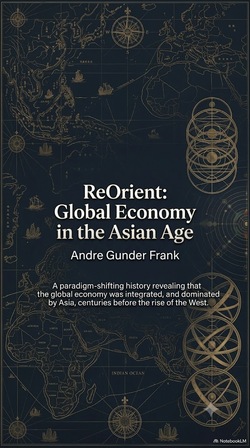
ReOrient
Loading…

ReOrient

Andre Gunder Frank

4.3437 learners

In Andre Gunder Frank’s *ReOrient*, we dismantle the centuries-old Eurocentric myth that’s shaped Western historical thought. Frank argues that from 1400 to 1800, Asia—not Europe—was the true core of the global economy. Led by China and India, Asian nations boasted larger populations, higher productivity, and far more robust trade networks than their European counterparts. China, in particular, acted as the world’s ultimate 'silver sink,' drawing massive amounts of silver from the Americas and Japan to fuel its economic expansion. Europe, by contrast, was a marginal player, relying on stolen American silver to even participate in the Asian-dominated trade system. Frank debunks false claims about European 'superiority' in technology, institutions, and culture, showing that Europe’s later rise stemmed from global economic shifts, not inherent greatness. This book is a call to abandon narrow, Europe-focused narratives and embrace a truly global perspective to understand the world economy’s evolution.

Industrial RevolutionEurocentrismWorld Economic SystemAsian Economic DominanceAmerican Silver
Concept

What is Global History?

A 20th-century US historical school breaking national boundaries to view the world as interconnected networks, rejecting Eurocentrism and focusing on cross-cultural interactions.

Global HistoryHistorical SchoolInterconnectedness
No more