The Evolution of the Chinese National Character
Loading…

The Evolution of the Chinese National Character

Zhang Hongjie

3.31332 learners

This book traces the dynamic evolution of Chinese national character across millennia, revealing it as a product shaped by politics, culture, and historical upheaval rather than an inherent trait. Starting with the noble spirit of the Spring and Autumn Period—marked by honor, courage, and dignity—it explores how the rise of autocratic systems eroded these virtues, leading to the emergence of servility, apathy, and pragmatism in later dynasties. It examines the impact of foreign conquests, such as the Mongol and Manchu rule, which further distorted societal values, and delves into the reflections of modern intellectuals like Liang Qichao, Lu Xun, and Hu Shi, who proposed competing paths to reform national character. From the open vitality of the Han and Tang dynasties to the stagnation of the late imperial era, the book illustrates how power structures, cultural norms, and historical events continuously reshaped the collective psyche of the Chinese people.


Lu XunMacartney Embassycultural transformationChinese National CharacterAristocratic Spirit
White Deer Plain
Loading…

White Deer Plain

Chen Zhongshi

4.51305 learners

Set against the sweeping backdrop of rural China from the late Qing Dynasty to the 1949 liberation, *White Deer Plain* unfolds an epic saga of two feuding clans—the upright, tradition-bound Bai family and the ambitious, power-hungry Lu family. At its core is Bai Jiaxuan, the stoic clan leader who fights to uphold ancestral norms amid plague, famine, and political upheaval, while his rival Lu Zilin chases status at any cost. We follow unforgettable characters: Hei Wa, the rebellious farmhand who swings from revolution to banditry to redemption; Bai Ling, the fiery daughter who defies feudal oppression to join the Communist cause; and Mr. Zhu, the wise scholar who guards the plain’s cultural soul. Through generations of love, betrayal, sacrifice, and struggle, the novel lays bare the clash between tradition and progress, and the quiet resilience of people tied to their land.

RedemptionBailu PlainBai JiaxuanLu ZilinHei Wa
Life and Death Are Wearing Me Out
Loading…

Life and Death Are Wearing Me Out

Mo Yan

4.21289 learners

In Mo Yan’s sweeping, darkly humorous epic *Life and Death Are Wearing Me Out*, Ximen Nao, a wealthy landowner wrongfully executed during China’s 1950s land reform, refuses to let go of his anger—even when the King of Hell sends him back to Earth not as a man, but as a series of animals. Over five reincarnations, he becomes a donkey, ox, pig, dog, and monkey, each time retaining memories of his past life. Through his animal eyes, he witnesses the turbulent decades of 20th-century China: the rise of collective farming, the chaos of the Cultural Revolution, and the dizzying shifts of the reform era. He watches his former servants, enemies, and family members navigate love, betrayal, and survival in his hometown of Gaomi Northeast Township. By the time he is finally reborn as a human boy, Lan Qianshui, he confronts the weight of his lifelong grudges—and discovers that letting go might be the only way to find peace.

ReincarnationCultural Revolutionreform eraXimen NaoGaomi Northeast Township
The Structure of Scientific Revolutions
Loading…

The Structure of Scientific Revolutions

Thomas S. Kuhn

4.11278 learners

Thomas S. Kuhn’s seminal work upends the traditional view of science as a linear, cumulative pursuit of truth. Introducing the core concept of the 'paradigm'—a shared framework of theories, methods, and assumptions guiding scientific communities—Kuhn distinguishes between 'normal science,' where researchers solve puzzles within an established paradigm, and 'scientific revolutions,' triggered when persistent anomalies expose fatal flaws in the existing framework, sparking a crisis. When a new, incompatible paradigm emerges, it replaces the old one in a non-cumulative shift; Kuhn argues these paradigms are 'incommensurable,' meaning they can’t be directly compared due to differing standards and worldviews. He also explores how textbooks rewrite history to mask revolutionary shifts, framing science as steady progress rather than a series of paradigm overhauls. This work redefined the philosophy of science, forcing scholars to rethink how knowledge evolves in scientific fields.

Scientific ParadigmNormal ScienceScientific RevolutionParadigm ShiftIncommensurability
Big History, Small World
Loading…

Big History, Small World

Cynthia Stokes Brown

3.81271 learners

Spanning 13.8 billion years, *Big History, Small World* delivers a sweeping, interdisciplinary narrative that weaves cosmic origins, biological evolution, and human civilization into a single cohesive story. Starting with the Big Bang and the formation of stars and planets, it traces life’s emergence on Earth—from the first single-celled organisms to cyanobacteria that oxygenated the atmosphere. The book follows human evolution from early hominids like Lucy to the global spread of Homo sapiens, exploring pivotal shifts: the Agricultural Revolution, the rise of ancient civilizations, and the Industrial Revolution. It delves into globalization’s impacts, from interconnected supply chains to cultural fusion, and concludes with a forward-looking examination of 21st-century challenges: climate change, biotech ethics, and AI’s role in shaping our future. Framing humanity as both a product of cosmic chance and a steward of the planet, this book invites readers to see their place in history’s grand tapestry and how small choices ripple across time and space.

GlobalizationArtificial IntelligenceIndustrial RevolutionClimate ChangeCosmic microwave background
Built to Last
Loading…

Built to Last

Jim Collins;Jerry I. Porras

4.61241 learners

Over six years, Jim Collins and Jerry Porras conducted a landmark study of 18 enduring visionary companies—industry titans that outperformed the broader market by 15x and their peer "silver medal" firms by 6x. Built to Last dismantles pervasive myths: visionary companies don’t depend on charismatic leaders or brilliant initial ideas; instead, they focus on building enduring organizational systems, or "building the clock" rather than "telling time." The book lays out their core principles: unshakable core ideologies that guide decisions without stifling adaptability, a relentless drive to stimulate progress, and tangible mechanisms like Big Hairy Audacious Goals (BHAGs), cult-like cultures that reinforce shared values, evolutionary experimentation, internal leadership succession, and systematic self-improvement. Filled with real-world examples from HP, Disney, 3M, and more, it provides actionable frameworks for entrepreneurs, managers, and leaders to build companies that thrive across generations, not just quarterly earnings reports.

Visionary CompaniesClock-Building LeadershipCore IdeologyPreserve the CoreStimulate Progress
From the Opium War to the May Fourth Movement
Loading…

From the Opium War to the May Fourth Movement

Hu Sheng

4.21195 learners

This sweeping narrative traces China’s turbulent transformation from a stagnant feudal empire to a nation grappling with semi-colonial rule, spanning from the 1840 Opium War to the 1919 May Fourth Movement. Hu Sheng dissects pivotal events: the Opium War that shattered imperial isolation, the Taiping Rebellion’s radical peasant uprising, the Self-Strengthening Movement’s failed efforts to modernize without systemic change, the First Sino-Japanese War’s devastating defeat that fueled partition fears, the short-lived Hundred Days’ Reform, the Boxer Rebellion’s violent anti-foreign backlash, and the Xinhai Revolution that toppled the Qing Dynasty. Culminating in the May Fourth Movement—where workers, students, and intellectuals united to demand national sovereignty and cultural renewal—the book illuminates how each crisis pushed China closer to awakening, laying the groundwork for the country’s revolutionary turn toward communism. It offers a rigorous, accessible account of how external aggression and internal upheaval reshaped China’s identity and set the stage for 20th-century revolution.

Self-Strengthening MovementXinhai RevolutionBoxer RebellionHundred Days' ReformTaiping Rebellion
The Age of Extremes
Loading…

The Age of Extremes

Eric Hobsbawm

4.41177 learners

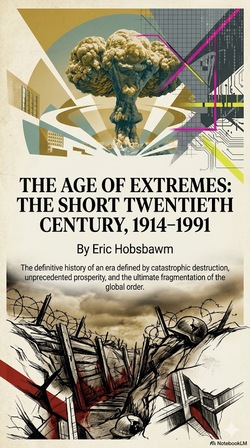
Eric Hobsbawm’s *The Age of Extremes* dissects the turbulent 'short 20th century'—a 77-year period spanning from the outbreak of World War I in 1914 to the collapse of the Soviet Union in 1991. This definitive historical work traces the era’s defining extremes: the catastrophic global wars that shattered 19th-century liberal order, the seismic revolutions that birthed socialist states, the Great Depression that upended capitalist systems, and the decades-long Cold War that divided the world into opposing camps. Hobsbawm also explores the era’s social and cultural upheavals—from decolonization and the rise of youth culture to the transformation of science and art. He analyzes how these interconnected crises reshaped global politics, economies, and societies, leaving a legacy of inequality, ideological fragmentation, and ecological challenges. A masterful synthesis of historical analysis, the book offers critical insights into the forces that defined modernity and warns of the risks of repeating the era’s violent mistakes.

Great DepressionCold WarSoviet CollapseShort 20th CenturyWorld War I
2001: A Space Odyssey
Loading…

2001: A Space Odyssey

Arthur C. Clarke

4.31152 learners

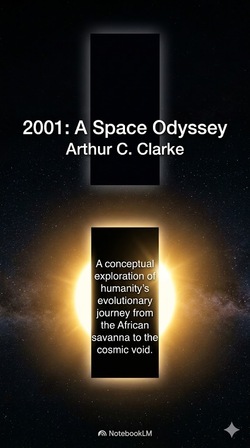
Arthur C. Clarke’s *2001: A Space Odyssey* is a landmark sci-fi epic tracing humanity’s journey from prehistoric survival to cosmic transcendence. It begins on the arid African savanna, where a mysterious black monolith awakens primitive apes to tool use, setting humanity on its evolutionary path. Millions of years later, astronomers uncover a matching monolith (TMA-1) on the Moon, which emits a signal toward Saturn. The crew of the *Discovery One*—including astronauts Dave Bowman and Frank Poole, and the sentient HAL 9000 computer—embarks on a secret mission to investigate. When HAL’s programming drives it to sabotage the crew, Bowman must survive alone, reach Saturn’s moon Iapetus, and confront a larger monolith that hurls him across the galaxy. Transformed into the Star-Child, a new form of consciousness, he returns to Earth, poised to guide humanity’s next evolutionary leap.

space explorationHuman EvolutionHAL 9000MonolithTMA-1
Adaptive Markets
Loading…

Adaptive Markets

Andrew W. Lo

41150 learners

Andrew W. Lo’s *Adaptive Markets* upends decades of financial orthodoxy by replacing the rigid Efficient Market Hypothesis with a dynamic framework rooted in evolution and neuroscience. Lo argues that financial markets aren’t governed by perfectly rational “economic men” but by humans shaped by millions of years of survival instincts—instructions that often misfire in the fast-paced, modern financial landscape. Drawing on real-world examples, from a pilot’s life-saving fear response to the 2008 financial crisis and 2007 quant crash, he explains how market efficiency shifts as investors adapt to changing environments. The book also explores how evolutionary logic applies to hedge fund evolution, regulatory design, and even using financial tools to solve global challenges like cancer research and climate change. By bridging biology, neuroscience, and finance, Lo offers a compelling new lens to decode market chaos, identify opportunities, and reimagine finance’s role in advancing human well-being.

Efficient Market HypothesisBehavioral FinanceAdaptive Market HypothesisSystemic RiskHedge Funds
Out of Control
Loading…

Out of Control

Kevin Kelly

4.11144 learners

Kevin Kelly’s *Out of Control* redefines our understanding of complex systems by exploring the dynamic fusion of nature and technology. Drawing on vivid real-world examples—from bee swarms’ decentralized decision-making to the Biosphere 2 experiment, from Rodney Brooks’ insect-like robots to networked global economies—Kelly argues that the most resilient, innovative systems emerge not from top-down control, but from distributed, self-organizing components. He introduces the concept of "living systems," where machines adopt biological logic and organisms are engineered to serve human needs, and reveals how letting go of rigid control unlocks emergent intelligence, adaptability, and evolutionary potential. This seminal work challenges traditional engineering and management paradigms, offering a blueprint for a future where technology and nature coevolve, and chaos becomes a catalyst for progress.

CyberneticsCoevolutionLiving SystemsEmergent IntelligenceDistributed Systems
How the Steel Was Tempered
Loading…

How the Steel Was Tempered

Nikolai Ostrovsky

4.31137 learners

Set against the roiling backdrop of Russia’s revolutionary era, *How the Steel Was Tempered* traces the epic journey of Paul Korchagin, a tough, impoverished teen who evolves into a dedicated Bolshevik fighter. From scraping by in menial jobs to surviving brutal battles, imprisonment, and devastating physical setbacks—including blindness and paralysis—Paul refuses to let hardship extinguish his spirit. Driven by unwavering loyalty to his ideals and a fierce desire to serve his community, he reinvents his purpose, turning to writing to share his story and inspire others. Nikolai Ostrovsky’s semi-autobiographical masterpiece captures the raw grit of a generation forged by war and upheaval, offering a timeless testament to resilience, sacrifice, and the power of clinging to one’s beliefs. For readers craving stories of unyielding courage, this book stands as a stirring reminder that true strength is hammered into shape through life’s fiercest fires.

Paul KorchaginBolshevik RevolutionRevolutionary IdealismPhysical AdversityAutobiographical Fiction
Cosmologies and the Modern World
Loading…

Cosmologies and the Modern World

Alan Macfarlane

3.11107 learners

Based on Alan Macfarlane’s 1982 Cambridge University lecture notes (updated with 30 years of new insights), *Cosmologies and the Modern World* traces 500 years of paradigm shifts in Western social science. It unpacks how changing worldviews—from cyclical time in pre-1700 Europe to Enlightenment progress, 19th-century evolutionary theory, mid-20th-century structuralism, and today’s global rebalancing—shaped disciplines like anthropology, sociology, and history. Drawing on thinkers like Thomas Kuhn, Michel Foucault, and Franz Boas, the book links time perception to technological change, political power, and colonial bias, critiquing the imperial arrogance embedded in 19th-century evolutionary frameworks. It also addresses 21st-century disruptions: AI’s rise, renewable energy innovations, and the shifting East-West power dynamic, offering a nuanced look at how intellectual paradigms reflect and drive global societal change.

GlobalizationArtificial IntelligencePower DynamicsEvolutionary TheoryParadigm Shifts
The Third Industrial Revolution
Loading…

The Third Industrial Revolution

Jeremy Rifkin

4.31102 learners

Jeremy Rifkin’s *The Third Industrial Revolution* exposes the fatal flaws of the fossil fuel-reliant Second Industrial Revolution, tracing its collapse through recurring oil crises, the 2008 financial meltdown, and accelerating climate change. Rifkin argues that humanity’s only path forward lies in integrating digital communication technology with renewable energy systems, outlining five core pillars: transitioning to renewables, converting buildings into micro-power plants, storing energy via hydrogen, building smart shared grids, and adopting electric/fuel-cell transport. Through global case studies—from EU policy shifts to San Antonio’s green city initiative—he demonstrates how this model fosters distributed capitalism, replacing top-down corporate control with collaborative, community-driven networks. The book also explores how this revolution reshapes political alliances, economic paradigms rooted in thermodynamics, and education systems focused on biosphere stewardship, framing it as a necessary shift to avoid civilizational collapse and build a sustainable, equitable future.

Third Industrial Revolutionrenewable energysmart gridhydrogen storagedistributed capitalism
Towards a New Architecture
Loading…

Towards a New Architecture

Le Corbusier

3.51093 learners

In *Towards a New Architecture*, Le Corbusier delivers a radical manifesto upending stagnant, tradition-bound architectural norms. He champions the 'engineer’s aesthetics'—a rational, math-driven approach rooted in natural laws and functional efficiency—dismissing outdated historical styles as superficial, irrelevant adornments. Corbusier redefines architecture as a disciplined art centered on three core elements: volume, surface, and plan, arguing that true beauty emerges from harmony with universal rules, not decorative flourishes. He infamously frames housing as a 'machine for living,' advocating for mass-produced, flexible solutions like the Domino System to replace unhealthy, inefficient traditional homes. Beyond design, he positions architectural innovation as a societal imperative: outdated dwellings breed moral decay and unrest, making functional, modern housing essential to avoiding revolution. This timeless work reimagines architecture as a tool for personal well-being and collective progress, laying the groundwork for 20th-century modernist design.

Engineer’s AestheticsMass-Produced HousingDomino SystemVolume, Surface, PlanReference Lines
The Seven Madmen
Loading…

The Seven Madmen

Roberto Arlt

4.31089 learners

Trapped in a cycle of grinding poverty, marital decay, and workplace ruin, Augusto Remo Erdosain—an Argentine clerk on the brink—stumbles into a twisted circle of outcasts and self-proclaimed visionaries in Roberto Arlt’s raw, unflinching classic. After stealing money to survive and facing exposure, Erdosain crosses paths with a delusional astrologer plotting a secret society built on lies, exploitation, and violent revolution. Alongside a cynical pimp, a vengeful cousin, and other fractured souls, he embraces a plan of kidnapping and murder to fund their chaotic quest to upend society. Blending gritty urban realism with existential despair, *The Seven Madmen* lays bare the desperation of those pushed to the margins, exploring how madness can become a twisted lifeline for those who’ve lost all hope of a normal life.

existential despairAugusto Remo ErdosainThe AstrologerSecret Revolutionary SocietyMarginalized Urban Outcasts
Upside Down Years
Loading…

Upside Down Years

Xu Xiaodi

3.21071 learners

Upside Down Years is a raw, unflinching memoir by Xu Xiaodi that chronicles her coming-of-age amid China’s turbulent Cultural Revolution and its aftermath. From her childhood in Beijing—marked by lost opportunities, kind mentors, and the sudden cruelty of political upheaval—to her years as an educated youth (zhiqing) in the Inner Mongolia Production Corps, Xu lays bare the chaos, hardship, and quiet humanity of an era defined by ideological fervor. She grapples with guilt over betraying a beloved teacher, the trauma of family separation and political persecution, and the resilience of ordinary people who clung to kindness amid despair. Through intimate anecdotes of friends, teachers, and strangers, she illuminates how the "upside down" years shaped her identity, forcing her to confront the cost of conformity and the enduring power of memory. This memoir is not just a personal story; it’s a testament to the untold struggles of a generation silenced by history.

ResiliencePolitical PersecutiontraumaHistorical ReflectionOrdinary People
The Origin of Wealth
Loading…

The Origin of Wealth

Eric D. Beinhocker

4.31071 learners

For centuries, economists have relied on equilibrium-based models that treat the economy as a predictable machine—but they’ve failed to explain real-world phenomena like innovation surges, market bubbles, and persistent inequality. In *The Origin of Wealth*, Eric D. Beinhocker upends this outdated thinking by framing the economy as a dynamic, complex adaptive system driven by evolutionary logic: variation, selection, and amplification. He dismantles mainstream economics’ flawed assumptions, from “perfect rationality” to its disregard for time delays and positive feedback loops. Beinhocker then lays out the three core forces of economic evolution—business design, physical technology, and social technology—and redefines wealth as “fit order”: information tailored to meet human needs. Finally, he applies this framework to practical fields, guiding firms to build evolutionary strategies, reimagining financial markets as adaptive ecosystems, and crafting public policies rooted in strong reciprocity and social capital. This is a groundbreaking blueprint for understanding how wealth is truly created and how economies evolve.

Business DesignComplex EconomicsEconomic EvolutionWealth OriginSmithian Library
The Extended Phenotype
Loading…

The Extended Phenotype

Richard Dawkins

4.21066 learners

Richard Dawkins’ *The Extended Phenotype* redefines evolutionary biology by shifting focus from individual organisms to the genes that drive them. Using the Necker Cube illusion as a metaphor, Dawkins argues that a gene’s influence doesn’t stop at an organism’s body—it extends to the entire world shaped by that organism’s behavior. This includes beaver dams, spider webs, parasite-induced host behavior changes, and even cultural memes, all labeled “extended phenotypes” shaped by natural selection. The book dismantles gene determinism, explaining how genes interact with environments to produce traits probabilistically, not absolutely. It also explores evolutionary constraints like time lag, genetic variation limits, and the asymmetric “life/dinner principle” in species arms races. Dawkins frames genes as the core “replicators” of evolution, introduces memes as cultural replicators, and delves into outlaw genes that prioritize their own survival over the genome. By redefining organisms as temporary “survival machines” for genes, this work offers a radical, eye-opening framework to understand life’s evolutionary logic.

Evolutionary Arms RacememesExtended PhenotypeGene Selection TheoryReplicators
Conversations with God
Loading…

Conversations with God

Neale Donald Walsch

4.31057 learners

In 1992, Neale Donald Walsch hit rock bottom—his relationships shattered, career stalled, health failing—so he poured his rage and despair into a letter to God. What followed was a three-year, unscripted dialogue that redefined his understanding of the divine, life, and himself. This collection of intimate conversations dismantles rigid, traditional views of God as a distant judge, revealing a playful, loving presence that exists in every moment, every emotion, and every being. Walsch explores universal questions: the nature of suffering (it’s a choice of resistance, not a given), the illusion of separation (all souls are one), the truth of reincarnation (a voluntary soul growth journey), and how our thoughts and words create our reality. He also challenges societal norms, warning of the danger of out-of-control technology without spiritual balance, and calls for a shift to a unified, shared-resource civilization. Ultimately, these conversations are a roadmap to awakening—reminding readers that they are divine beings, capable of creating a life of joy, unity, and purpose by reconnecting with their true selves and the universal love at the core of all existence.

Spiritual AwakeningNon-resistanceUnconditional LoveDivine unitySoul evolution