
The Great Debate
Loading…

The Great Debate

Yuval Levin

3954 learners

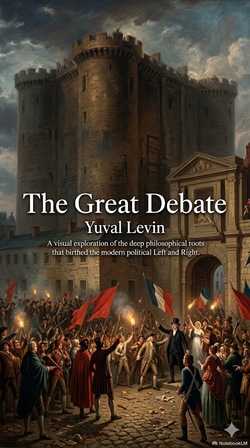
Set against the roiling backdrop of late-18th-century transatlantic revolutions—from America’s fight for independence to France’s seismic upheaval—*The Great Debate* unpacks the defining clash between Edmund Burke and Thomas Paine, two titans whose ideas forged modern political thought. Burke, a pragmatic British statesman, championed traditional order, gradual reform, and the wisdom of collective historical experience, warning that radical revolution would unravel society’s organic bonds. Paine, a fiery radical and American independence icon, argued for natural rights, rational governance, and the right of people to overthrow tyrannical systems to build just, egalitarian societies. Their debate spanned core political tensions: justice vs. order, reason vs. convention, revolution vs. incremental change. More than a historical showdown, this clash laid the foundation for the modern left-right political spectrum, shaping debates over governance, equality, and societal change that resonate in contemporary policy fights.
French RevolutionEdmund BurkeThomas PaineConservative ThoughtRadical Liberalism
The Old Regime and the Revolution
Loading…

The Old Regime and the Revolution

Alexis de Tocqueville

4.3895 learners

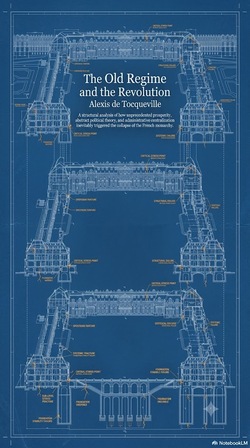
In *The Old Regime and the Revolution*, Alexis de Tocqueville dismantles the myth that the French Revolution was a sudden, unforeseen upheaval. Instead, he argues that the revolution’s seeds were planted deep within the decaying structures of the Old Regime itself. Tocqueville dissects how overbearing centralized governance eroded local autonomy, while a rigid class system—marked by noble privileges, unequal taxation, and a disconnected intellectual elite that seized public opinion—fueled widespread resentment. He highlights the monarchy’s self-defeating contradictions: empty promises of reform, public exposure of injustices without action, and a corrupt venal office system that hollowed out state legitimacy. Most strikingly, Tocqueville reveals an irony: the revolution that claimed to destroy the Old Regime inherited and amplified its most authoritarian trait—centralized power. This seminal work offers a prescient analysis of how systemic decay and unaddressed grievances ignite revolutionary change, making it essential reading for anyone seeking to understand modern political upheaval.

French RevolutionCentralized governanceFiscal CrisisClass inequalityIntellectual elites
Scenario

Bastille Seizure Legitimation

The 1789 Bastille seizure had little military value, but the National Assembly later interpreted the mass violence as legitimate expression of people’s sovereignty, and invented the modern concept of revolution.

French RevolutionPolitical CultureEvent Study
Concept

Transformative Historical Event

A transformative historical event is a contingent sequence of actions that breaks regular social practices. It triggers a series of follow-up disruptions, and permanently changes the original social structure.

French Revolutionevent theoryHistorical change
Scenario

French Pre-Revolution Bureaucracy

French King Louis XIV built the Versailles Palace to trap and corrupt nobles, appointed supervising envoys with absolute power across the country, forming extremely rigid bureaucratic rule before the French Revolution.

bureaucracyFrench HistoryAbsolutism
Scenario

French Revolution's Reign of Terror

The Reign of Terror (1793-94) was a period of violence during the French Revolution. Robespierre's Jacobins executed thousands, including King Louis XVI, in the name of 'defending the revolution.'

French RevolutionReign of TerrorJacobins
Insight

Burke on French Revolution Disaster

Burke sees the French Revolution as a disaster. He says it destroyed tradition and order, leading to violence and chaos instead of freedom.

ChaosFrench RevolutionBurke
Quote

Burke on Chivalry Loss

"The age of chivalry is gone." - Edmund Burke, mourning the loss of honor and decency in the French Revolution, which he saw as replacing tradition with violence.

French RevolutionBurkeChivalry
Insight

French Revolution Contradictions

The French Revolution’s 'liberty, equality, fraternity' excluded poor people—only property owners could vote initially.

EqualityFrench RevolutionContradictions
No more