
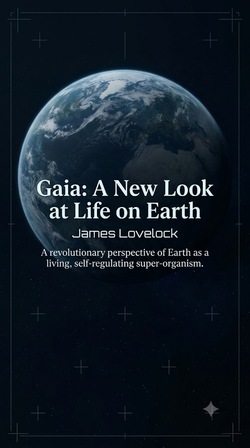
Gaia: A New Look at Life on Earth
In *Gaia: A New Look at Life on Earth*, pioneering scientist James Lovelock introduces his revolutionary Gaia hypothesis—the radical idea that Earth functions as a single, self-regulating living superorganism. Drawing on his environmental science background and insights from space exploration, Lovelock argues that all living organisms and non-living planetary components (oceans, atmosphere, soil) interact in a complex, interconnected system to maintain stable, habitable conditions. He breaks down how processes like carbon cycling, oxygen production, and temperature regulation are controlled by the collective activity of Earth’s biosphere, not random chance. Though initially met with scientific skepticism, Lovelock’s framework has reshaped our understanding of ecology, climate science, and humanity’s role in the planet’s delicate balance. This book invites readers to rethink their relationship with Earth, offering a compelling lens to address modern environmental challenges and appreciate the planet’s remarkable resilience.