The Age of Extremes
Loading…

The Age of Extremes

Eric Hobsbawm

4.41177 learners

Eric Hobsbawm’s *The Age of Extremes* dissects the turbulent 'short 20th century'—a 77-year period spanning from the outbreak of World War I in 1914 to the collapse of the Soviet Union in 1991. This definitive historical work traces the era’s defining extremes: the catastrophic global wars that shattered 19th-century liberal order, the seismic revolutions that birthed socialist states, the Great Depression that upended capitalist systems, and the decades-long Cold War that divided the world into opposing camps. Hobsbawm also explores the era’s social and cultural upheavals—from decolonization and the rise of youth culture to the transformation of science and art. He analyzes how these interconnected crises reshaped global politics, economies, and societies, leaving a legacy of inequality, ideological fragmentation, and ecological challenges. A masterful synthesis of historical analysis, the book offers critical insights into the forces that defined modernity and warns of the risks of repeating the era’s violent mistakes.
Great DepressionCold WarSoviet CollapseShort 20th CenturyWorld War I
A Monetary History of the United States
Loading…

A Monetary History of the United States

Milton Friedman;Anna Jacobson Schwartz

4.51098 learners

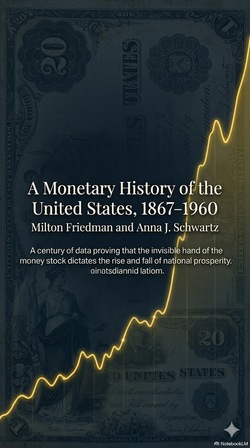
Co-authored by Milton Friedman and Anna J. Schwartz, *A Monetary History of the United States* is a landmark work spanning 93 years of U.S. economic and financial history (1867–1960). Through rigorous empirical analysis, the book traces fluctuations in the money supply and their profound, often underrecognized, impact on pivotal events—from the paradoxical Greenback Era where deflation coincided with rapid economic growth to bitter gold-silver debates, the creation of the Federal Reserve, the catastrophic policy failures of the Great Depression, and post-WWII monetary policy evolution. Challenging conventional wisdom, Friedman and Schwartz argue that changes in the money stock are independent drivers of economic booms and busts, not just passive responses to shifts. This seminal text redefined monetary policy’s role, offering timeless insights into how monetary decisions shape national prosperity and crisis.

Monetary PolicyGreat DepressionGold standardMonetary StockFederal Reserve System
The Great Game
Loading…

The Great Game

John Steele Gordon

3.81075 learners

John Steele Gordon’s *The Great Game* delivers an electrifying, page-turning account of Wall Street’s evolution—from its gritty beginnings as a Dutch defensive wall in 17th-century New Amsterdam to its ascent as the world’s dominant financial hub. Gordon brings to life the larger-than-life figures who shaped its destiny: Alexander Hamilton, whose bold fiscal framework turned a fledgling nation into an economic powerhouse; Cornelius Vanderbilt, the tough-as-nails shipping tycoon who outmaneuvered Wall Street’s shadiest speculators to control railroads; and J.P. Morgan, the legendary banker who rescued America from catastrophic financial panics. He doesn’t sugarcoat the chaos: the tulip bubble’s lasting legacy, the 1929 stock market crash, the 2008 subprime crisis, and the endless battle between regulation and unbridled greed. More than a history of a street, this book is a chronicle of America itself—how financial innovation, ambition, and resilience forged the nation’s identity and global influence.

J.P. MorganWall StreetFederal ReserveGreat DepressionSpeculation
The Grapes of Wrath
Loading…

The Grapes of Wrath

John Steinbeck

4.4994 learners

Set during the 1930s Dust Bowl, John Steinbeck’s *The Grapes of Wrath* traces the Joad family’s harrowing journey after they’re evicted from their Oklahoma farm—their land parched by drought, seized by corporate greed. Piling into a rickety truck, they join thousands of displaced “Okies” on Route 66, chasing the false promise of work and abundance in California. Along the way, they endure hunger, illness, and devastating loss, yet find glimmers of hope in the solidarity of fellow migrants. In California, they face systemic exploitation: greedy landowners slash wages, use scabs to break strikes, and label them unwanted outsiders. Guided by former preacher Jim Casey, who evolves from a man of faith to a champion of collective action, the Joads learn survival depends not just on individual grit, but on standing together against a system that dehumanizes the poor. Steinbeck’s raw narrative exposes the dark underbelly of the American Dream, celebrating the unbreakable resilience of ordinary people clinging to dignity.

Great DepressionMigrant WorkersDust BowlOkiesJoad Family
Capitalism in America
Loading…

Capitalism in America

Alan Greenspan;Adrian Wooldridge

4.4987 learners

From the colonial era’s resource-rich, free-spirited foundations to today’s tech-driven, globally dominant economy, *Capitalism in America* by Alan Greenspan and Adrian Wooldridge traces the wild, transformative journey of U.S. capitalism. This sweeping history unpacks how key turning points—from Hamilton’s financial system and the Civil War’s resolution of slavery to the Gilded Age’s robber barons, the Great Depression’s New Deal, and the post-WWII golden age—shaped the nation’s economic identity. It highlights the central role of 'creative destruction': how entrepreneurs like Ford, Rockefeller, and Silicon Valley innovators disrupted old systems to drive prosperity, even as crises (2008’s financial crash, 1970s stagflation) and challenges (ballooning welfare costs, stagnant productivity) tested its resilience. The book argues that America’s unique blend of entrepreneurial grit, institutional flexibility, and a willingness to adapt remains its greatest asset, even as it faces modern threats to its economic vitality.

Great DepressionNew DealBretton Woods SystemSilicon ValleyCreative Destruction
Freedom From Fear
Loading…

Freedom From Fear

David M. Kennedy

4982 learners

David M. Kennedy’s *Freedom From Fear* delivers a sweeping, immersive account of America’s defining journey through the Great Depression and World War II. Starting with the 1920s’ simmering tensions—Jim Crow’s racial oppression, rural poverty, urban cultural upheaval, and educational progress—the book traces how unregulated capitalism and global instability ignited the 1929 stock market crash. It dissects Herbert Hoover’s failed laissez-faire responses, then chronicles Franklin D. Roosevelt’s transformative New Deal: the 100 Days of urgent legislation, the rise of labor unions, the birth of the social safety net, and the political battles that exposed its limits. The narrative shifts to America’s reluctant pivot from isolationism to war, detailing the Lend-Lease Act, the Pearl Harbor attack, and the nation’s industrial mobilization that turned it into the Allies’ "arsenal of democracy." Kennedy explores how war resolved the Depression, sparked early civil rights gains, and redefined America’s global role, revealing how a nation conquered fear to reimagine its identity and future.

Great DepressionWorld War IINew DealFranklin D. RooseveltSocial Security Act
Free to Choose
Loading…

Free to Choose

Milton Friedman;Rose D. Friedman

4.2577 learners

In Free to Choose, Milton and Rose Friedman deliver a sharp, evidence-backed argument for the transformative power of free markets and limited government, framing voluntary exchange and the price system as the bedrock of prosperity and individual freedom. Drawing on real-world examples—from Hong Kong’s thriving laissez-faire economy to the failure of Soviet central planning, the Fed’s catastrophic role in the Great Depression to the inefficiencies of U.S. welfare programs—the Friedmans dismantle pervasive myths about government intervention. They explain how price signals coordinate global economic activity without central control, critique the harm of union power, regulatory overreach, and equality-of-outcome policies, and outline practical reforms: school vouchers to revitalize education, a negative income tax to replace broken welfare systems, and constitutional amendments to rein in big government. The book clarifies the critical distinction between equality of opportunity (compatible with freedom) and equality of outcome (destructive to it), urging readers to reclaim economic liberty as the foundation of a just, thriving society.

Limited GovernmentSchool VouchersNegative Income TaxGreat DepressionInflation
View

Fed Failed Great Depression

Friedman & Schwartz argue Fed's inaction caused 1929-33 money supply collapse (down 1/3). They didn't inject liquidity during bank runs, turning recession into depression.

Great DepressionFed PolicyMoney Supply
Scenario

Great Depression Mistakes

The 1930s Great Depression worsened because the Fed raised rates (to save gold) and the government cut spending. These austerity measures deepened the crisis.

Great DepressionAusterityPolicy Mistakes
Golden Sentence

Fed's Great Depression Mistake

"The Great Depression was not an inevitable outcome of economic decline but largely an independent factor exacerbated by Federal Reserve's policy errors."

Great DepressionFed PolicyError
Quote

Jack Morgan's Tax Quote

Jack Morgan said: 'People who pay taxes are suckers.' This reckless comment angered the public during the Great Depression.

Jack MorganTax QuotePublic Anger
Concept

NYA Texas Program

The National Youth Administration (NYA) in Texas, led by LBJ, provided jobs and education for young people during the Great Depression. It helped thousands get work and stay in school.

Great DepressionLBJNYA
Insight

Fed Caused Great Depression

The Fed's failure to stabilize money supply (1/3 drop 1930-33) led to bank failures and deepened the Great Depression.

Great DepressionFed PolicyMonetary Supply
Scenario

Great Depression Roots

1930s depression worsened by high tariffs, tax hikes, and tight monetary policy—delayed recovery.

Policy MistakesRecessionMacroeconomics
Insight

Financial Regulation Needs Update

Old post-Great Depression financial regulation worked well for decades. But modern complex financial products and shadow banks create new loopholes, so regulation must be updated to consider animal spirits.

FinanceCrisisfinancial regulation
Scenario

1929 Great Depression Default Wave

Before 1929, global investors believed no new world war would break out and economic growth would last forever. The stock market crash then triggered the largest sovereign default wave in modern history.

Economic HistoryCrisis Wave
Concept

100 Days New Deal

The 100 Days New Deal refers to the 100-day window after Roosevelt took office, when Congress passed 15 urgent reform bills covering finance, agriculture and industry to stop the Great Depression from worsening.

Great DepressionNew DealUS History
Insight

Depression Is Not Just Crash

The author argues the Great Depression was not just a short stock market correction, but a result of overlapping crises including collapsed southern agriculture, broken banking system and unequal wealth distribution.

Great DepressionEconomic HistoryUS 1930s